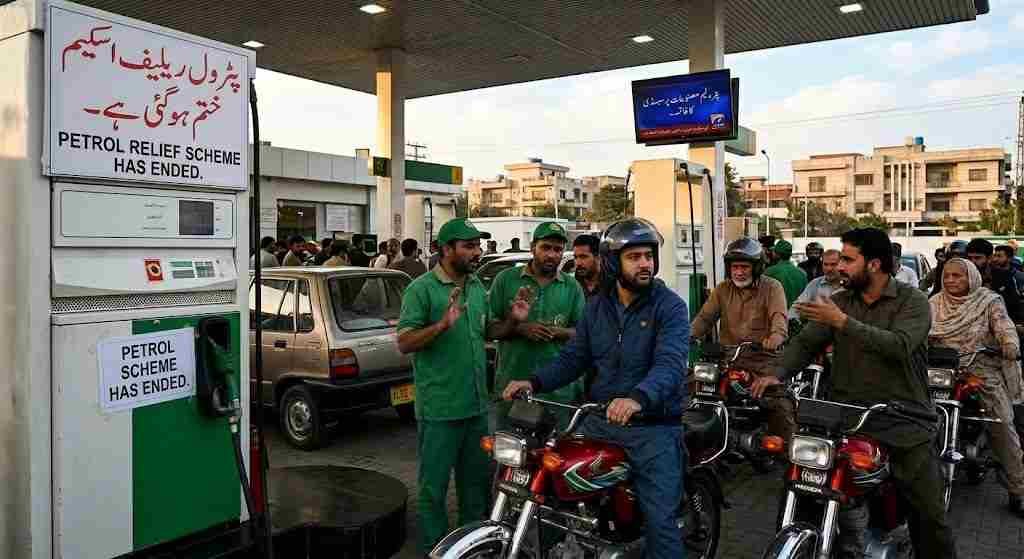
ISLAMABAD: The government’s plan to provide Rs100 per litre relief on petrol to motorcycle riders and owners of small cars now faces uncertainty after Pakistan reached a staff-level agreement with the International Monetary Fund (IMF).
The three-month scheme was designed to ease fuel costs for ordinary consumers. Under the plan, motorcycle riders were eligible for a discount on up to 20 litres of petrol per month, while owners of vehicles with engines up to 800cc could receive relief on up to 30 litres.
However, the government had allocated Rs75 billion for the scheme, while the IMF objected to the subsidy because of its cost and broad coverage.
Following the latest IMF agreement, Pakistan has committed to end the fuel support scheme and avoid broad, untargeted subsidies in the future.
IMF seeks immediate end to fuel subsidy
In a statement issued after the talks, Petrova said Pakistan should immediately end the fuel support scheme.
She described the programme as costly and untargeted. The IMF also warned against introducing broad fuel subsidies in the future.
However, Petrova said any future fuel support should meet strict conditions. It should be limited, temporary and targeted through existing social protection programmes.
It must also remain within the limits of Pakistan’s fiscal year 2027 budget, she added.
Prime Minister Shehbaz Sharif had announced the three-month scheme to provide a Rs100-per-litre discount on up to 20 litres of petrol a month for motorcycle riders. Owners of vehicles with engines up to 800cc were eligible for up to 30 litres.
The government had allocated Rs75 billion for the scheme.
IMF rejected broad fuel relief
The prime minister had also met the IMF managing director to seek support for the subsidy. However, the effort did not succeed.
Earlier, The Express Tribune reported that the IMF had strongly opposed the scheme because of its high cost and broad coverage.
Government officials had maintained that the programme would continue for three months despite the IMF’s objections.
Following the latest agreement, however, Islamabad will now have to revise its fuel subsidy policy to meet the IMF’s conditions.