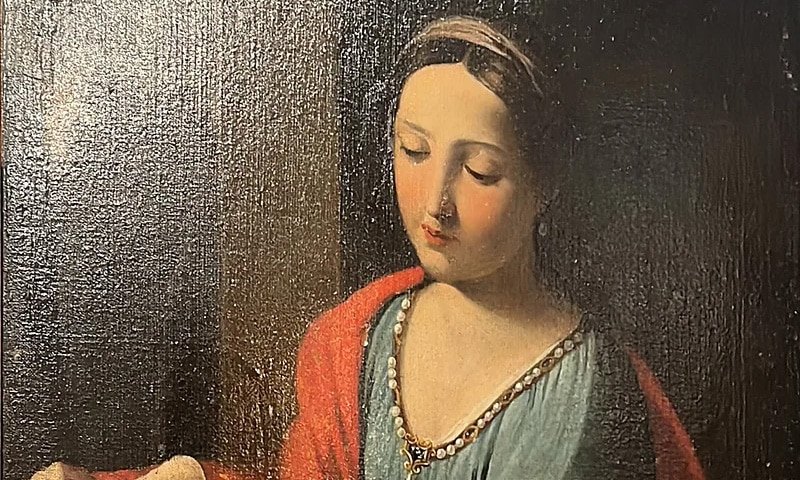
Italian police have recovered a 17th-century painting stolen more than two decades ago with the help of an artificial intelligence (AI) system that identified the artwork despite alterations made to conceal its original identity.
The painting was stolen in 2004 from a small church in Italy and later modified to make it appear to be an ordinary portrait of a young woman. The AI system detected similarities in its colours, patterns and composition, even though several religious symbols had been removed.
The breakthrough came in October 2024 during an annual antiques fair in Parma, Italy, where police officers were photographing artworks and adding them to their database. Within hours, the AI system flagged a suspicious painting depicting a young woman holding a sheet of paper.
Further investigation revealed that the artwork was actually a painting of Saint Agnes, stolen on August 11, 2004, from the Virgo Potens Church in Solmona, near Naples.
The thieves had altered or removed key religious features, including a white lamb, a halo and a palm branch, transforming the image into what appeared to be a portrait of an ordinary young woman.
Italian police began developing an AI-powered system in 2020 to identify stolen artworks. Named the Stolen Works of Art Detection System (SWADS), it was introduced in November 2023.
Since its launch, the system has helped recover more than 300 major stolen artworks and sculptures, along with over 165,000 other items, including coins, medals, letters, manuscripts, religious objects, stamps and cards.
Authorities estimate the total value of the recovered items at more than €203 million. The system also continuously scans images available on the internet, online auction houses and commercial websites to identify potentially stolen objects.
Experts say AI is proving to be a valuable tool in the recovery of stolen cultural property, but stress that it cannot replace human investigation or legal cooperation. Poor-quality images, duplicate artworks and three-dimensional objects remain challenges for the technology.
Although more than two decades have passed since the theft, making legal proceedings in the case no longer possible, the painting was returned to the church on May 20, 2025. It is expected to be restored before being displayed again in its original location.