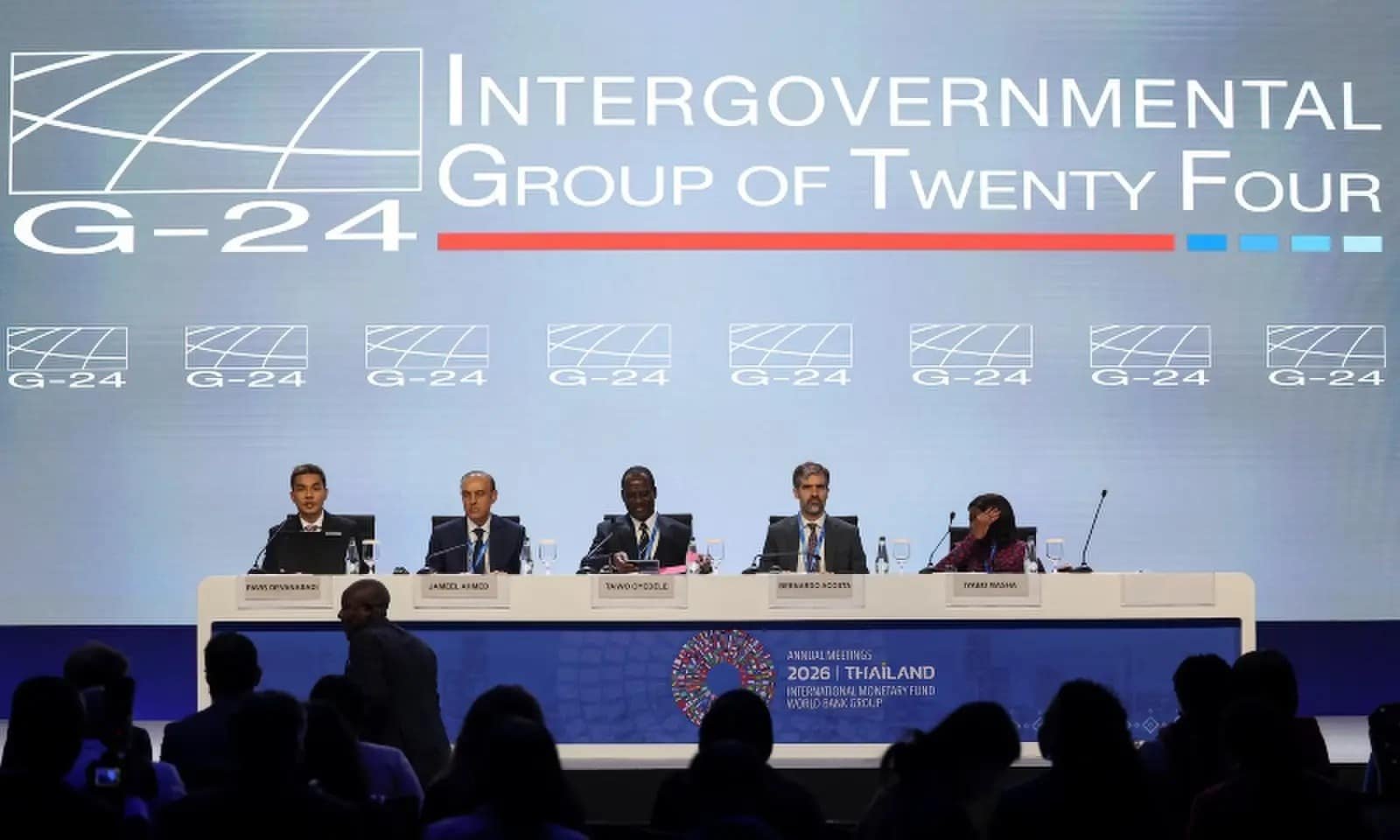
ISLAMABAD: Pakistan assumed the chairmanship of the Groudevelopment financingp of 24 on Sunday, with Finance Minister Muhammad Aurangzeb pledging to strengthen developing countries’ influence over international financial decisions and promote a fairer system focused on development.
Aurangzeb described the leadership role as a profound responsibility and called for stronger international cooperation to address climate shocks, financing shortages and global economic fragmentation.
The G-24, established in 1971, coordinates developing countries’ positions on international monetary and financial issues.
Aurangzeb outlined three priorities for Pakistan’s chairmanship: putting development at the centre of global economic policymaking, strengthening multilateral frameworks and promoting an international financial architecture that better supports developing economies.
He stressed that macroeconomic stability should provide the foundation for investment, productivity, employment and shared prosperity.
Such an approach, he said, would help developing and low-income countries move beyond repeated crisis management towards sustainable growth.
The minister also mentioned emerging economies’ potential to drive investment, innovation, entrepreneurship and global economic expansion.
Pakistan will advocate fairer governance and meaningful participation in decision-making at the Bretton Woods institutions, including the International Monetary Fund and World Bank, the statement said.
Aurangzeb urged these institutions to respond more effectively to their members’ changing needs and economic circumstances.
His remarks placed developing countries’ representation alongside the broader challenge of ensuring that international institutions support national development priorities.
Pakistan’s approach will also emphasise consultation, consensus and collective advocacy among G-24 members across Africa, Asia, Latin America and the Caribbean.
Affordable and timely development financing, sustainable debt solutions and stronger global financial safety nets will feature prominently during Pakistan’s tenure.
The minister also identified climate resilience and the mobilisation of public and private capital as priorities.
Drawing on Pakistan’s experience with stabilisation and reform, he emphasised aligning financial stability with long-term development goals.
Reforming economies, he said, need sufficient financing and policy space to pursue sustainable growth.
Leadership to Be Judged by Results
Aurangzeb acknowledged outgoing chair Nigeria’s leadership and pledged to build on the group’s progress through cooperation with members and international partners.
ALSO READ: Pakistan and Qatar Spearhead Diplomatic Breakthrough as U.S.-Iran Talks Convene in Doha
He stressed that collective leadership should be measured through tangible development outcomes, rather than statements alone.
Pakistan’s stated ambition is to turn the developing world’s collective voice into greater influence, and that influence into meaningful progress through practical cooperation on the group’s shared development priorities and financial reform agenda.