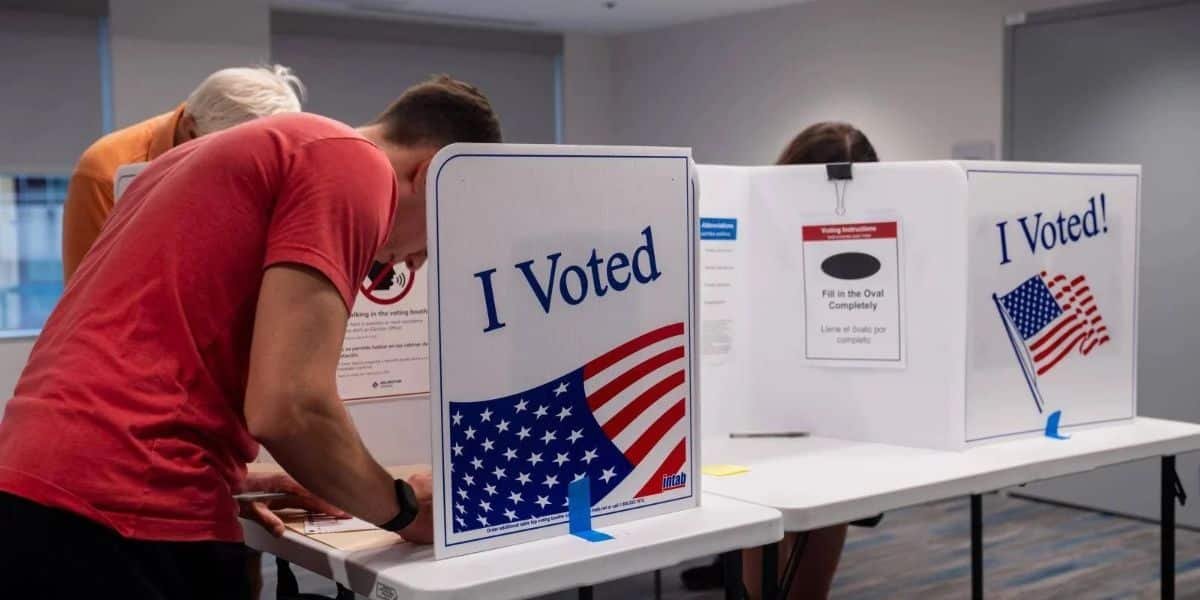
WASHINGTON: The US Midterm Elections entered a decisive phase on Tuesday as polling stations began closing across the country, with Democrats seeking to regain control of Congress and challenge President Donald Trump’s political influence in Washington.
All 435 seats in the House of Representatives and 35 of the 100 Senate seats were being contested, alongside governorships in 36 states. Democrats needed a net gain of three seats in the House and four in the Senate to take control of both chambers from Republicans.
A Democratic victory in the House would allow the party to block parts of Trump’s legislative agenda and launch investigations into his administration. Losing the Senate could also complicate the president’s efforts to secure confirmation for Supreme Court justices and senior government appointments.
US Midterm Elections Reflect Growing Public Discontent Over Economy
The election has emerged as a nationwide assessment of Trump’s presidency, with rising living costs, inflation, tariffs and the US conflict with Iran among the major concerns shaping voters’ decisions.
Trump’s approval rating has remained near the low 30s, adding to Republican concerns ahead of the vote. Many voters have expressed frustration over increasing rents, grocery bills, utility costs and property taxes.
Speaking to AFP, 24-year-old Los Angeles voter Taylor Cook identified affordability and congressional oversight of the Trump administration as her main priorities.
Trump defended his record during a final television appearance on Tuesday, highlighting his immigration crackdown, actions against Iran and tariff policies. Republicans, meanwhile, argued that the president’s tax cuts and immigration policies would benefit American voters.
Senate Race Remains Challenging for Democrats
Although Democrats appeared well-positioned to make gains in the House, securing a Senate majority remained a more difficult challenge. Republicans entered the election with a 53-47 advantage, while competitive races emerged in traditionally conservative states, including Texas, Iowa, Kansas, Ohio and Alaska.
The campaign also exposed divisions within the Democratic Party. In Michigan, Congresswoman Haley Stevens backed Republican candidate Mike Rogers rather than Democratic nominee Abdul El-Sayed, highlighting tensions within the party.
Decision Desk HQ’s final forecast projected Democrats winning 241 House seats against 194 for Republicans, while its Senate projection showed a narrower 52-48 Democratic majority.
Election Integrity Concerns and Political Tensions
The campaign attracted more than $11 billion in political advertising, while billionaire Elon Musk reportedly contributed nearly half a billion dollars to Republican efforts.
Concerns also grew over whether Trump and Republican allies would accept an unfavourable election outcome. Trump, who challenged his defeat in the 2020 presidential election, has repeatedly alleged widespread voter fraud without providing evidence.
Also Read: US Midterm Elections Enter Decisive Phase as Polls Close, Trump Faces Political Test
On Tuesday, voting machine malfunctions in a closely contested New York congressional race prompted unfounded fraud claims from some right-wing commentators. Local election officials, however, maintained that all ballots would be counted.
The results are expected to determine the balance of power in Congress and shape the remainder of Trump’s presidency.