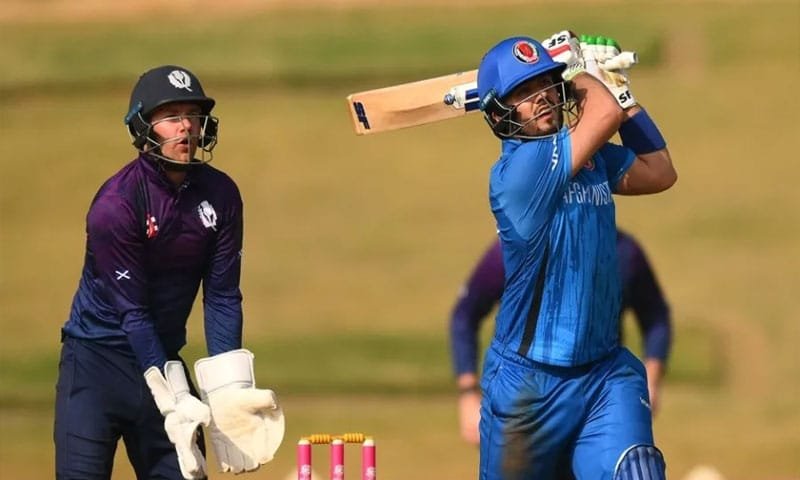
GLASGOW: The Taliban government’s restrictions on women’s rights have triggered another setback for Afghanistan’s international cricket relations, with Cricket Scotland refusing to arrange bilateral matches against the country outside International Cricket Council (ICC) competitions.
The decision, announced on Monday, November 9, reflects growing international concern over the Taliban’s treatment of women and girls, whose access to education, employment, public life and sporting activities has been severely restricted since the group returned to power in August 2021.
Under the new policy, Scotland will not proactively schedule bilateral series or participate in tri-nation tournaments involving Afghanistan’s men’s team unless there is a material improvement in the circumstances surrounding women’s cricket and wider human rights conditions.
The Scottish side will, however, continue to face Afghanistan in ICC-organised competitions when required by tournament regulations.
The move brings Cricket Scotland in line with Cricket Australia and the England and Wales Cricket Board (ECB), which have also restricted bilateral cricket engagements with Afghanistan over the Taliban government’s treatment of women.
Taliban’s Restrictions on Women Carry International Consequences
Since returning to power, the Taliban have imposed sweeping restrictions on Afghan women and girls, barring them from secondary schools and universities and severely limiting their employment opportunities and participation in public life.
Women have also been excluded from sporting activities, effectively bringing women’s cricket to a halt inside Afghanistan.
The restrictions have forced several members of Afghanistan’s former women’s cricket team to leave the country and rebuild their sporting careers abroad.
While Afghanistan’s men’s team continues to compete on the international stage, the country has no functioning women’s national cricket structure, highlighting the stark divide between opportunities available to male and female athletes.
Cricket Scotland said its decision reflected its commitment to expanding women’s and girls’ participation in cricket, alongside concerns about the humanitarian situation in Afghanistan.
The governing body said the policy would remain under annual review or be reconsidered following a significant ICC decision or a material change in circumstances.
Afghanistan’s Men Continue to Pay the Price
The latest decision has added to the debate over the separation of Afghanistan’s men’s cricket team from the policies of the Taliban government.
Afghan male cricketers are not responsible for restrictions imposed on women, but their country’s bilateral sporting relationships are increasingly being affected by the actions of the authorities ruling Afghanistan.
Scotland’s decision also means Afghanistan will have fewer opportunities for bilateral international cricket, although ICC competitions remain open to encounters between the two sides.
Cricket Scotland further clarified that it would continue to consider its contractual obligations towards players. It could issue no-objection certificates to Scottish cricketers seeking to participate in the proposed Afghanistan Premier League if the ICC officially approves the tournament.
However, the board stressed that allowing players to participate would not constitute an endorsement of the Taliban government or its policies.
The Afghanistan Cricket Board had approached Cricket Scotland twice this year, seeking access to training facilities in July and September. Reuters reported that the Scottish governing body had contacted the Afghan board for comment on its latest decision.
The Taliban government maintains that it respects women’s rights under its interpretation of Islamic law and local customs, while international criticism of its restrictions continues.
The growing reluctance of cricket boards to arrange bilateral fixtures with Afghanistan demonstrates how the Taliban’s domestic policies are increasingly shaping the country’s international sporting relations.