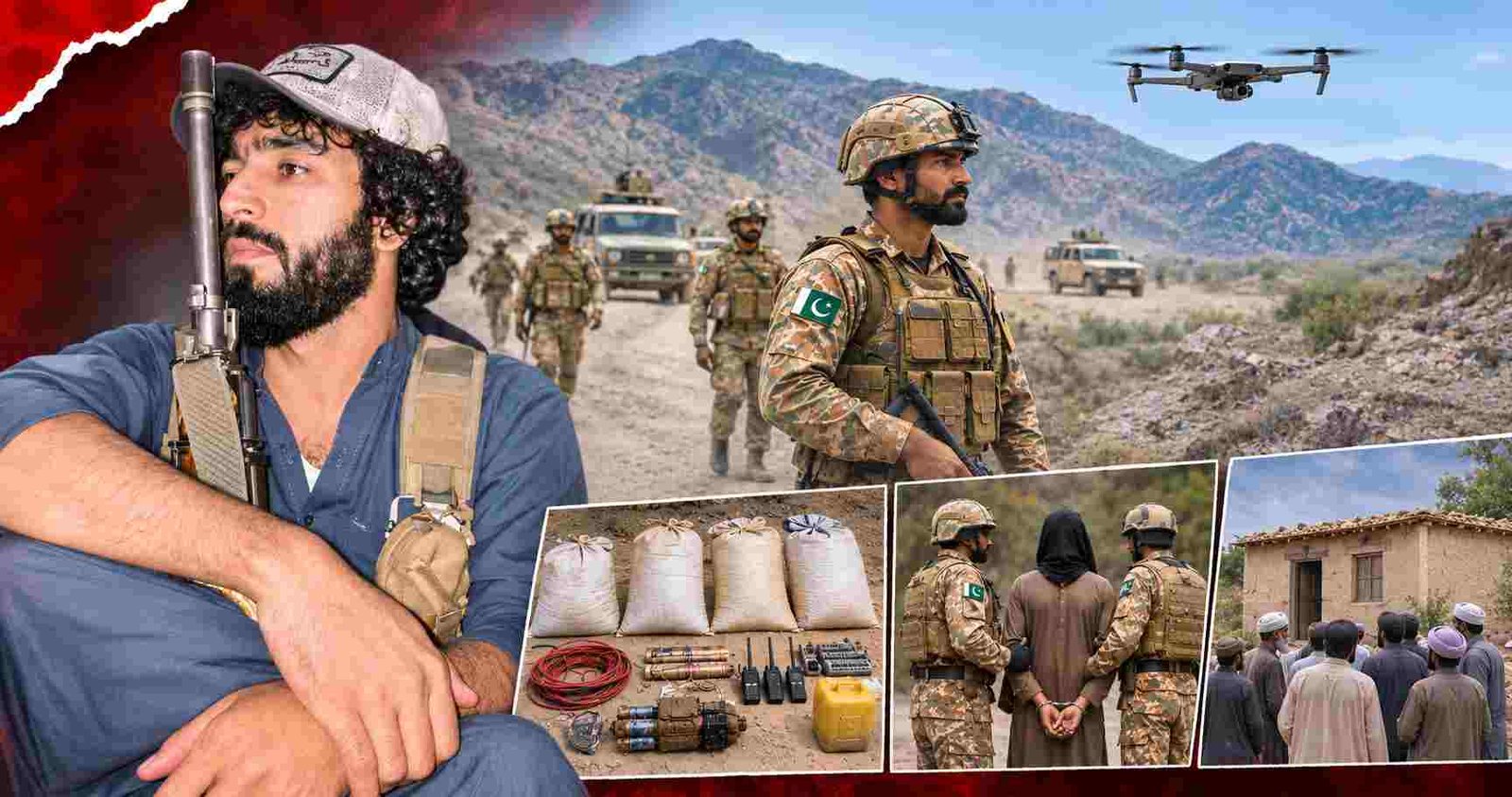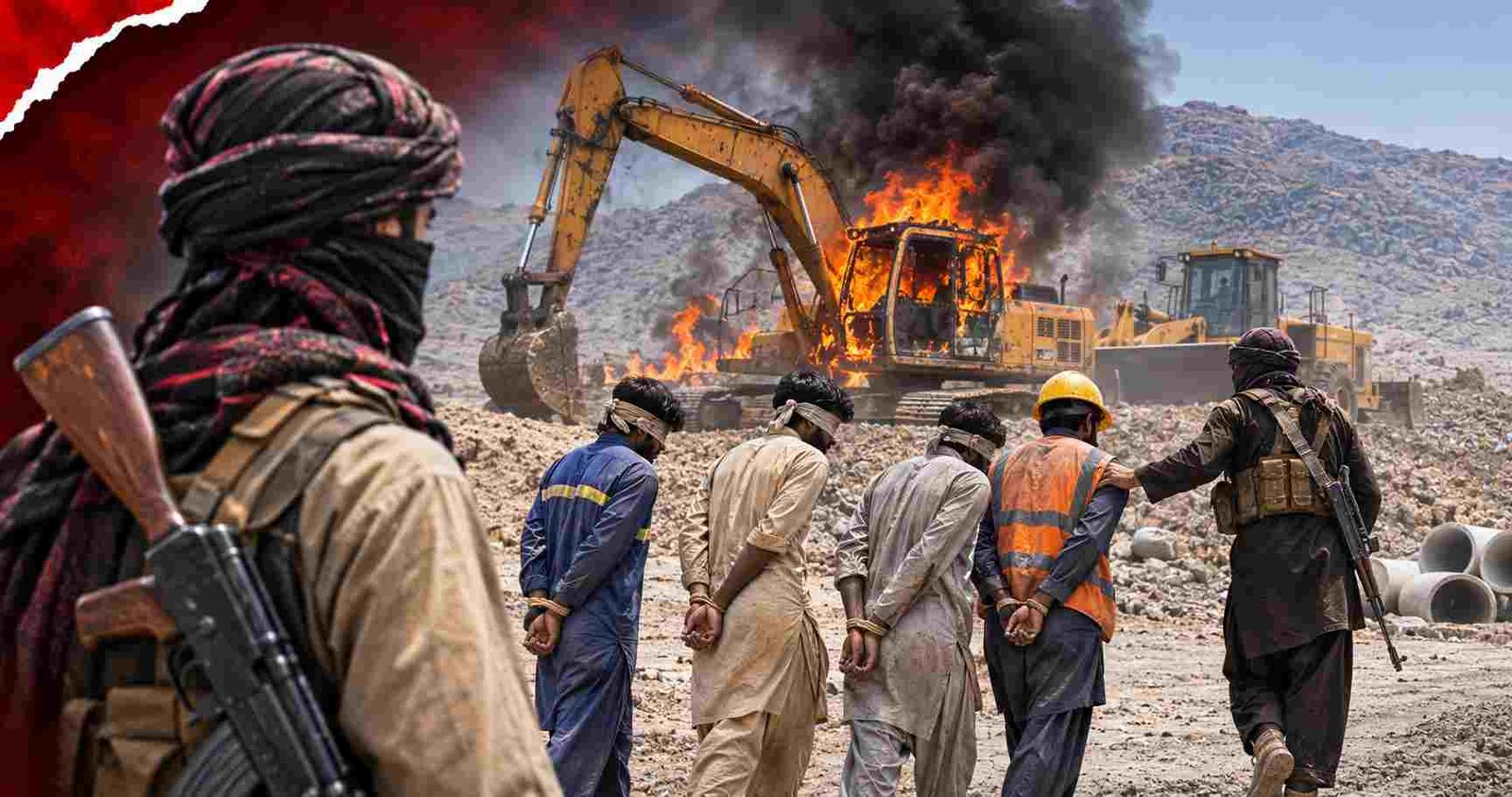
MUSAKHEL: Terrorists belonging to Fitna al-Hindustan (FAH), also known as the banned Balochistan Liberation Army (BLA), attacked a construction site in the Durg area of Musa Khel district, setting heavy machinery on fire and abducting four workers.
The attackers targeted the construction site, torched machinery and took four labourers away, says report.
The attack marks another reported assault on workers and development infrastructure in Balochistan, where militant groups have repeatedly targeted construction projects and people engaged in development activities.
By attacking labourers and destroying machinery, the Indian backed terror groups have sought to disrupt development work and undermine economic activity in the region. Such attacks also put the lives and livelihoods of local workers at risk.
Authorities have yet to provide further details about the abducted workers or announce any recovery operation.
BLA attacks threaten Balochistan’s development
The BLA has openly claimed attacks on highways, construction companies, transport vehicles and infrastructure associated with economic activity. In June, the group announced a campaign it described as an “economic blockade”, claiming responsibility for 11 operations over 12 days targeting highways, mineral and fuel transport vehicles and economic routes. It claimed that more than 36 vehicles were destroyed and two bridges on a China-Pakistan Economic Corridor (CPEC) route were damaged. These figures were the group’s own claims and were not independently verified in the cited report.
Such attacks carry consequences far beyond the immediate destruction. Burning an excavator, loader, road roller or fleet of dump trucks can interrupt construction schedules, increase replacement and insurance costs, expose workers to danger and delay projects intended to improve connectivity between remote districts and major commercial centres.
For a province already struggling with underdevelopment, insecurity that prevents contractors from operating freely can deepen existing economic difficulties. Damaged bridges and blocked highways can also disrupt the movement of people, goods and mineral resources.
The BLA’s stated campaign against economic infrastructure has therefore placed construction firms, transport operators and other businesses in the line of fire. Its claims of targeting economic routes demonstrate that disrupting such activity has become an explicit part of the group’s announced strategy.
Construction sites repeatedly targeted
The pattern has extended beyond highways and transport vehicles.
On January 15, the BLA claimed responsibility for an attack on a construction company working on Washuk Road in the Mashkel area of Washuk district. The group said vehicles and machinery were set on fire.
On April 30, the Baloch Republican Guards (BRG), another separatist armed group, claimed responsibility for an attack on a road construction site near Pat Feeder Peropol in Dera Murad Jamali. Police reported that machinery was damaged and work was halted. The incident illustrates that attacks on development assets have not been confined to the BLA alone.
On September 4, a construction company near Ziarat Cross on the Quetta-Zhob highway suffered extensive equipment losses. Local sources reported that 14 vehicles and pieces of heavy machinery were destroyed, including eight dump trucks, two loaders, an excavator, a trailer, a bitumen distributor and a water tanker. The BLA claimed a separate attack on a military convoy in the area, but no group had claimed responsibility for the construction-site attack when the report was published.
Later that month, an attack on a road construction camp in Duki district reportedly killed a security guard, injured people and resulted in the abduction of construction workers. Reports said machinery and vehicles were also set on fire. The incident highlighted the risks faced not only by equipment and infrastructure but also by the people carrying out development work.
The cost of attacking development
The destruction of public and private infrastructure does not advance the welfare of ordinary residents. It threatens jobs, delays access to markets and services, and increases the cost of delivering projects in areas that need roads, bridges and investment.
The impact is especially serious when contractors suspend work or demand additional security before returning to a site. Even when a project eventually resumes, lost time, damaged equipment and higher operating costs can place additional pressure on already constrained development budgets.
The BLA has framed attacks on economic infrastructure as a means of opposing the state’s activities in Balochistan. But the immediate consequences are borne by workers, businesses and communities whose livelihoods depend on functioning roads and continued investment.
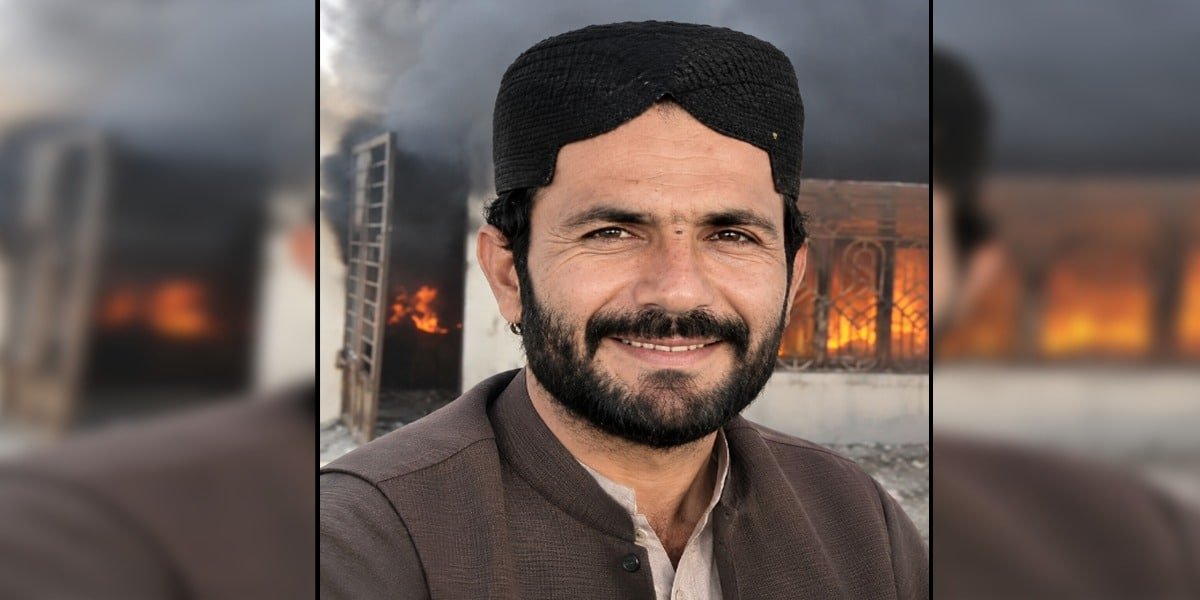
The latest fire near Jabal Noor must, however, be treated separately until the investigation establishes who carried it out and why. Authorities have yet to confirm whether it was linked to the BLA or to the wider campaign against development infrastructure.
The broader challenge for the provincial government and law enforcement agencies is to protect construction sites, safeguard workers and ensure that violence does not repeatedly derail projects intended to connect communities and support economic activity across Balochistan.