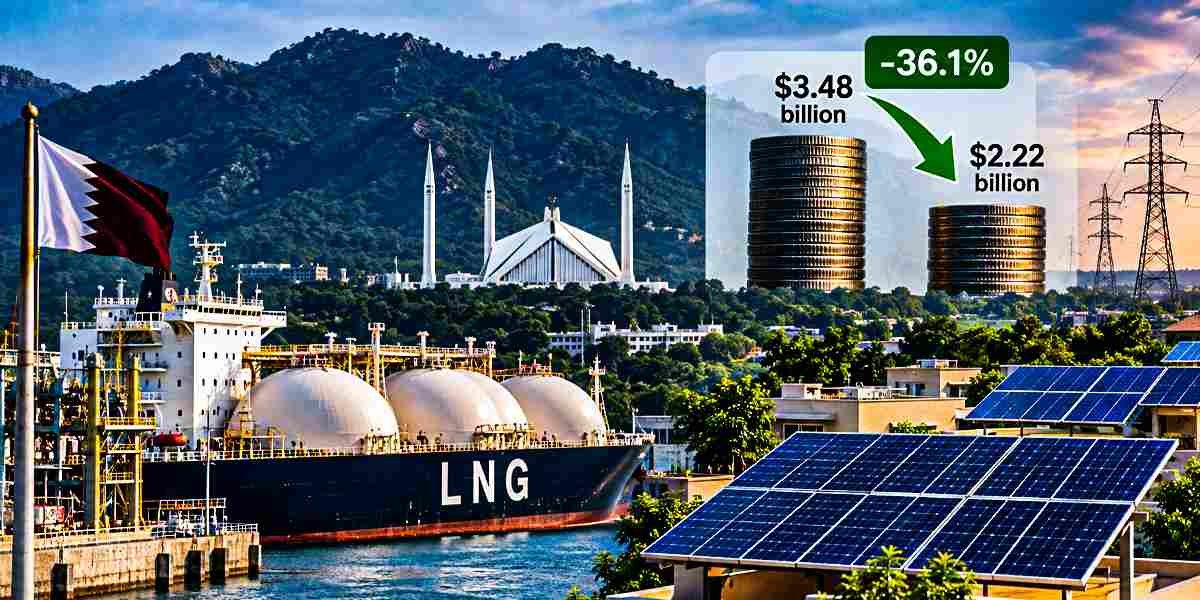
ISLAMABAD: Pakistan’s spending on liquefied natural gas (LNG) imports fell by $1.25 billion in fiscal year 2025-26, as cheaper electricity sources, particularly solar power, reduced the country’s reliance on imported gas for power generation.
According to figures from the State Bank of Pakistan (SBP), the LNG import bill declined 36.1% to $2.22 billion in the fiscal year ended June 2026, compared with $3.48 billion in the previous year.
The reduction came despite a rise in Pakistan’s overall energy import bill during the final four months of the fiscal year, when higher international prices pushed up import costs.
The shift has significant implications for Qatar, Pakistan’s main LNG supplier. Official figures previously reported by Arab News show that Qatar supplied 35 of the 36 LNG cargoes imported by Pakistan last winter.
In its governor’s annual report submitted to parliament on Tuesday, the central bank attributed the decline in LNG imports partly to the growing availability of cheaper electricity sources, including decentralised solar power.
“Greater availability of lower-cost generation sources — such as decentralized solar — had reduced reliance on imported gas to run power plants,” the SBP said.
The report also pointed to weaker industrial demand and the postponement of surplus LNG cargoes that Pakistan had already contracted to purchase. However, it did not specify how much of the reduction was directly linked to solar power.
Despite the lower annual import bill, Pakistan remains vulnerable to gas supply disruptions, particularly during periods of peak winter demand.
In October, officials warned of a possible gas shortage during the winter after QatarEnergy extended its suspension of supplies until December 29. With LNG deliveries disrupted, Pakistan also turned to furnace oil to generate electricity during evening peak-demand hours.
The developments highlight a changing energy landscape in Pakistan, where the expansion of solar power is reducing dependence on imported gas, even as supply disruptions continue to pose challenges during periods of high demand.