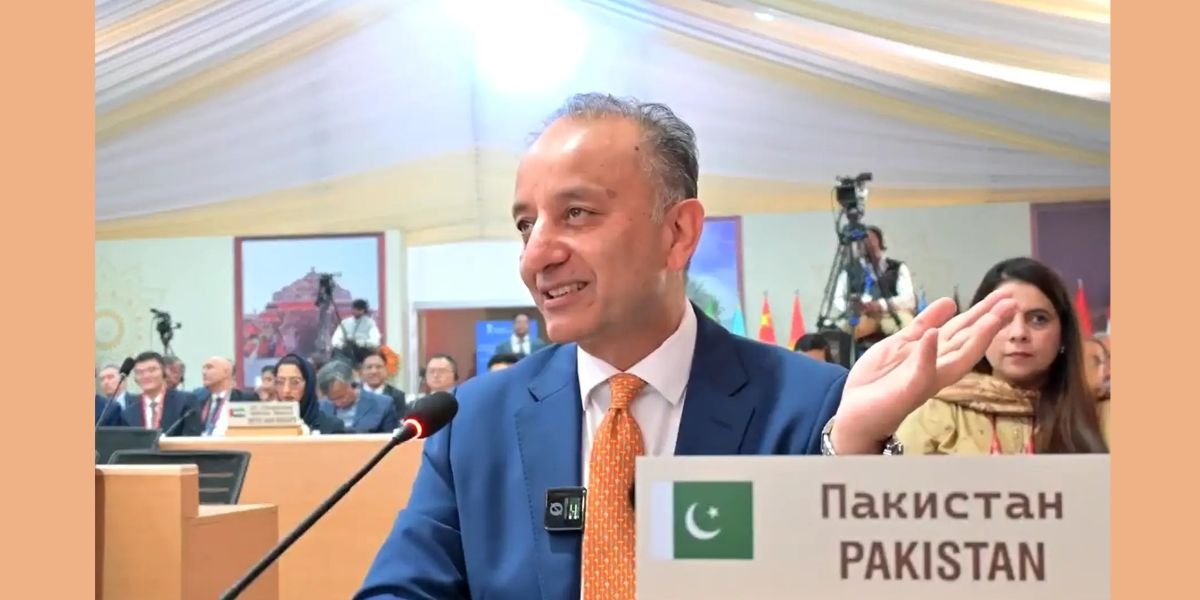
NEW DELHI: Pakistan’s Climate Change Minister Musadik Malik has described climate change as the “enemy” of civilisations, warning of its devastating impact on South Asian countries while addressing the inaugural Shanghai Cooperation Organisation (SCO) Civilisational Dialogue Forum in India on Saturday.
Musadik Malik Calls Climate Change ‘Enemy of Civilisations
During his address, Malik said civilisations were not each other’s enemies, but climate change posed a growing threat to humanity, cultural heritage and societies across the region.
Referring to devastating floods in Nepal and Pakistan, the minister recalled the 2022 floods in Pakistan, which killed around 1,700 people and inundated nearly one-third of the country, including large parts of Sindh.
He also highlighted the damage caused to the historic archaeological site of Mohenjo-Daro, saying rain-induced flooding had brought down walls that had stood for approximately 4,500 years.
“Four days of rain caused Mohenjo Daro’s walls to fall; those walls that no one was able to break for 4,500 years, climate [change] and rain-induced floods did it,” he remarked.
Malik said human activities were also contributing to climate destruction, stressing the need for collective action to protect cultural heritage and civilisation.
Calls for Regional Cooperation on Climate and Heritage
The minister proposed three initiatives for the SCO, including establishing a network of cultural institutions, creating a digital repository showcasing the region’s historical and natural heritage, and developing a climate-resilient heritage framework to address damage caused by climate-related disasters.
Highlighting the role of communities during disasters, Malik said Mohenjo-Daro had, in a sense, opened its gates to displaced people during the 2022 floods. He recalled how people sought shelter in parking lots, shopping malls, mosques, temples, shrines and schools.
“This is the power of civilisation. This is the power through which nations survive,” he said, emphasising solidarity and compassion as defining features of civilisations.
At the beginning of his speech, Malik opted to address the forum in Urdu, saying his proximity to the tombs of poet Mirza Ghalib and Sufi saint Nizamuddin Auliya in Delhi inspired him to speak in the language.
He also stressed that dialogue required diverse identities and perspectives, arguing that cultural diversity and the exchange of ideas should be embraced rather than restricted.
Bilateral Meetings on Cultural Cooperation
On the sidelines of the forum, Malik held bilateral meetings with representatives from India, Nepal, Iran, Tajikistan, Azerbaijan and Kyrgyzstan to discuss cultural ties, regional cooperation and people-to-people exchanges.
During his meeting with Indian Culture and Tourism Minister Gajendra Singh Shekhawat and Culture Secretary Vivek Aggarwal, discussions focused on cultural cooperation and strengthening historical and civilisational links between Pakistan and India.
In meetings with representatives from Nepal, Iran and Tajikistan, Malik highlighted shared cultural heritage, expressed solidarity over natural disasters and reaffirmed Pakistan’s commitment to strengthening bilateral relations.
He also met Azerbaijan’s Culture Minister Adil Karimli and Kyrgyzstan’s Deputy Minister of Culture and Youth Policy Askaraly Shukuralievich, discussing avenues for expanding cooperation.
Malik’s three-day visit to New Delhi marks the first visit by a Pakistani minister to India since former foreign minister Bilawal Bhutto-Zardari attended an SCO meeting in May 2023.
Pakistan currently holds the rotating chairmanship of the SCO Council of Heads of State for the 2026–27 term and is scheduled to host the organisation’s summit in Islamabad in August 2027.