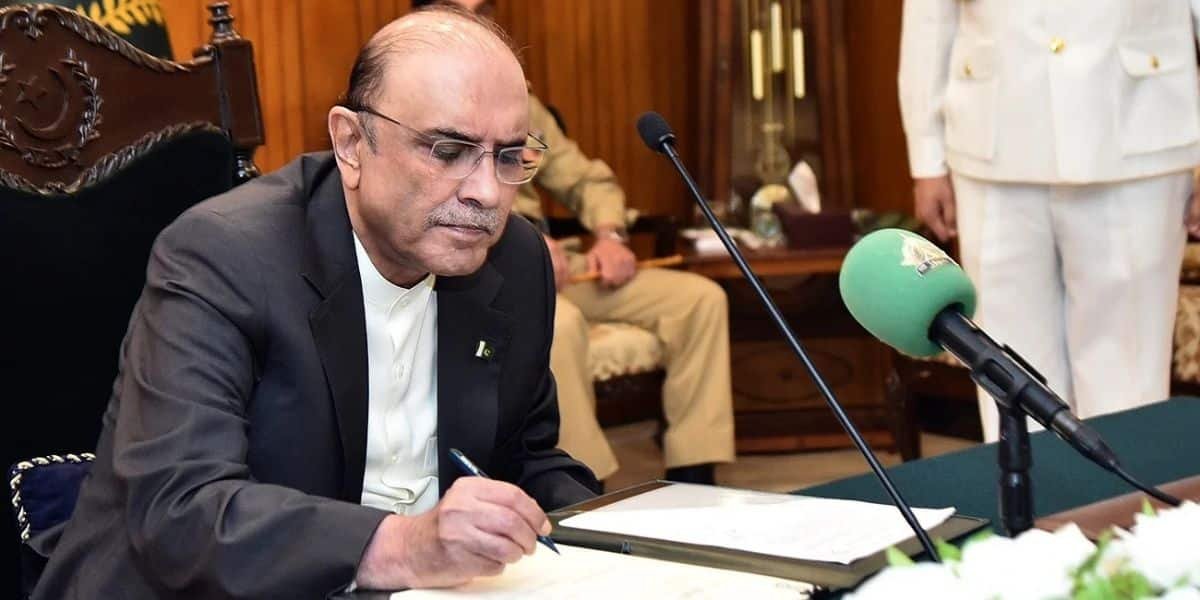
ISLAMABAD: President Asif Ali Zardari has promulgated five ordinances introducing major changes to the legal and administrative framework of Khyber Pakhtunkhwa (KP), including the withdrawal of several privileges enjoyed by provincial lawmakers and the establishment of special development initiatives across the province.
Presidential Ordinances Strip KP MPAs of Key Privileges
The most significant change concerns the Khyber Pakhtunkhwa Provincial Assembly (Powers, Immunities and Privileges) Act, 2026, under which 21 of its 40 sections have been omitted through an amendment ordinance.
The amendments remove several protections previously available to members of the provincial assembly (MPAs), including safeguards against preventive detention, arrest and certain legal proceedings.
Among the provisions removed are those requiring the speaker’s permission before the arrest or detention of an assembly member, protecting lawmakers against civil or criminal action, and addressing breaches of parliamentary privileges.
The schedule of offences relating to violations of the privileges of the provincial assembly, its members and committees has also been omitted.
The development comes after an emergency was imposed in KP on October 11, followed by the formation of an Area Representative and Development Council (ARDC) to oversee 12 districts facing significant security challenges, including the former tribal districts.
According to police, Chief Minister Sohail Afridi, Speaker Babar Saleem Swati and other lawmakers have remained in preventive detention since the imposition of the emergency. KP Governor Faisal Karim Kundi had also previously stated that lawmakers were placed under house arrest.
Five Ordinances Promulgated
In a statement issued on Saturday, the President’s Office confirmed the promulgation of five ordinances concerning Khyber Pakhtunkhwa. Four were published in the Official Gazette on November 19.
These include the Khyber Pakhtunkhwa Societies (Registration) (Amendment) Ordinance, 2026; two Khyber Pakhtunkhwa Special Initiative Ordinances covering designated and other districts; and the Khyber Pakhtunkhwa Provincial Assembly (Powers, Immunities and Privileges) Ordinance, 2026.
The fifth legislation is the Khyber Pakhtunkhwa Speaker and Deputy Speaker (Salaries, Allowances and Privileges) Ordinance, 2026.
Special Development Initiatives Across KP
Two of the newly promulgated ordinances establish a legal framework for special development initiatives in 12 designated districts and the remaining districts of the province.
Under the legislation, separate executive committees will be established to oversee these initiatives. The committee for the designated districts will be constituted by the prime minister, while the governor will nominate members for the committee covering the other districts.
The Area Development Secretariat will serve as the secretariat for the designated districts’ committee, while the Planning and Development Department will perform the same role for the remaining districts.
The committees will have extensive powers, including identifying urgent development projects, scrutinising and approving proposals, reviewing project progress and recommending executing agencies.
Importantly, the legislation allows the committees to recommend military organisations and formations as executing agencies for development projects.
The committees will also oversee monitoring and evaluation mechanisms, including third-party assessments, and may grant anticipatory approval for proposed initiatives.
The ordinances define special initiatives broadly, covering development schemes, rehabilitation and reconstruction projects, procurement, human resources and consultancy services involving public funds.
Both laws provide that the executive committees will meet at least once a month or whenever required. Decisions will be made through majority voting, with the chairman holding a casting vote in case of a tie.
The ordinances also override certain existing provincial laws, including the KP Public Procurement Regulatory Authority Act, 2012, and the KP Public Private Partnership Act, 2020. They further restrict civil courts from exercising jurisdiction over actions and proceedings undertaken under the new legislation.
Changes to Madrassah Registration
Separately, the Khyber Pakhtunkhwa Societies (Registration) (Amendment) Ordinance, 2026, introduces changes concerning the registration of religious seminaries.
Read Also: Scrutiny Intensifies Over Fazlur Rehman’s Political Rhetoric, Asset Declarations, and Family Matters
The amendment adds a new subsection to Section 21, exempting madrassahs registered with the Directorate General of Religious Education under the Ministry of Federal Education and Professional Training from the requirement of separate registration under the Societies Registration Act.
The five ordinances collectively introduce significant changes to provincial lawmakers’ privileges, development administration and the regulatory framework governing religious seminaries in Khyber Pakhtunkhwa.