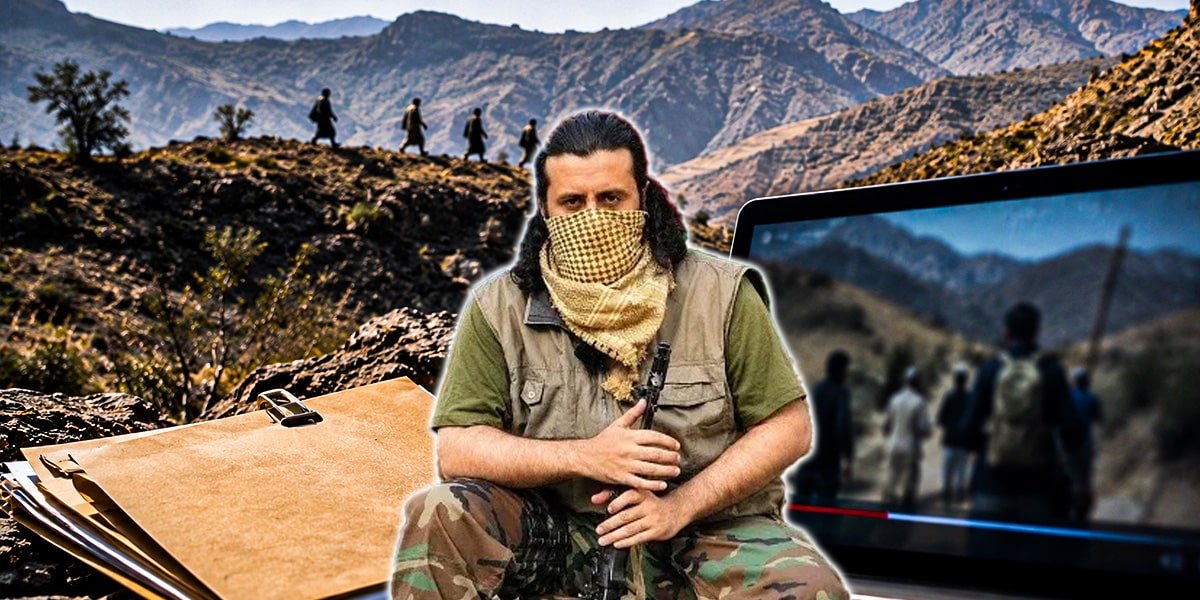
ISLAMABAD: Behind the Baloch Liberation Army’s (BLA) rhetoric of liberation lies a ruthless struggle for power, influence and control. Born out of disagreements over leadership, ideology and the direction of an earlier terror movement, the internationally designated terrorist organisation now faces an uncomfortable question: has it become the very force it once claimed to oppose?
While its leaders compete for authority and pursue their own interests under the banner of rebellion, ordinary Baloch youth are drawn into a cycle of radicalisation and violence, paying with their lives while families and communities bear the devastating consequences. The contradiction is stark: a group claiming to fight for Baloch rights is putting the lives and future of ordinary Baloch people at risk.
Leadership Changes Expose Internal Power Struggle
The BLA’s emergence was shaped by differences within the broader Baloch nationalist and militant landscape. Disagreements over leadership, political direction and the conduct of armed activities contributed to the emergence of competing factions and organisational structures.
However, the subsequent evolution of the BLA raises questions about whether those differences produced a fundamentally different approach or merely created another power structure within the same armed struggle.
Leadership changes, rivalries and competing claims of authority have remained part of the organisation’s story.
The reported appointment of Arif Mureed as commander-in-chief following the death of a previous commander, alongside references to Bashir Zeb, reflects the continuing importance of leadership and succession within the organisation. The precise circumstances and chronology of these developments require further verification.
The Leadership Question: Who Pays for the Rebellion?
Perhaps the most significant contradiction concerns the gap between the people who lead militant organisations and those who bear the consequences of their activities.
While ordinary Baloch communities continue to face insecurity, economic hardship and the consequences of prolonged violence, questions persist over the backgrounds, interests and influence of individuals occupying senior positions within militant organisations.
The criticism is that influential figures can pursue their agendas under the banner of rebellion while economically disadvantaged young people are exposed to recruitment, radicalisation and armed confrontation.
This raises a fundamental question: if the stated objective is to protect the interests of the Baloch population, why should ordinary Baloch youth pay the highest price?
The interests of an armed organisation’s leadership should not automatically be equated with the interests of the people it claims to represent.
Repeating the Very Practices That Caused the Differences
The BLA’s historical evolution presents an uncomfortable question for its leadership.
If disagreements with earlier militant structures centred on leadership conduct, organisational control, ideological differences and the direction of the struggle, has the BLA actually moved beyond those problems?
Its continued reliance on armed violence and the recurring questions surrounding leadership authority suggest that the underlying contradictions have not necessarily disappeared.
Changing commanders, organisational labels or ideological slogans does not, by itself, establish a different political approach.
The issue is not simply who commands the organisation, but whether its methods and objectives have changed in any meaningful way.
Ideology, Recruitment and the Future of Baloch Youth
The use of nationalist grievances and political slogans to mobilise young people remains another major concern.
Balochistan faces genuine challenges involving economic opportunities, governance, political representation and development. These grievances deserve serious political attention and peaceful solutions.
However, turning those grievances into justification for armed violence risks trapping another generation in a cycle of recruitment, confrontation and loss.
The most vulnerable communities have the most to lose when political disagreements become prolonged armed conflicts.
The question is whether young people are being offered a future through education, employment and political participation, or being drawn into a struggle in which leadership rivalries and competing interests continue to shape the direction of events.
A Contradiction the BLA Cannot Ignore
The BLA’s evolution from internal disagreements within an earlier movement to its present organisational structure raises a broader question about the consequences of armed politics.
An organisation cannot convincingly claim to have broken away from the failures of an earlier structure while continuing to face similar questions about leadership, power and the cost imposed on ordinary people.
Ultimately, the real measure of any movement claiming to represent a population is not its slogans, commanders or weapons, but whether its actions improve the lives and protect the interests of the people it claims to represent.
For ordinary Baloch families, the consequences of prolonged violence are real, regardless of which faction or commander claims authority.