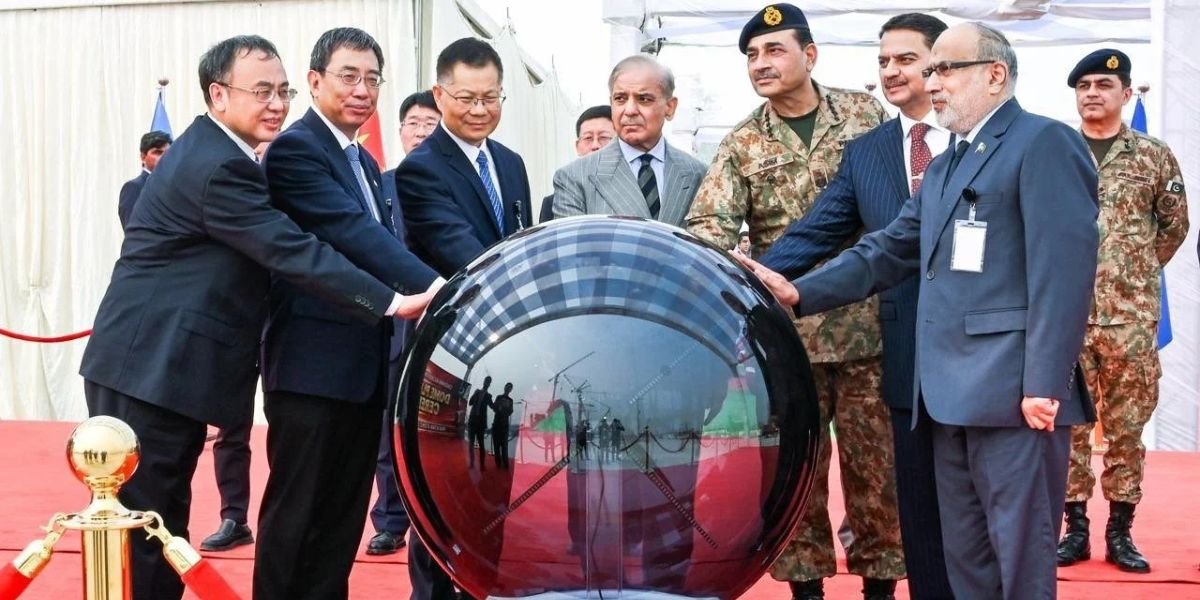
MIANWALI: Prime Minister Muhammad Shehbaz Sharif and Chief of Army Staff and Chief of Defence Forces (COAS & CDF) Field Marshal Syed Asim Munir, NI (M), HJ, attended the dome placement ceremony of the Chashma-5 (C-5) Nuclear Power Plant in Mianwali on Tuesday, marking a major milestone in Pakistan’s nuclear energy programme.
The Pakistan Atomic Energy Commission (PAEC) successfully completed the installation of the reactor building’s dome ahead of schedule, less than three and a half years after the project’s groundbreaking in July 2023.
Chashma-5 Nuclear Power Plant Reaches Major Milestone, Set to Generate 1,200 Megawatts of Electricity
Addressing the ceremony, Prime Minister Shehbaz Sharif described the development as a proud moment for Pakistan and appreciated the dedication of Pakistani and Chinese engineers, technicians and workers who contributed to the project’s progress.
He said Chashma-5 would provide clean, reliable and affordable electricity while reducing Pakistan’s dependence on imported fuels and exposure to fluctuations in international energy prices.
The prime minister also commended China’s continued cooperation in Pakistan’s nuclear energy sector, describing the project as another symbol of the longstanding strategic partnership between the two countries.
Project Expected to Become Operational in 2030
According to the PAEC, Chashma-5 will have a gross electricity generation capacity of 1,200 megawatts (MW) and is expected to begin commercial electricity generation in September 2030.
PAEC Chairman highlighted that Pakistan’s existing nuclear power plants are generating a combined 3,530 MW of electricity, helping avoid approximately 15 million tonnes of carbon dioxide emissions annually.
Nuclear energy currently accounts for around 16.6% of Pakistan’s total electricity generation, despite representing 8.6% of the country’s installed power generation capacity.
The Chashma-5 project is expected to further strengthen national energy security, expand low-carbon electricity generation and support Pakistan’s long-term economic and industrial development.