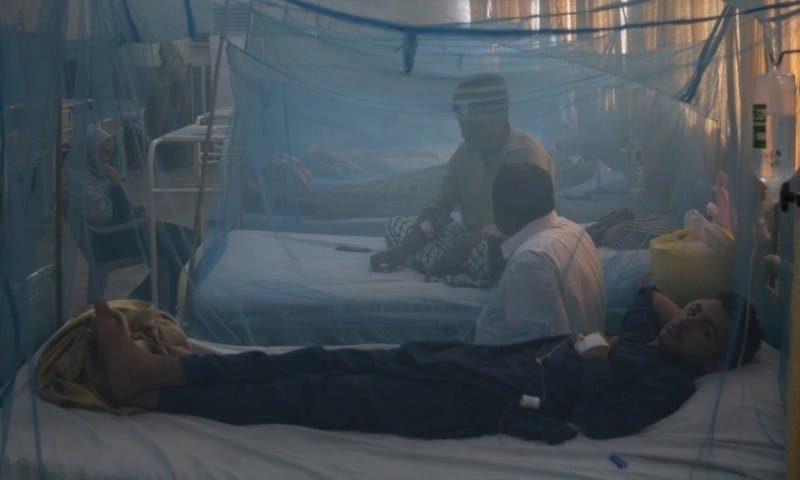
PESHAWAR: Khyber Pakhtunkhwa has reported 99 new dengue cases in the past 24 hours, taking the province’s total infections this year to 4,091, according to health data.
Kohat has emerged as the worst-affected district amid a rise in dengue infections during October, recording 2,567 cases so far this year.
According to the Integrated Disease Surveillance and Response System, the 99 cases reported in the past 24 hours represent the highest daily tally recorded in the province this year.
Media reports also indicated that a resident of Tank died of dengue in Dera Ismail Khan.
Kohat has recorded 2,567 cases, followed by Peshawar with 566, Bannu with 192, Khyber with 120, Haripur with 112, Charsadda with 75, Abbottabad with 71, Nowshera with 51, Karak with 43, Mansehra with 38, Dera Ismail Khan with 35, Swabi with 28 and Mohmand with 14. Other districts have reported fewer than 10 cases each.
Dengue Cases Rise in October
The increase in dengue infections during October has added to the challenges facing the provincial health department.
Since October 1, Kohat has reported 80 cases, Bannu 24 and Peshawar 18. The rising number of infections in Kohat has increased pressure on hospitals, prompting health authorities to step up prevention and control measures.
Health department figures show that 144 dengue cases are currently active across the province, while 3,946 patients have recovered this year.
Despite the recent increase, experts say the overall situation remains relatively better than last year, when more than 6,000 people contracted dengue across the province. Charsadda was among the worst-affected districts last year, recording more than 1,000 cases.
This year, however, Kohat has emerged as the main hotspot, with experts saying health authorities have also identified factors behind the unusually high number of infections there.
Experts Warn of Further Spread
Experts have warned that the coming weeks will be crucial for dengue prevention, as favourable weather conditions for mosquito breeding could lead to further infections.
They said the government prepares a dengue prevention plan every year and issued its 2026 action plan on time, allowing field activities to begin early in the year.
The health department has been implementing dengue action plans since 2017, reviewing previous strategies annually and making changes where necessary, according to experts.
Coordination among government departments and public awareness campaigns remain key components of the strategy, aimed at limiting dengue transmission and controlling the recurring public health threat.