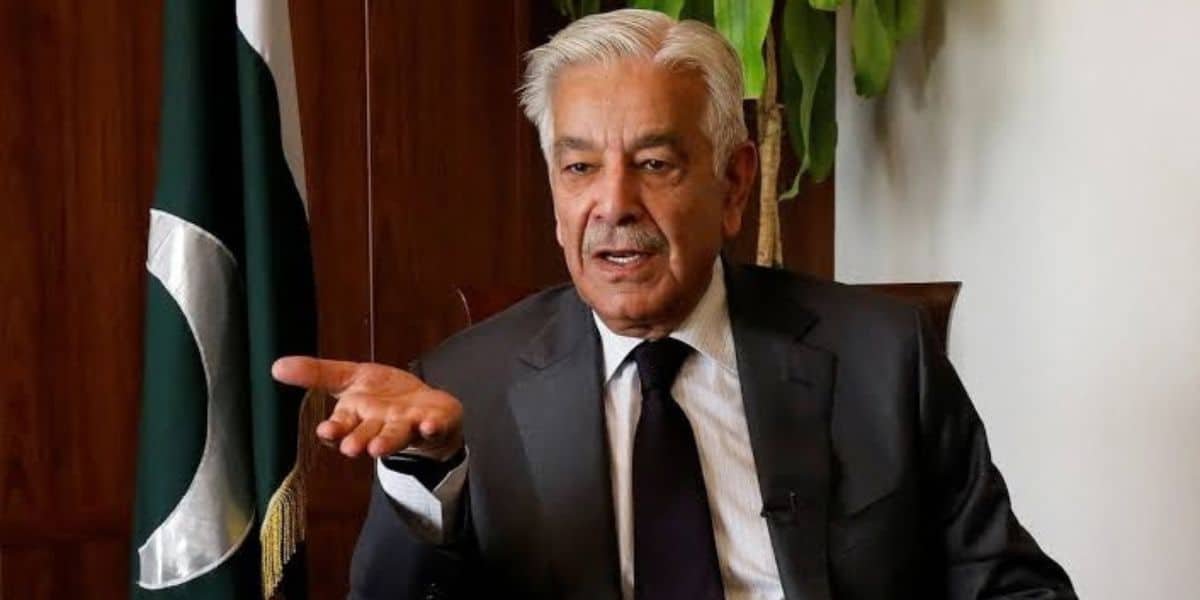
ISLAMABAD: Defence Minister Khawaja Asif has rejected Pakistan Tehreek-e-Insaf’s (PTI) claim that it was prevented from formulating a counter-terrorism policy, raising eight questions about the party’s record and approach to security issues.
Khawaja Asif questioned why PTI, which has governed Khyber Pakhtunkhwa for more than a decade and previously held power at the federal level, did not formulate or implement what it considers an effective counter-terrorism policy during its periods in government.
Khawaja Asif Questions PTI’s Counter-Terrorism Record
Khawaja Asif asked which policy or institutional restriction prevented PTI governments from implementing the National Action Plan or convening meetings of the Apex Committee.
He also questioned what additional policy, in PTI’s view, would be required to explicitly condemn terrorist groups and publicly support security forces confronting attacks.
The Defence Minister further questioned PTI’s position on security incidents allegedly originating from Afghan territory, asking why the provincial government had not, according to his claim, consistently and publicly condemned such incidents.
Khawaja Asif Raises Questions Over Afghan Border Security
According to Khawaja Asif, Pakistani security personnel and border posts have repeatedly faced firing and other security threats originating from across the Afghan border.
He also referred to allegations of cross-border infiltration and the facilitation of militant activity, questioning how frequently PTI leaders had explicitly condemned such incidents and held the Afghan authorities responsible.
The claims and characterisations remain part of a political dispute and would require verification against official records and statements.
Khawaja Asif Highlights Extortion and Smuggling Concerns
Khawaja Asif also raised concerns about extortion, smuggling and the circulation of non-customs-paid vehicles in Khyber Pakhtunkhwa.
He questioned what measures the provincial government had taken during its years in office to address these issues, which he linked to the broader security environment.
The Defence Minister challenged PTI to make details of any such measures publicly available.
Khawaja Asif Questions PTI’s Support for Security Forces
Khawaja Asif also questioned the extent of PTI leadership’s engagement with security personnel and families affected by terrorism.
He asked how frequently PTI leaders had visited military posts or publicly demonstrated solidarity with personnel engaged in counter-terrorism operations.
He also questioned whether PTI leaders had made comparable efforts to support families affected by terrorism in Khyber Pakhtunkhwa.
Khawaja Asif Questions PTI’s Use of the Term “Khawarij”
The Defence Minister further questioned why PTI leaders, in his view, had not consistently used the term “Khawarij” when referring to militant groups.
Khawaja Asif argued that no separate policy should be necessary to condemn militant violence or express support for state institutions fighting terrorism.
Khawaja Asif Raises Corruption Allegations
Khawaja Asif also raised allegations concerning governance and corruption in Khyber Pakhtunkhwa during PTI’s period in power.
He alleged that provincial resources had been misused and referred to accusations of financial irregularities reportedly made by PTI lawmakers against one another.
He also cited media statements attributed to a female National Assembly member concerning the alleged misuse of funds received from abroad.
Also Read: Khawaja Asif Questions PTI’s Role in Counterterrorism Efforts in Khyber Pakhtunkhwa
These allegations have not been independently established in the material provided and should be treated as political claims unless supported by official investigations, audit findings or court records.
Khawaja Asif Calls for Answers on PTI’s Security Position
According to Khawaja Asif, PTI’s claim that it was not permitted to formulate a counter-terrorism policy does not address the broader questions he has raised about the party’s record and public position on terrorism.
The dispute highlights continuing political differences between the government and PTI over counter-terrorism policy, security in Khyber Pakhtunkhwa and relations with Afghanistan.