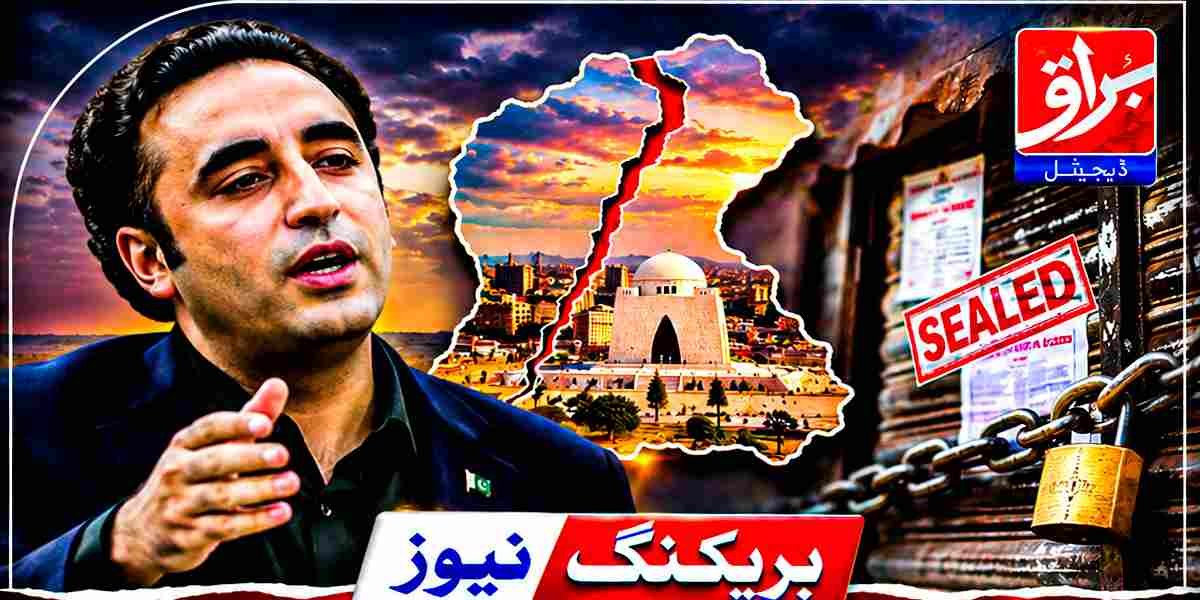
KARACHI: As demands for new provinces and smaller administrative units gain momentum across Pakistan, the Sindh government has found itself under renewed scrutiny over its record of governance and public service delivery. The latest questions have emerged after a deadly building collapse in Karachi, which prompted the provincial administration to seal 143 unauthorised buildings — raising a familiar question: why does the government appear to wake up only after a tragedy exposes its failures?
The debate over new provinces has gained fresh momentum, with federal ministers advocating administrative restructuring and MQM-P linking its demand for new provinces to what it describes as the denial of basic civic facilities and adequate representation to Karachi and other urban centres in Sindh.
143 Buildings Sealed After Karachi Tragedy: PPP’s Governance Exposed
KARACHI: The sealing of 143 under-construction buildings across Karachi has exposed the alarming scale of regulatory failure under the Pakistan Peoples Party (PPP)-led Sindh government, raising a question that goes far beyond illegal construction: how many years of unchecked violations were allowed to pass before the provincial administration finally woke up?
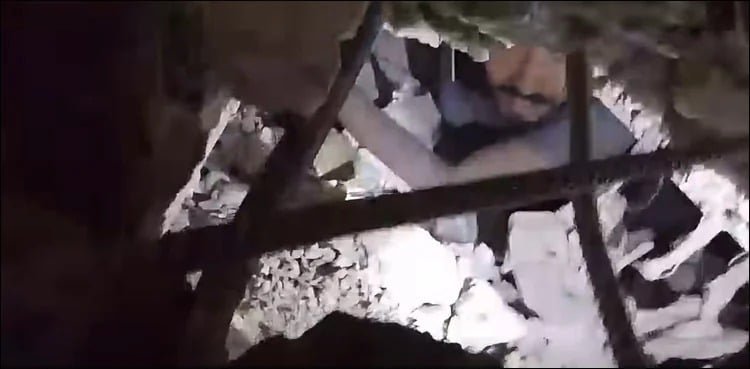
The massive crackdown came only after a six-storey under-construction building collapsed in Karachi’s Administration Society, killing six people and leaving 13 others reported missing. The tragedy exposed how a building approved for limited construction could allegedly rise to six storeys without effective intervention from the authorities responsible for enforcing building regulations.
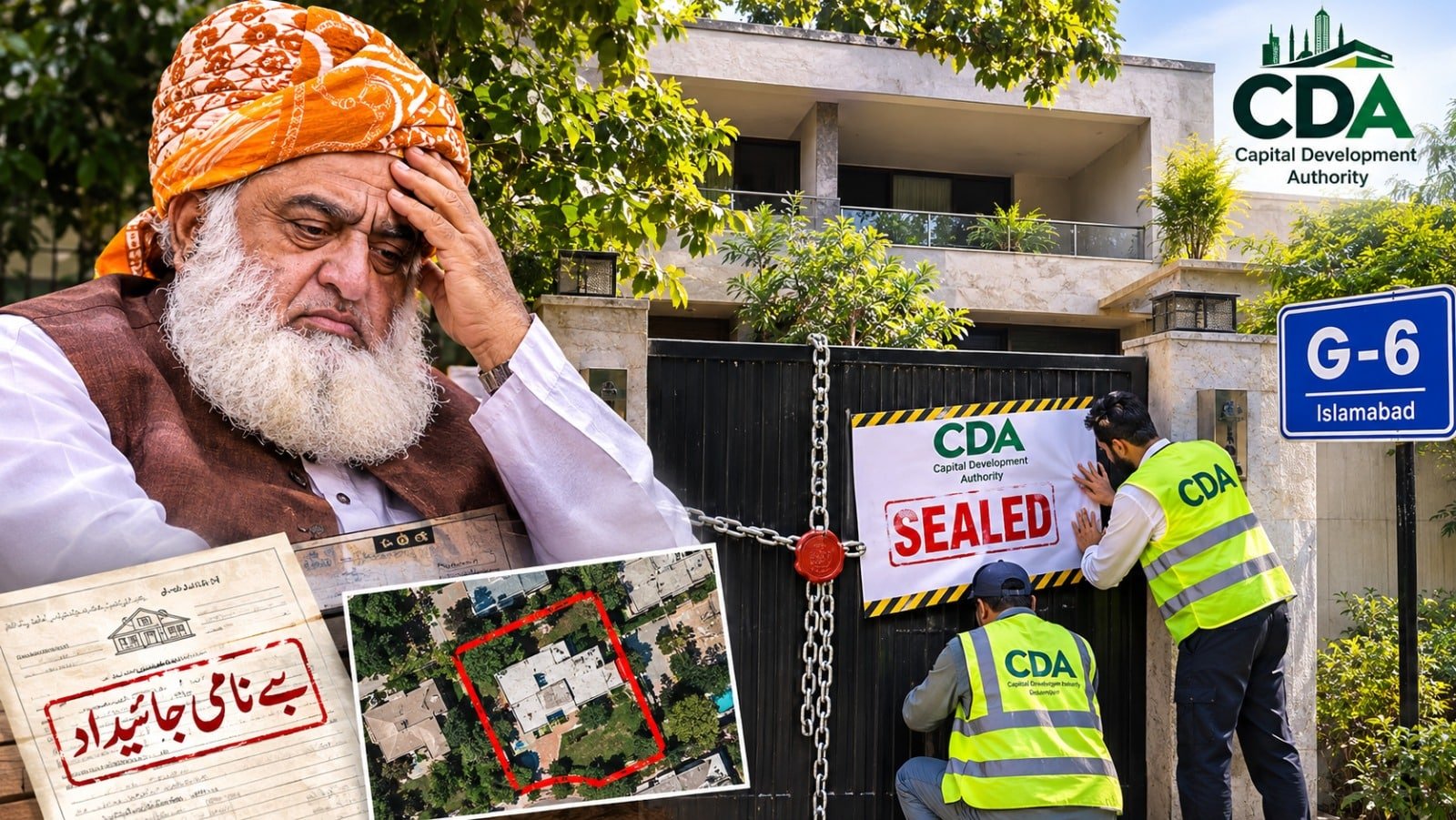
Following the incident, district administrations sealed 143 under-construction buildings across Karachi. District South recorded the highest number at 36, followed by East with 35, Korangi with 29, Central with 20, West with 12, Malir with seven and Keamari with four. The Sindh government has also ordered a province-wide halt to unauthorised construction and directed authorities to initiate demolition proceedings against illegal, unoccupied structures.
But the real question is not how many buildings the government has sealed after the tragedy. It is how many illegal structures were allowed to rise in the first place, how many complaints went unanswered and how many officials looked the other way while construction rules were openly violated.
Even Chief Minister Murad Ali Shah acknowledged that such violations could not occur without the involvement or connivance of relevant officials. His admission puts the spotlight directly on the regulatory machinery that was supposed to protect citizens. The government has since ordered the removal of senior officials and suspension of 16 Sindh Building Control Authority officers, but disciplinary announcements alone cannot replace a transparent investigation and lasting accountability.
The scale of the crackdown also raises serious questions about the PPP’s repeated claims of defending Sindh’s interests while resisting demands for new provinces and smaller administrative units. The party has consistently opposed proposals to divide Sindh, with its leadership arguing that the province’s territorial unity must be protected.
But protecting Sindh cannot simply mean protecting existing political and administrative arrangements. It must mean protecting the people who live in the province. Karachi’s persistent civic problems, weak enforcement and now the sealing of 143 buildings demonstrate why demands for more accountable and effective local administration cannot simply be dismissed as political conspiracies against Sindh.
The PPP cannot demand unquestioned loyalty to the existing system while failing to demonstrate that the system is delivering basic public safety. If 143 buildings require enforcement action after one deadly collapse, the government must explain why its regulatory institutions failed to identify and stop these violations before lives were put at risk.
The latest operation may look like decisive action, but it also exposes an uncomfortable reality: the authorities appear capable of identifying illegal construction on a massive scale only after a tragedy forces them to act.
For Bilawal Bhutto Zardari and the PPP leadership, the challenge is no longer just to defend Sindh’s geographical boundaries. It is to explain why citizens should continue to trust an administrative system that has repeatedly failed to protect them.
Sealing 143 buildings is not proof of good governance. It is a reminder of how much went wrong before the government finally acted. And if the PPP wants to oppose new administrative units in the name of protecting Sindh, it must first prove that the existing system is capable of protecting Sindh’s people.