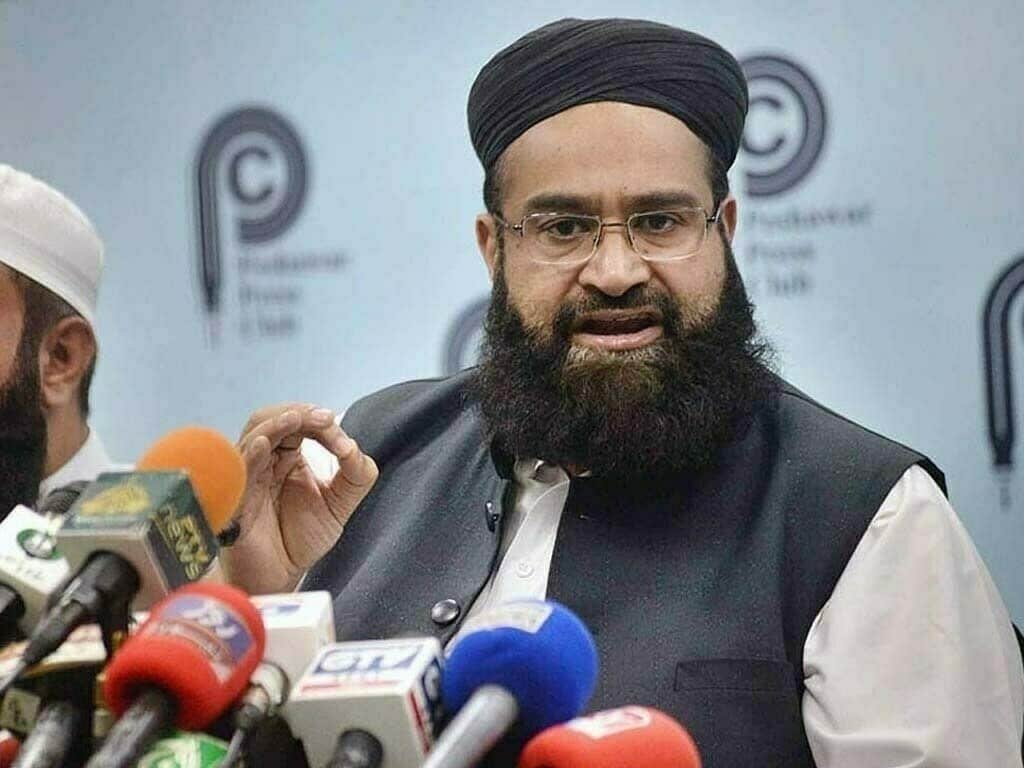
Pakistan Ulema Council Chairman and Secretary-General of the International Council for the Reverence of the Two Holy Mosques, Hafiz Tahir Mahmood Ashrafi, has said that the alleged ambitions associated with the concept of a “Greater Israel” are unacceptable, stressing that the sanctity and security of Islam’s holiest sites must be protected.
Ashrafi said that any threat directed toward the Haramain Sharifain — Makkah and Madinah — would be treated as a serious matter. He described the two holy cities as a “red line” for the Muslim world and called for unity among Muslim countries to protect Islamic holy sites.
According to Ashrafi, Makkah and Madinah hold a central religious significance for Muslims worldwide and their protection remains a shared responsibility of the Islamic world.
He emphasized that any attempt to threaten the security of the two holy cities should not be viewed through the lens of regional political or sectarian disputes. Instead, he called for collective efforts to safeguard the sanctity of the holy sites.
Ashrafi has previously made similar statements about the importance of protecting the Haramain and has linked regional security developments to concerns surrounding the concept of “Greater Israel.”
Comments on Houthi Actions
Ashrafi also addressed the actions of Yemen’s Houthi movement, arguing that their activities indicate what he described as an alignment with Israeli interests.
He rejected the characterization of the issue as a purely sectarian confrontation between Shia and Sunni Muslims or as an extension of differences between Iran and Saudi Arabia.
His remarks come amid wider regional tensions involving Israel, Iran, Yemen and other Middle Eastern countries, where competing security and political interests have continued to shape the regional environment.
The Pakistan Ulema Council chairman warned that ambitions directed against Islamic countries could pose a serious challenge to regional peace and stability.
He called for greater unity among Muslim-majority countries and emphasized the need to protect Islamic holy sites from regional conflicts and geopolitical disputes.
Ashrafi has previously argued that stronger cooperation between Pakistan and Saudi Arabia could contribute to regional security and has publicly emphasized the significance of bilateral arrangements involving the protection of the Haramain.
Ashrafi said the Muslim world remains united on the issue of protecting Islamic holy sites and urged Muslim countries to maintain solidarity in the face of emerging regional challenges.
He stressed that Makkah and Madinah should remain beyond political and sectarian disputes, reiterating that the protection of the Haramain is a matter of fundamental importance for Muslims around the world.
ALSO READ: Saudi-led Coalition Says Houthi Drone Attack Targeted Power Distribution Station in Madinah
His comments add to the ongoing debate over regional security, the future of relations among Middle Eastern states and concerns surrounding competing geopolitical ambitions in the region.