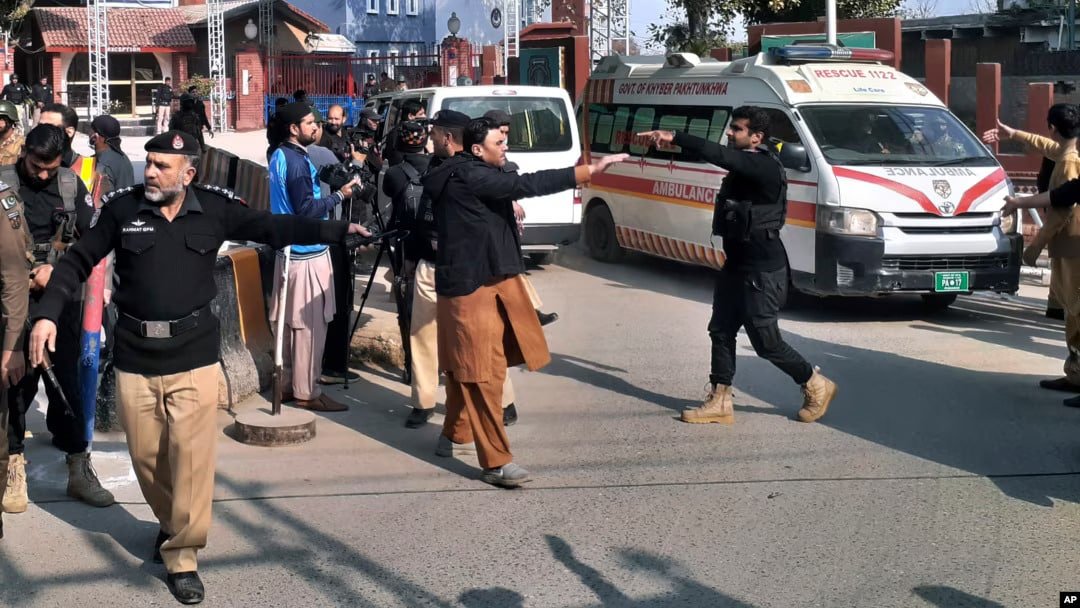
ISLAMABAD: The differences between the federal government and Pakistan Tehreek-e-Insaf (PTI) over counterterrorism issues have emerged as a major point of concern, raising fresh questions about coordination between the Centre and the province on national security.
The issue came into sharper focus during negotiations between the government and PTI, where differences reportedly remained over aspects of the National Action Plan and counterterrorism operations. Government representatives have stressed the need for effective coordination between federal and provincial authorities, while PTI negotiators have expressed reservations over certain security-related matters.
Khyber Pakhtunkhwa Remains at the Centre of Security Concerns
The disagreement carries particular significance because Khyber Pakhtunkhwa has faced a prolonged terrorism threat. Police personnel, security forces and civilians have repeatedly been exposed to militant attacks, making counterterrorism and public safety among the province’s most pressing challenges.
Against this backdrop, questions are being raised over whether political differences could undermine cooperation between provincial and federal institutions. Supporters of stronger coordination argue that counterterrorism requires a unified approach that goes beyond party politics.
The security disagreement has coincided with PTI’s decision to proceed with its planned Islamabad long march. Khyber Pakhtunkhwa Chief Minister Sohail Afridi has announced that he would lead the October 4 march, while the PTI leadership has also reaffirmed its decision to continue with the protest.
The development has intensified debate over political priorities at a time when Pakistan faces significant security and border-related challenges.
Government leaders have argued that increased political confrontation could distract from national priorities, while PPP Chairman Bilawal Bhutto Zardari has urged PTI to withdraw the march so that political forces can focus collectively on confronting terrorism.
PTI Defends Protest as a Constitutional Right
PTI maintains that its march represents a constitutional and peaceful right to protest and that its demands fall within the constitutional framework. The party has rejected the suggestion that its political activities should be suspended because of the security situation.
The federal government, meanwhile, has maintained that political disputes should be addressed through negotiations rather than street confrontation. Prime Minister’s Adviser Rana Sanaullah has also indicated that the government remains willing to keep the dialogue process open despite the planned protest.
ALSO READ: Government-PTI Talks Enter Crucial Phase as Long March Dispute Persists
The broader challenge for Pakistan is how to maintain effective counterterrorism cooperation while political tensions remain high. In Khyber Pakhtunkhwa, the protection of civilians, police officers and security personnel requires sustained coordination between provincial and federal institutions.