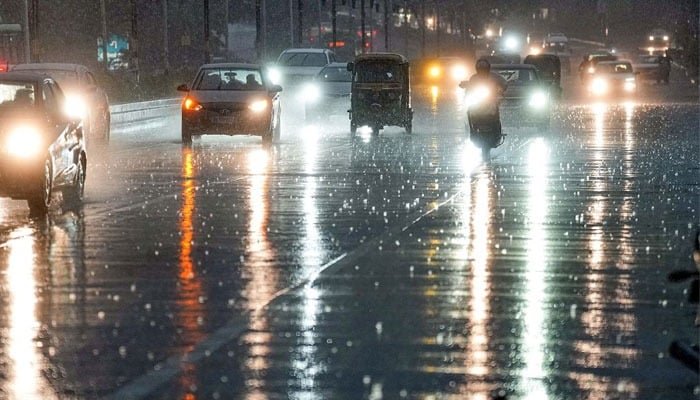
LAHORE: PDMA issues alert of rains across Punjab . According to the soureces,
the Provincial Disaster Management Authority (PDMA) has issued a high-alert weather warning across the province, predicting that moderate to heavy rainfall expected across most Punjab districts starting today through October 14.
According to official advisories from the PDMA, a fresh westerly weather system entered the upper regions of Pakistan over the weekend, bringing strong windstorms, lightnings, and precipitation across central and northern Punjab.
Widespread rain accompanied by gusty winds is anticipated in Lahore, Rawalpindi, Murree, Galliyat, Attock, Chakwal, Jhelum, Mandi Bahauddin, Gujrat, Gujranwala, Hafizabad, Wazirabad, Kasur, Sheikhupura, Sialkot, Narowal, and Mianwali.
Additionally, intermittent rain spells are expected across Faisalabad, Khushab, Bhakkar, Sargodha, Jhang, and Toba Tek Singh.
Due to the risk of landslides triggered by continuous downpours in Murree, Galliyat, and adjacent hilly terrains, the authority has instructed all relevant line departments, local administrations, and rescue teams to remain vigilant and execute precautionary measures.
The PDMA emphasized that public safety remains paramount while moderate to heavy rainfall expected across most Punjab districts.
Dynamics and Significance of Winter Rains in Pakistan
Winter precipitation in Pakistan represents a crucial component of the country’s annual hydrometeorological cycle, accounting for approximately 30% to 35% of total annual rainfall.
Unlike summer monsoons driven by easterly currents, winter precipitation is primarily caused by Western Disturbances—extratropical weather systems originating over the Mediterranean Sea and Atlantic Ocean.
As these low-pressure systems travel eastward across the Middle East, Iran, and Afghanistan, they enter Pakistan’s western and northern skies between December and March.
These rains play a pivotal role in Pakistan’s agricultural productivity and ecological balance.
Winter precipitation provides vital moisture for rainfed (Barani) agriculture, particularly supporting the sowing and early growth stages of important Rabi crops such as wheat, barley, and pulses.
Additionally, winter snowfall across northern mountain ranges acts as a critical natural reservoir, replenishing glaciers and feeding major river basins like the Indus Basin during the spring melt to sustain power generation and canal irrigation systems.
However, changing global climate patterns have introduced significant variability to winter precipitation in Pakistan.
Shifted seasonal timing, short-duration high-intensity downpours, and delayed winter rains pose growing risks such as severe dry spells, urban flooding, and localized landslides in mountainous regions.
ALSO READ: PDMA Issues Alert for Eighth Spell of Monsoon Rains
Adapting water management strategies and disaster preparedness protocols remains essential to harness the hydrological benefits of these winter weather patterns while mitigating climate risks.