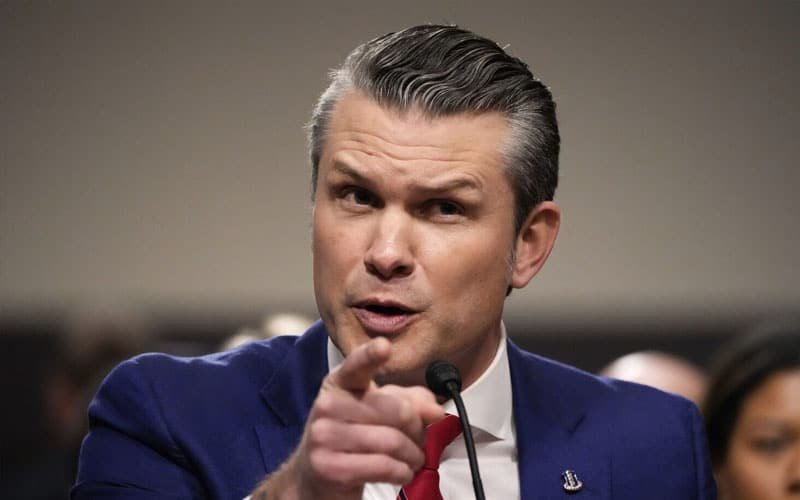
TENNESSEE: The US Defense Secretary Pete Hegseth warned Iran on Saturday that it must choose between negotiating over its nuclear ambitions and facing potentially devastating American military action, delivering a message that combined diplomatic pressure with the threat of force.
Hegseth said Tehran would soon have to decide whether to make concessions through negotiations or risk a military response from Washington.
Hegseth said the United States was prepared to act swiftly if necessary, presenting military strength as an essential tool for bringing adversaries to the negotiating table.
The statements placed responsibility on Tehran to respond to Washington’s demands concerning its nuclear activities.
However, the published account of his speech did not identify a specific deadline, outline a proposed agreement or announce a new military operation.
The warning linked the possibility of negotiations directly to American military capabilities, reinforcing the administration’s position that diplomatic engagement would be backed by the potential use of force.
The defense secretary accused Iran of developing a substantial conventional missile stockpile to discourage military intervention while pursuing what he described as nuclear ambitions.
He also alleged that Tehran finances Hezbollah and Yemen’s Houthi movement, connecting those relationships to wider American concerns about security across the Middle East.
Hegseth said Washington had taken steps intended to deter attacks against American personnel and shipping. His comments presented Iran’s missile capabilities and support for armed groups as connected security challenges.
The allegations indicated the American administration’s assessment. The cited reports did not include an immediate Iranian response to his latest remarks.
Trump’s Wider Strategy Extends to Latin America
Turning beyond the Middle East, Hegseth described President Donald Trump’s foreign policy as an effort to strengthen American influence and confront competing powers across several regions.
He mentioned Washington’s campaign against drug cartels and its objective of limiting Iranian, Chinese and Russian influence in Latin America.
Hegseth said the American operation there would have consequences lasting for generations. He also highlighted the country’s oil resources when explaining its strategic importance.
The statements connected pressure on Tehran with a broader policy of strengthening military partnerships and American influence in the Western Hemisphere.
The address offered a forceful statement of Washington’s priorities, while leaving the timing, terms and next steps of any negotiations with Iran unspecified.