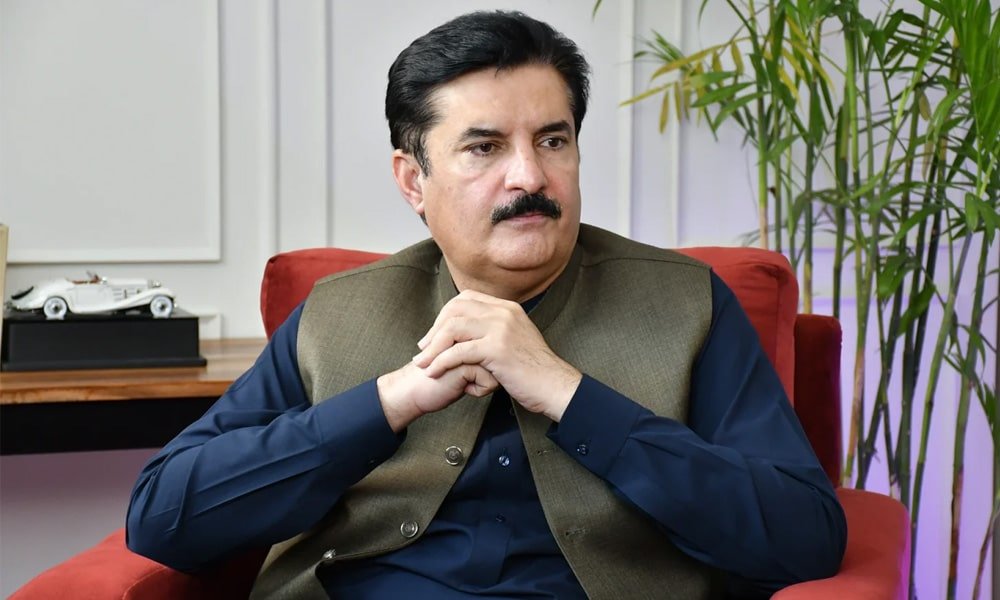
PESHAWAR: Khyber Pakhtunkhwa Governor Faisal Karim Kundi has empowered deputy commissioners to order arrests and detentions under the Maintenance of Public Order (MPO) Ordinance 1960 in a move aimed at addressing the province’s law and order situation.
According to a notification issued by the Khyber Pakhtunkhwa Home and Tribal Affairs Department, the governor has delegated these powers to district administrations under Section 3(1) of the MPO Ordinance 1960.
The decision comes amid a series of administrative and security measures following the imposition of emergency and governor’s rule in the province. These measures include the formation of an 11-member advisory council headed by the governor, the deployment of the military to assist the civil administration, and the establishment of a special administrative framework for 12 districts.
Under the notification, the relevant deputy commissioner will take immediate action upon receiving a case from the district police officer (DPO).
The notification states that the decision was taken in the wake of the emergency declared in the province on October 11. The move aims to reduce administrative delays and ensure timely action on law and order matters.
Governor Faisal Karim Kundi said the delegation of powers would expedite proceedings in cases registered under Section 3 of the MPO at the district level.
He directed deputy commissioners to exercise their powers in accordance with the Constitution and the law, warning against any misuse of authority. He said ensuring public safety and security remained the top priority.
Separately, authorities launched an anti-encroachment operation three days ago around Qamar Din in Garhi Qamar Din, Kohat Road, Pushtakhara Chowk and the PDA Toll Plaza along Peshawar’s Ring Road. Dozens of illegal structures and shops were demolished during the operation.
During an inspection of the operation in Garhi Qamar Din, the governor announced that the anti-encroachment campaign would not remain limited to Peshawar but would be extended to other parts of the province.
He said no one would receive preferential treatment on the basis of political influence or social status.