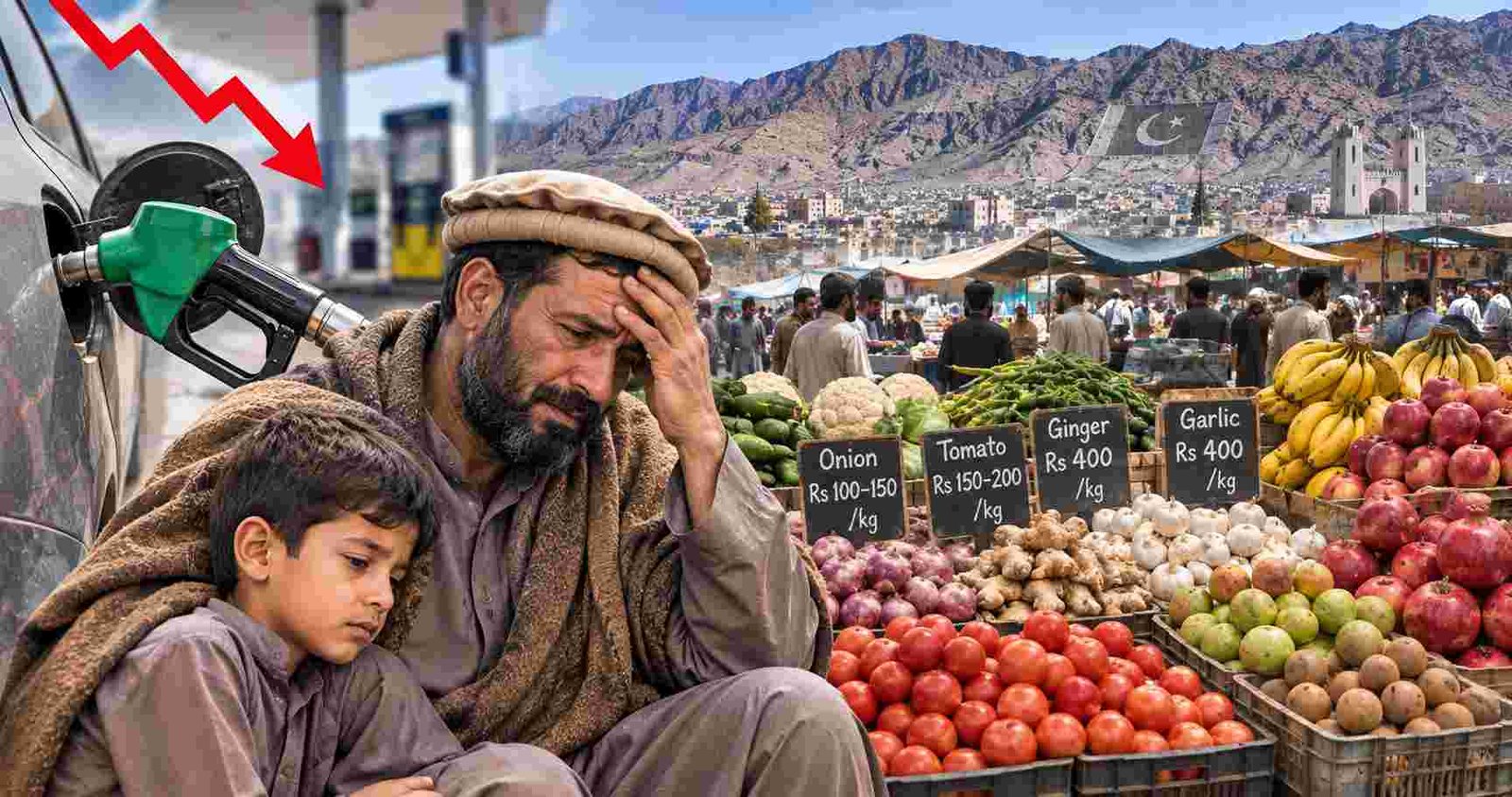
QUETTA: Despite repeated cuts in petroleum prices, residents of Quetta continue to struggle with soaring food costs, as expensive vegetables and fruits put even two daily meals beyond the reach of many low-income households.
The government reduced petrol and diesel prices six consecutive times during November 2026. Between November 3 and 11, petrol prices fell by a cumulative Rs39.91 per litre, while diesel became cheaper by Rs31.96 per litre.
However, the reductions have yet to translate into significant relief for consumers in Quetta, where essential food items remain expensive.
According to market sources, retailers are selling onions for Rs100 to Rs150 per kilogram and tomatoes for Rs150 to Rs200. Garlic and ginger cost around Rs400 per kilogram, while seasonal vegetables range from Rs200 to Rs250.
Fruit prices have also remained beyond the reach of many households. Bananas sell for Rs150 to Rs200 per kilogram, guavas for Rs250 to Rs300, sapodillas for Rs170 to Rs230, apples for Rs300 to Rs350 and pomegranates for Rs500 to Rs800.
A resident Muhammad Shoaib said falling fuel prices had brought little relief because food items remained expensive.
“Everything has gone beyond the purchasing power of ordinary people,” he said, adding that daily-wage workers now struggle to manage household expenses and afford two meals a day.
Another resident, Ahmadullah, said soaring prices had made even basic food items difficult to afford.
He added that many families could no longer buy fruit regularly, while expensive vegetables and meat had further strained household budgets.
Meanwhile, residents have questioned the effectiveness of government measures against overpricing and hoarding. They said administrative raids and enforcement claims had failed to bring profiteers under control or provide lasting relief to consumers.
The situation has raised a key question: why have lower fuel prices not translated into cheaper food for ordinary households?
Analysts, however, caution that falling petroleum prices do not automatically translate into equivalent reductions in fruit and vegetable prices.
Although cheaper fuel can reduce transportation and distribution costs, food prices also depend on seasonal production, supply and demand, wholesale market rates and profit margins across the supply chain.
The issue carries particular significance for Quetta, which receives a large share of its food supplies from other parts of the country. Transportation costs and weaknesses in supply-chain monitoring can therefore influence retail prices.
Experts say the district administration must go beyond shop inspections, fines and arrests to address the problem effectively.
They stress the need for consistent monitoring from wholesale markets to retail outlets, strict enforcement of official price lists and action against hoarding and excessive profiteering.
Without effective oversight across the supply chain, falling petroleum prices may offer little meaningful relief to consumers already struggling with the rising cost of living.