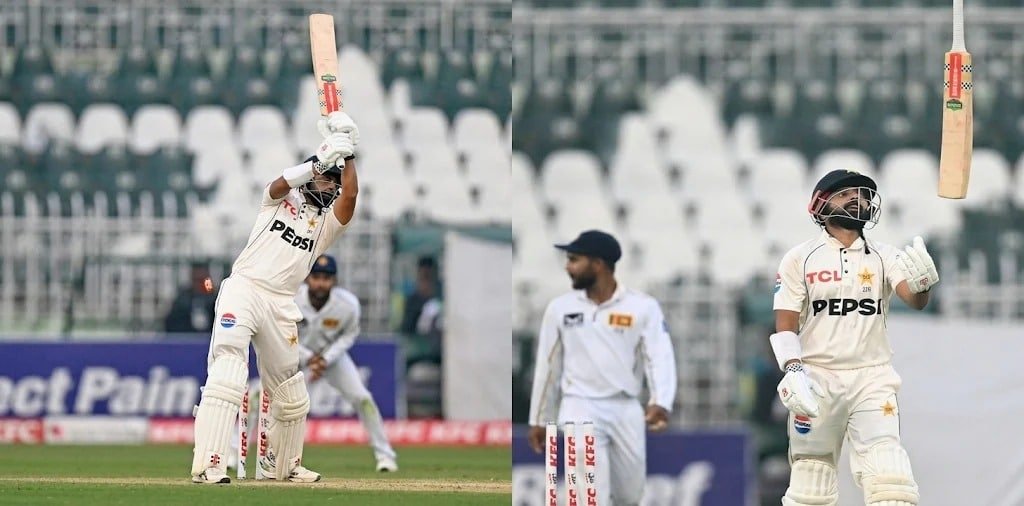
RAWALPINDI: Saud Shakeel gets an unwanted record to his name.
According to the details, Pakistan’s middle-order batter Saud Shakeel has etched his name into a rare yet heartbreaking chapter of cricket history, becoming only the fifth player in the 150-year history of the longest format to be dismissed in the Saud Shakeel nervous nineties in both innings of a Test match category.
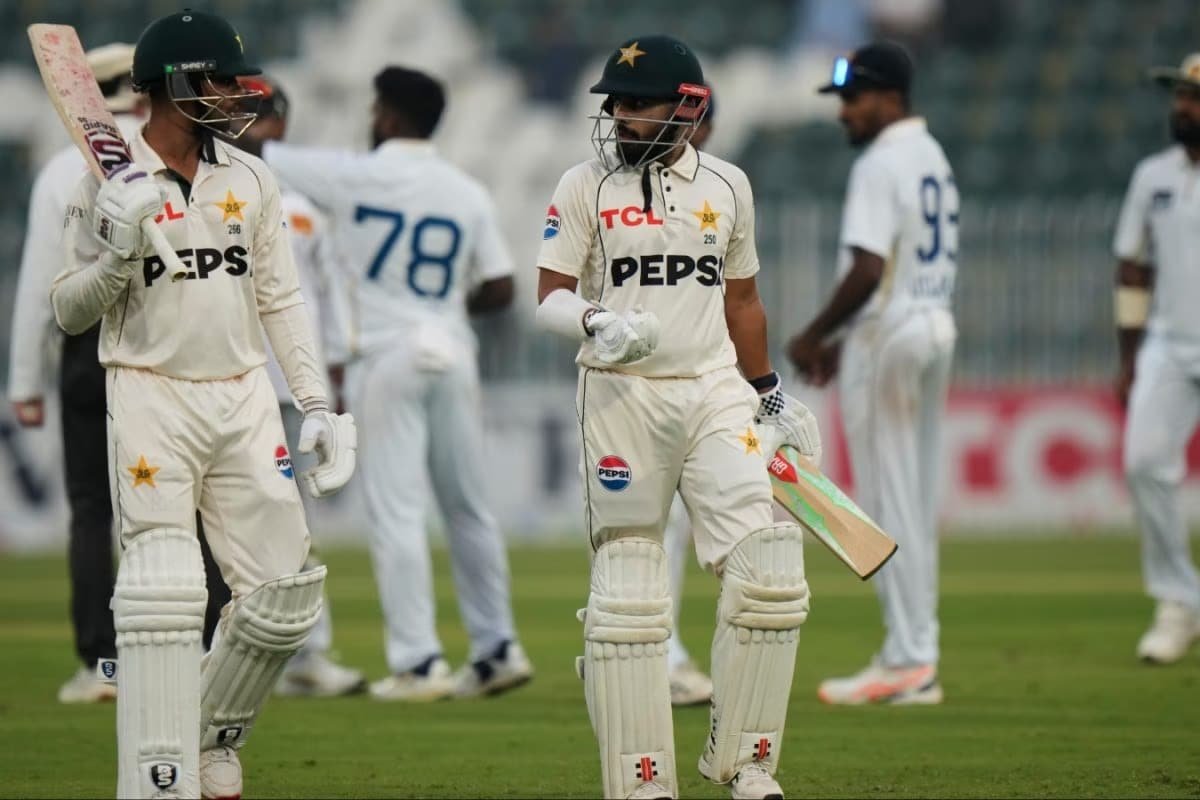
During the first Test against Sri Lanka at the Rawalpindi Cricket Stadium, the left-handed batter fell agonizingly short of a century twice.
After scoring a composed 93 in the first innings, Shakeel followed it up with 97 in the second, marking only the sixth instance overall where a batter was dismissed between 90 and 99 in both turns at the crease in a single Test.
Before Shakeel, only four batters had endured this agonizing double dismissal. The very first instance occurred in January 1902 against England in Adelaide, where Australia’s Clem Hill scored 98 and 97, leaving him with an aggregate of 195 runs that still stands as the highest in this exclusive club.
Later, in June 1921 at Lord’s against Australia, England’s Frank Woolley fell for 95 and 93.
West Indies legend Gordon Greenidge remains the only player to suffer this fate twice—first in March 1977 against Pakistan in Georgetown with scores of 91 and 96, and again in February 1980 against New Zealand in Christchurch where he made 91 and 97.
Prior to Shakeel, the most recent occurrence was in August 2009 in Colombo, when Sri Lanka’s Mahela Jayawardene was dismissed for 92 and 96 against New Zealand.
With a match aggregate of 190 runs, Shakeel now holds the second-highest total among batters who have suffered the Saud Shakeel nervous nineties in both innings of a Test match misfortune, trailing only Clem Hill’s 195.
Unique Records in Test Cricket
Across nearly a century and a half, Test cricket has produced a fascinating collection of quirky and statistical anomalies that showcase the unpredictable nature of the five-day game.
Beyond twin nervous nineties, cricket history features extraordinary feats such as Jim Laker and Anil Kumble taking all ten wickets in a single innings, and Wilfred Rhodes scoring over 30,000 first-class runs while batting at every position from number one to eleven in Test matches.
Conversely, there are bizarre records of misfortune, including Marvan Atapattu’s unforgettable start to his career with five ducks in his first six innings, and batters like Chris Martin and B.S. Chandrasekhar who finished their careers with more Test wickets than total runs scored.
ALSO READ: Rawalpindi Test Ends in a Draw: Saud Shakeel and Ghazi Ghouri Rescue Pakistan
Even the Saud Shakeel nervous nineties in both innings of a Test match milestone highlights how razor-thin margins in red-ball cricket can turn potential twin centuries into unforgettable statistical footnotes.