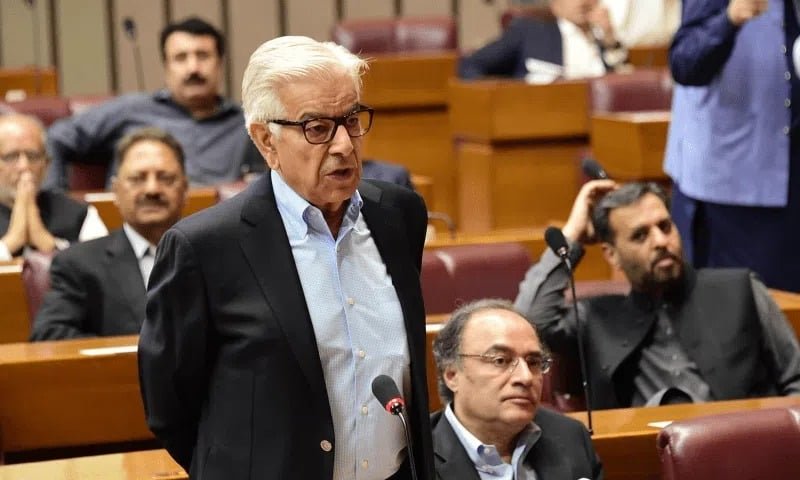
Pakistan’s political landscape could undergo a significant transformation in 2026 as Defence Minister Khawaja Asif has indicated that consultations on creating new provinces are moving towards a possible consensus among political stakeholders.
Asif said that discussions on the issue had been continuing for several weeks and expressed optimism that an agreement could be reached in the near future.
He described the proposed administrative changes as a potentially progressive development for the country.
In this regard, President Asif Ali Zardari, Prime Minister Shehbaz Sharif and Interior Minister Mohsin Naqvi, Asif said he did not have access to confidential details of the discussions.
However, he believed that consultations were moving towards building consensus on the creation of new provinces.
The defence minister said the process was approaching its concluding stages, although he did not disclose how or when a final decision might be announced.
He suggested that Pakistan could witness a new administrative arrangement during 2026, potentially bringing changes to the country’s political structure.
The debate gained momentum following meetings between senior government officials.
Interior Minister Mohsin Naqvi met President Zardari in Nawabshah on Thursday, while the president subsequently held discussions with Prime Minister Shehbaz Sharif on Saturday.
Although the Presidency denied reports that the creation of new provinces had been discussed during the meeting between Zardari and Naqvi, official sources indicated that the president and prime minister had agreed to follow constitutional provisions regarding the establishment of new provinces or administrative units.
Sources also maintained that Parliament could not be bypassed in deciding whether a referendum should take place or determining the questions presented to the public.
Asif rejected the impression that his support for new provinces was being driven by pressure from particular quarters.
He said he had advocated a stronger local governance system for years, arguing that Pakistan needed administrative arrangements capable of responding more effectively to public needs.
According to the minister, smaller administrative units could improve governance, public service delivery and administrative efficiency.
He also regretted that provisions concerning local governments under the 18th Amendment had not been fully implemented.
Asif maintained that the proposed changes should benefit all provinces and the country as a whole rather than being viewed as a political threat.
The defence minister acknowledged that political parties could have different positions on the matter but argued that sufficient political space should be provided to develop an agreement.
He said minor adjustments and mutual concessions could help achieve consensus, adding that no political party should have a decision imposed upon it.
Commenting on the possible political implications for PTI founder Imran Khan, Asif suggested that supporting the proposed administrative arrangement could potentially create an opportunity for the former prime minister to return to mainstream politics.
He advised Khan not to oppose the idea, arguing that he had no fundamental objection to the creation of new provinces.
Sindh’s Opposition Remains a Major Challenge
Despite the government’s apparent efforts to develop consensus, the proposed changes face political resistance, particularly in Sindh.
Pakistan Peoples Party leadership has consistently opposed dividing Sindh into smaller provinces, referring to a unanimous resolution passed by the Sindh Assembly against such a move.
ALSO READ: Government Accelerates Plans to Grant Islamabad Special Administrative Status
Sindh Chief Minister Murad Ali Shah recently reiterated that the division of Sindh was neither legally nor politically acceptable, although he acknowledged that the PPP had no objection to creating new provinces elsewhere in the country if their residents supported the proposal.
Asif has previously suggested that Pakistan could have as many as 12 provinces if administrative requirements, rather than linguistic, ethnic or political considerations, determined their boundaries.
However, the PML-N has yet to announce a formal policy, maintaining that its position will be presented when the matter reaches Parliament.