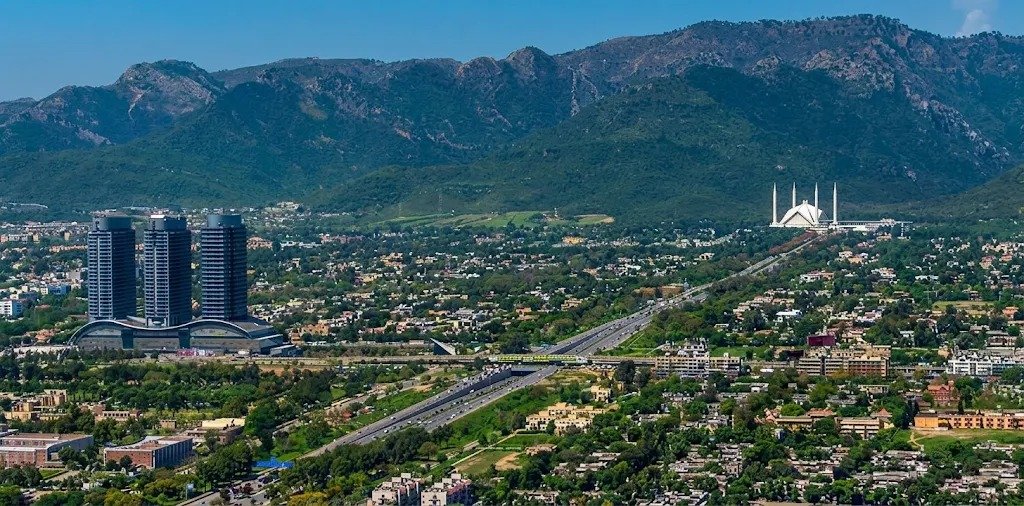
ISLAMABAD: The government tends to grant Islamabad a special administrative status.
According to the details, the federal government has renewed and accelerated its efforts to grant Islamabad special administrative status, aiming to overhaul the capital’s governance and municipal structure.
Constitutional, legal, and administrative experts are expected to submit their final recommendations to the Prime Minister shortly, after which formal implementation will proceed following executive approval.
According to official sources, the proposed administrative framework initially faced reservations from both the Prime Minister’s House and the Ministry of Interior.
To address these concerns, authorities have decided that the new administrative setup will remain strictly subordinate to the federal government and will not function as a parallel or conflicting authority.
Under the proposed model to grant Islamabad special administrative status, a Mayor will serve as the head of the new administrative unit.
The plan outlines a 25-to-30-member assembly whose representatives will be chosen through direct elections.
However, the Mayor of Islamabad will not be elected directly by the public; instead, the newly formed assembly will elect the Mayor. Core civic responsibilities—including healthcare, education, and other municipal services—will fall under the jurisdiction of this administrative body.
Alongside administrative restructuring, the proposal includes significant changes to the capital’s geographical boundaries.
Under the expansion plan, adjoining areas from Khyber Pakhtunkhwa and Punjab—specifically parts of Haripur, Rawalpindi, and Murree—are under consideration for integration into the federal territory as part of the broader initiative to grant Islamabad special administrative status.
Special Administrative Position of World Capitals
Globally, capital cities frequently hold distinct legal and administrative statuses separate from standard provinces or states to balance local governance with national security and federal operations.
In the United States, Washington, D.C., operates as a federal district directly under the jurisdiction of the U.S. Congress, possessing a locally elected mayor and council while remaining outside any state’s authority.
Similarly, Australia’s Canberra is governed within the Australian Capital Territory (ACT), featuring self-governance through a local legislative assembly alongside federal oversight.
In India, the National Capital Territory (NCT) of Delhi functions as a union territory with a partially autonomous elected government, though key areas such as land, police, and public order remain under the central government.
ALSO READ: Islamabad tightens grip on public transport: New traffic orders raise questions across the capital
These tailored frameworks prevent jurisdictional conflicts between national and regional authorities, ensuring seamless diplomatic operations, centralized security management, and efficient delivery of municipal services in a nation’s political hub.