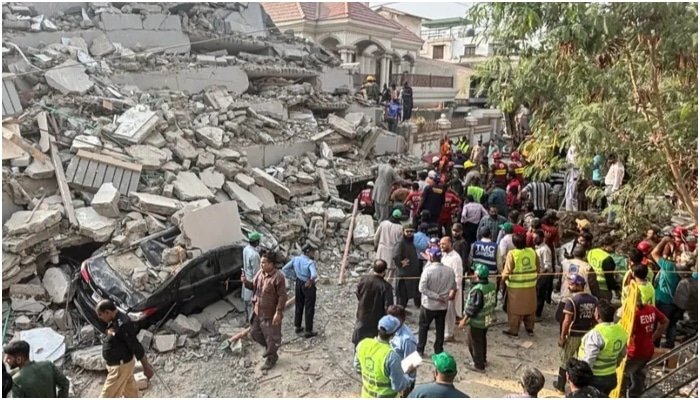
KARACHI: The Karachi Admin Society building collapse death toll rises to seven following the recovery of another body from the rubble of the fallen structure.
Rescue officials confirmed that the deceased has been identified as 40-year-old Najeebullah.
Search and rescue operations remain underway at the site. Authorities stated that heavy machinery is being deployed with extreme caution due to fears that more individuals may still be trapped beneath the debris.
According to rescue officials, 14 people were injured in the incident, while 13 others remain missing.
Meanwhile, Association of Builders and Developers (ABAD) Chairman Hanif Gohar expressed deep regret over the tragic incident in Karachi Administrative Society.
He stated that ABAD has consistently raised its voice against illegal constructions, yet authorities failed to pay heed.
Addressing the Sindh Chief Minister’s recent directive to seal all under-construction buildings, Gohar noted that action is unfairly targeting legitimate builders.
He emphasized that relevant departments should distinguish between legal and illegal projects, warning that if sealed legal constructions are not unsealed by Monday, builders will halt business operations and take to the streets in protest.
As the Karachi Admin Society building collapse death toll rises to seven, authorities face mounting pressure to ensure accountability and expedite search efforts.
Deadly Building Collapses in Karachi
Deadly building collapses have become a recurring tragedy in Karachi, frequently claiming dozens of lives and highlighting severe lapses in urban governance and construction oversight.
Over the past several years, multiple residential and commercial structures across densely populated neighborhoods—including Lyari, Golimar, Liaquatabad, and Nazimabad—have caved in without warning.
Investigators and urban planners consistently point to a combination of factors behind these disasters: rampant illegal construction, unauthorized addition of extra floors on weak foundations, the use of substandard building materials, and a lack of routine structural inspections.
Often, buildings declared dangerous by the Sindh Building Control Authority (SBCA) remain occupied due to inadequate relocation mechanisms and poor enforcement of evacuation notices.
Furthermore, delayed response times, narrow alleyways hindering heavy machinery access, and insufficient specialized urban search-and-rescue equipment frequently compound the casualties during emergencies.
Also Read: Eleven Members of Same Family Killed in Faisalabad Road Accident
Each collapse triggers temporary crackdowns, committee formations, and sealing drives against under-construction sites; however, systemic regulatory reforms and strict accountability for negligent officials and builders remain largely unimplemented, leaving thousands of residents vulnerable to similar catastrophes.