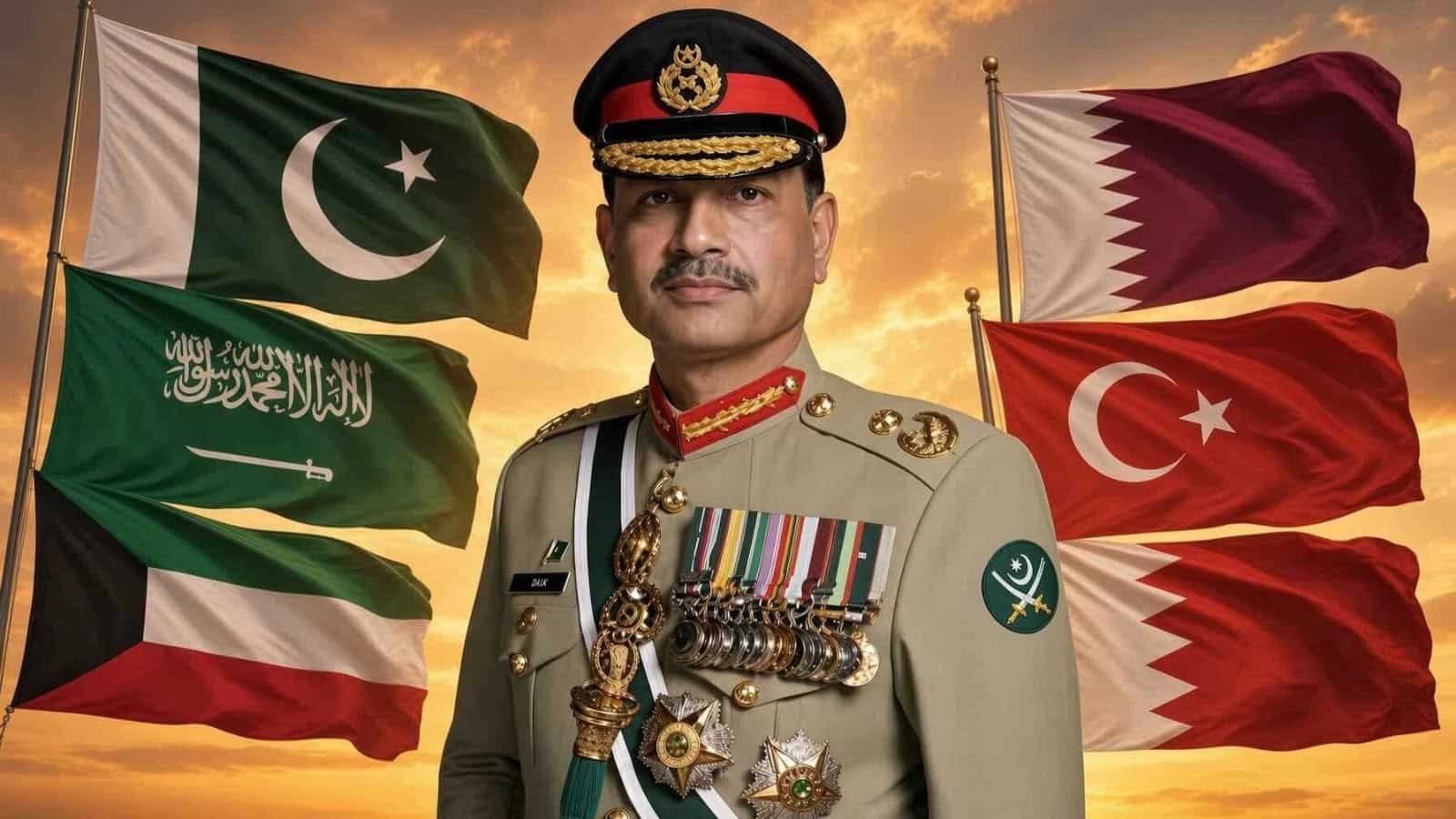
ISLAMABAD: From safeguarding Pakistan’s national security to opening diplomatic channels between rival powers, Field Marshal Asim Munir is increasingly playing a prominent role in the Middle East’s search for stability. His latest diplomatic initiative brought Iran, Saudi Arabia, Pakistan and Turkiye together in Tehran, placing Islamabad at the centre of a renewed regional dialogue.
As Chief of Army Staff and Chief of Defence Forces, Asim Munir has a central role in Pakistan’s defence and security policy. His involvement in regional diplomacy has also brought renewed attention to Islamabad’s efforts to ease tensions between rival powers.
At a time when tensions across the Middle East threaten regional stability, Pakistan has sought to use its relationships with Washington, Tehran, Riyadh and Ankara to keep diplomatic channels open. Munir has become a prominent face of that effort, using high-level engagements to encourage dialogue where confrontation threatens to deepen.
His latest diplomatic initiative came on October 26, when senior officials from Iran, Saudi Arabia, Pakistan and Türkiye met in Tehran to discuss regional security and cooperation. The meeting brought together Iranian security chief Mohsen Rezaei, Saudi Defence Minister Prince Khalid bin Salman, Munir and Turkish intelligence chief Ibrahim Kalin.
Significantly, Iranian Foreign Ministry spokesperson Esmaeil Baghaei confirmed that the proposal for the four-country meeting had emerged during Munir’s recent visit to Tehran and had received Iran’s approval. Tehran described the initiative as a practical step towards strengthening regional security arrangements.
The four countries subsequently agreed to continue dialogue to enhance cooperation on peace and security, giving the initiative a concrete diplomatic outcome rather than leaving it as a symbolic gathering.
From Pakistan’s Defence Chief to a Regional Diplomatic Facilitator
Filed Marshal’s growing diplomatic profile reflects a broader effort by Pakistan to turn its strategic relationships into channels for conflict prevention.
His role extends beyond traditional military engagement. Pakistan has been involved in efforts to facilitate communication between Iran and the United States, seeking a path away from renewed confrontation and towards negotiations.
The diplomatic effort has gained urgency as disagreements over sanctions, maritime security, Iran’s nuclear programme and military pressure have complicated attempts to establish a durable settlement.
An interim agreement reached in June through mediation involving Pakistan and Qatar offered a route towards broader negotiations. Subsequent tensions, however, demonstrated how fragile such arrangements can be and how difficult it remains to bridge the differences between Washington and Tehran.
Against this backdrop, Asim Munir’s engagement with Iranian leaders and his efforts to bring regional stakeholders into a common forum have helped keep diplomacy in the conversation.
The challenge is formidable: Pakistan must maintain working relations with countries whose security interests do not always align, while persuading regional powers that dialogue and cooperation can offer more sustainable outcomes than escalation.
Bringing Iran, Saudi Arabia and Turkiye to the Same Table
One of the most significant aspects of the Tehran initiative was the participation of Iran and Saudi Arabia alongside Pakistan and Türkiye.
Relations among Middle Eastern powers have long been shaped by competing security priorities, regional rivalries and conflicts extending beyond their borders. Bringing senior representatives together therefore offered an opportunity to discuss shared threats and explore areas of cooperation.
The meeting addressed regional security amid the repercussions of the conflict involving Iran, the United States and Israel, as well as wider concerns over Palestine and Lebanon.
Saudi Arabia’s participation was particularly important given the renewed security pressures facing the kingdom, including attacks attributed to Yemen’s Houthi movement. The wider regional conflict has increased the risks of confrontation spreading across borders and threatening critical infrastructure and trade routes.
For Pakistan, the initiative also demonstrated the value of maintaining diplomatic access to different regional capitals. Rather than relying exclusively on military deterrence, Islamabad has sought to position dialogue as a means of reducing the risk of further escalation.
The meeting did not resolve the region’s conflicts, but the agreement to continue consultations created an additional channel through which the participating countries can pursue common security objectives.
The Makkah Defence Pact and the Search for Collective Security
Pakistan’s regional engagement has also been shaped by the Makkah Joint Defence Agreement involving Pakistan, Saudi Arabia and Turkiye.
The agreement provides a framework for closer defence cooperation among the participating countries. Its significance lies in the effort to strengthen coordination and deterrence while responding to an increasingly interconnected regional security environment.
The Tehran meeting brought the three partners into direct engagement with Iran, extending the diplomatic conversation beyond the agreement’s signatories.
This distinction matters. A defence arrangement and a diplomatic dialogue serve different purposes, but they can operate alongside each other: credible security cooperation may support deterrence, while sustained engagement can help reduce misunderstandings and prevent disputes from escalating.
There has been discussion about broader regional interest in such security arrangements. However, any additional countries joining the agreement would require confirmation through official announcements rather than assumptions based on diplomatic participation.
The larger strategic question is whether regional powers can build a framework that combines national defence, mutual consultation and practical mechanisms for managing disputes.
Strength at Home, Diplomacy Abroad
Asim Munir’s diplomatic activities remain closely connected to his primary responsibilities as Pakistan’s senior military commander.
The country faces persistent security challenges, including militant violence, border tensions and the need to protect critical infrastructure. Pakistan’s military leadership continues to play a central role in national defence and security coordination.
The government and military leadership have repeatedly emphasised preparedness, professional capability and the protection of Pakistan’s sovereignty. Supporters of Munir’s leadership view these responsibilities and his international engagements as complementary dimensions of the same strategic objective: a secure Pakistan with the diplomatic space to pursue its national interests.
Yet the relationship between military strength and peace requires careful balance. Deterrence can discourage aggression, but lasting stability also depends on political engagement, regional cooperation and the willingness of opposing sides to make difficult compromises.
Munir’s expanding diplomatic role reflects Pakistan’s attempt to combine these instruments at a moment when regional crises are increasingly interconnected.
A Symbolic Greeting and the Importance of Diplomatic Engagement
Munir’s meeting with Iranian security chief Mohsen Rezaei also attracted attention in Pakistan, particularly over the personal tone of their interaction.
The meeting formed part of the wider diplomatic engagement surrounding the Tehran initiative. Such exchanges can carry symbolic significance, but the larger measure of diplomatic success lies in whether personal contacts lead to sustained negotiations, practical cooperation and reduced tensions.
For Pakistan, maintaining a relationship of trust with Tehran while preserving ties with Riyadh, Ankara and Washington is a delicate task. Its success depends not only on high-level meetings but also on the ability to translate political access into workable proposals accepted by the parties involved.
That is where Munir’s role as a diplomatic facilitator faces its most consequential test.
The Road Ahead: Can Pakistan Turn Dialogue into Lasting Peace?
Pakistan’s recent diplomatic activity has raised its profile in discussions about Middle Eastern security. The Tehran meeting demonstrated that Islamabad could help convene regional stakeholders and encourage further consultations at a time of heightened tensions.
For Pakistan, the strategic opportunity is clear. A country able to maintain meaningful relationships across regional divides can contribute to conflict prevention while advancing its own security and economic interests.
Field Marshal Asim Munir’s emerging role reflects that ambition. As Pakistan’s military chief and a prominent participant in regional diplomacy, he is helping place Islamabad within conversations that could shape the Middle East’s security future.
The ultimate test will not be the symbolism of a meeting or the prominence of its participants, but whether these diplomatic efforts produce tangible progress towards peace, stability and a more cooperative regional order.