QUETTA: Balochistan has expanded efforts to bring more children into school, reopen inactive institutions and recruit teachers, but the province still faces a major challenge in keeping children in education, particularly girls.
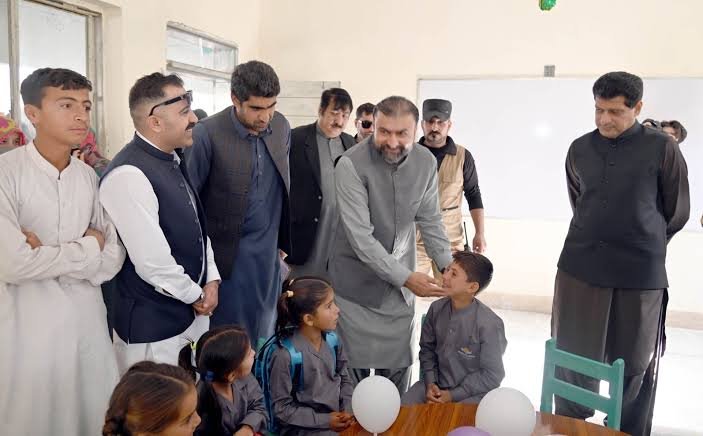
The provincial government says more than 786,000 children have entered the education system over the past two years as authorities have focused on expanding access and improving basic school facilities.
Of those, about 231,000 children enrolled in 2025, while another 281,000 have enrolled so far in 2026, according to government figures.
In addition, community schools operated by the Balochistan Education Foundation have provided education to around 154,000 children.
Meanwhile, authorities have reopened previously inactive schools, bringing more than 95,000 children back into the education system.
The government has also sought to address teacher shortages. It says it has recruited more than 15,000 teachers on merit while introducing projects aimed at improving school facilities and the learning environment.
Under the Balochistan Education Foundation, authorities have established more than 2,000 new schools and are working to establish another 1,800, according to officials.
Education system expands
The latest available government figures show that, as of July 2026, Balochistan had 14,709 government schools serving about 1.19 million students.
Those schools employed 80,614 teachers and other staff, the figures show.
At the same time, the government has placed greater emphasis on monitoring schools to ensure they remain functional.
Authorities have introduced mechanisms to track teacher attendance, school functionality and education standards. Officials also say thousands of previously inactive schools have been restored.
However, expanding access remains only one part of the province’s education challenge.
Nearly half of children remain out of school
Despite the recent expansion, Balochistan continues to lag behind other parts of Pakistan on key education indicators.
Around 45% of children aged 5 to 16 remain out of school in the province, while the rate rises to 52% among girls.
That means the government’s next challenge will be to ensure that children who enter the education system remain there and progress through higher grades.
The issue is particularly acute for girls in rural areas, where authorities face the additional challenge of helping students move from primary education to middle and secondary school.
At the same time, the government will need to improve teacher attendance and the quality of classroom instruction while ensuring that reopened schools have permanent buildings and basic facilities such as clean water, toilets and furniture.
Retention emerges as the next test
Recent Education Department data point to another concern: enrolment falls significantly as children move from primary to middle school.
That decline suggests that increasing enrolment alone will not be enough to measure the success of the province’s education reforms.
Instead, authorities will have to focus increasingly on retention, progression and completion.
In other words, the longer-term test for Balochistan will not simply be how many children enter school, but how many stay, move successfully through the grades and complete their education.
For a province where nearly half of school-age children remain outside the education system, sustaining that progress could prove as important as expanding access in the first place.