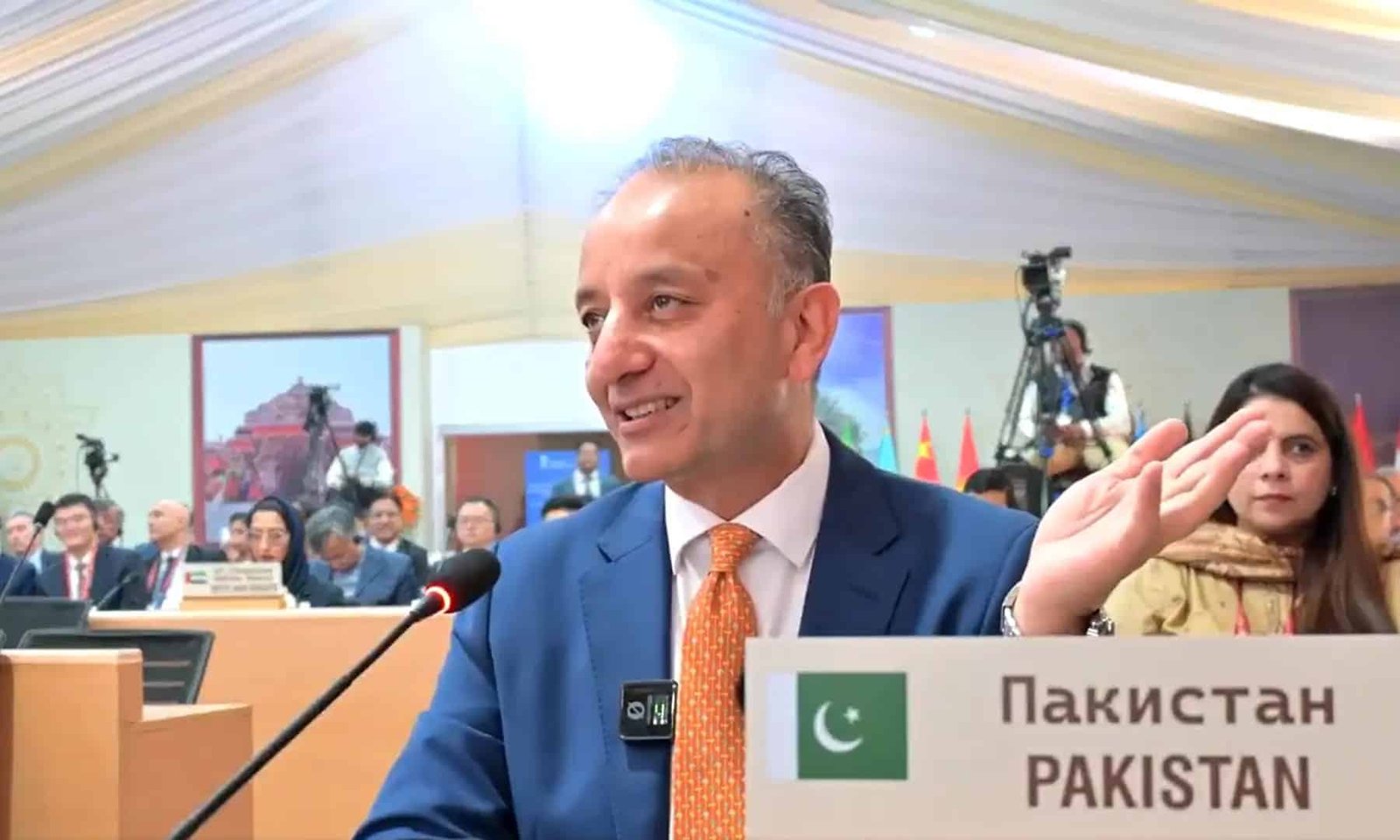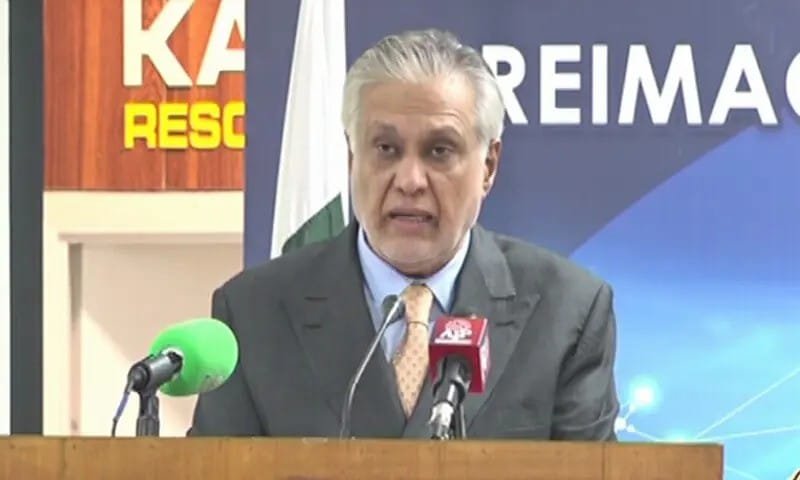
Deputy Prime Minister and Foreign Minister Ishaq Dar has reasserted that Islamabad believes in independent foreign policy, multilateralism and diplomatic engagement, warning that bloc politics and unilateral decisions cannot provide lasting solutions to international disputes.
Dar discussed Pakistan’s diplomatic role in the US-Iran conflict, regional security, relations with India and Afghanistan, and the country’s economic potential. He maintained that Pakistan would continue supporting dialogue and peaceful settlements despite growing international tensions.
Dar said Pakistan’s foreign policy remained independent and focused on multilateral cooperation.
He stressed that countries needed to make greater efforts to strengthen international institutions and promote peaceful coexistence.
He said multilateralism and the peaceful settlement of disputes had been central themes.
In this regard, the unilateral approaches and political blocs could not address the complex challenges facing the international community.
Discussing tensions between Washington and Tehran, Dar mentioned Pakistan’s efforts to facilitate diplomatic engagement between the two countries.
He said Islamabad had consistently maintained that dialogue and diplomacy were the only sustainable ways to resolve the conflict.
He recalled that Pakistan was among the first countries to condemn Israel’s February 28 attack on Iran.
The following day, he contacted his Iranian counterpart and urged restraint, while expressing concern over subsequent attacks affecting other Middle Eastern and Gulf countries.
Dar also mentioned the historic direct talks between the United States and Iran in Islamabad on April 11-12, following decades without direct negotiations hosted by Pakistan.
He welcomed the June 18, 2026, Islamabad Memorandum of Understanding between the two sides but expressed disappointment over subsequent violations.
He said Pakistan had not abandoned its diplomatic efforts and continued encouraging both countries to honour their commitments.
The foreign minister stressed the importance of ensuring uninterrupted maritime movement through international sea routes, warning that disruptions were affecting energy supply chains and increasing prices worldwide.
He said the global economy could not afford prolonged disruptions and called for a sustainable regional security arrangement.
Dar also focused on the need for an agreed mechanism to achieve lasting peace in the region.
Discussing Pakistan’s economic prospects, Dar said the country needed to unlock its considerable natural resources and attract investment.
He estimated Pakistan’s external debt at approximately $130 billion, while placing the potential value of its mineral resources and rare earth materials between $6 trillion and $10 trillion.
He described the Pakistan Minerals Investment Forum as part of the government’s efforts to attract investment and develop the country’s resource sector.
Afghanistan and India Remain Key Regional Challenges
On relations with Afghanistan, Dar said Pakistan wanted its neighbouring country to become stable, economically viable and prosperous. However, he raised concerns about cross-border terrorism, claiming that Pakistan had shared credible evidence with international institutions regarding attacks originating from Afghan territory.
He said Pakistan had suffered significant human and economic losses from terrorism and urged concrete action to eliminate the threat.
Dar criticised New Delhi’s August 2019 constitutional changes in Indian-administered Jammu and Kashmir and reiterated Pakistan’s position on the right to self-determination.
ALSO READ: Pakistan Keeps Taliban-Ruled Afghanistan Out of ECO Meeting
He also rejected India’s decision to suspend the Indus Waters Treaty, arguing that water security was essential for approximately 260 million people. He warned against using water as a political weapon and stressed that international agreements must be respected.
Pakistan Targets Compliance With New GSP+ Requirements
Dar also discussed Pakistan’s Generalised Scheme of Preferences Plus (GSP+) arrangement with the European Union, which is due to expire at the end of 2026.
He said the next application process would involve compliance with an expanded framework of 32 international conventions, compared with the previous 27. Pakistan, he added, was committed to fulfilling the requirements, with the new GSP+ regime scheduled to begin on January 1, 2029.