SWAT: Swat and surrounding jolted with earthquake tremors.
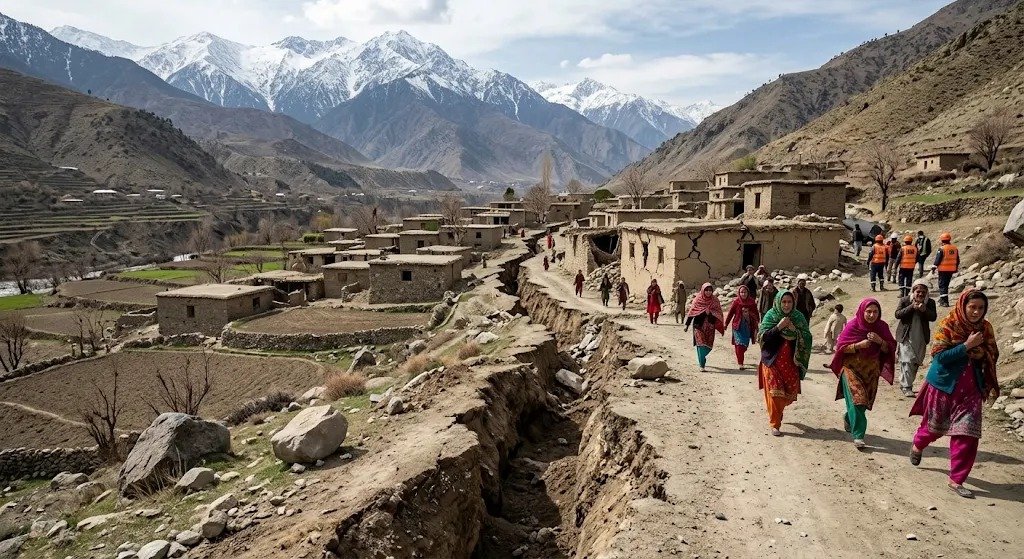
According to the details, Panic spread among residents across Swat and neighboring districts of Khyber Pakhtunkhwa (KP) after a 5.3 magnitude earthquake jolts Swat and surrounding areas triggering panic and prompting people to rush out of their homes.
According to the National Seismic Monitoring Centre, the tremor registered a magnitude of 5.3 on the Richter scale with a deep underground focal depth of 184 kilometers.
The epicenter of the seismic activity was located in the Hindu Kush mountain range, sending strong vibrations across Swat and adjoining localities.
As the 5.3 magnitude earthquake jolts Swat and surrounding areas triggering panic, anxious citizens evacuated buildings and residences while reciting religious verses (Kalma-e-Tayyaba).
Local authorities confirmed that, fortunately, no loss of life or property damage has been reported so far following the incident where a 5.3 magnitude earthquake jolts Swat and surrounding areas triggering panic.
Seismic Activity and Earthquakes in Khyber Pakhtunkhwa
Khyber Pakhtunkhwa is among the most seismically active regions in Pakistan due to its proximity to the collision zone between the Indian and Eurasian tectonic plates.
The northern and northwestern districts of the province—including Swat, Chitral, Dir, Shangla, and Malakand—frequently experience tremors originating from the Hindu Kush and Karakoram mountain ranges.
Most earthquakes in this belt occur at intermediate to deep focal depths, which often allows vibrations to be felt across wide geographical areas while minimizing surface destruction compared to shallow quakes.
However, historical disasters, such as the devastating 2005 Kashmir earthquake and the 2015 Hindu Kush quake, highlight the persistent vulnerability of mountainous settlements and non-engineered structures.
ALSO READ: 4.6-Magnitude Earthquake Jolts Swat, Residents Flee Homes
In response, provincial disaster management authorities and seismic agencies continuously emphasize enforcing earthquake-resistant building codes, strengthening early warning communication, and conducting public awareness drills to minimize casualties during future seismic events in KP.