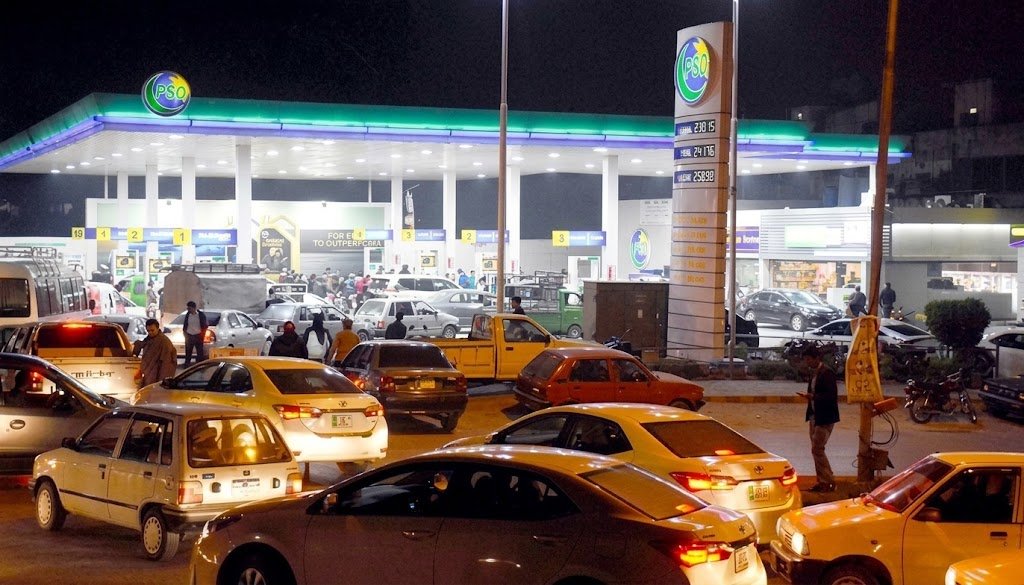
ISLAMABAD: Government has decreased petrol prices on fifth successive day.
According to the sources, In an official announcement regarding petroleum product rates, the government reduces petrol price in Pakistan to provide immediate financial relief to consumers nationwide.
According to the notification issued by the Petroleum Division, the price of petrol has been reduced by Rs 3.93 per liter, bringing the new price of petrol down to Rs 386.30 per liter.
The official release further clarified that the price of high-speed diesel remains unchanged, maintaining its existing rate of Rs 396.96 per liter.
As per the official declaration, these revised petroleum prices will remain effective specifically for October 17, 18, and 19.
This unexpected short-term price adjustment comes at a time when consumers are closely monitoring energy costs.
By implementing this decision, the government reduces petrol price in Pakistan to temporarily ease transport and daily commuting expenses across the country.
Industry analysts note that short-window revisions reflect fast-changing domestic tax adjustments and international market dynamics.
Nevertheless, citizens hope that as the government reduces petrol price in Pakistan, overall inflationary pressures on everyday goods and public transport fares will see a corresponding decrease.
Note: Trends, Structure, and Socio-Economic Impact of Fuel Prices in Pakistan
Fuel prices in Pakistan represent a critical economic barometers, directly influencing overall inflation, transportation tariffs, agricultural production costs, and daily household budgets.
The pricing structure of petroleum products is managed by the government in coordination with the Oil and Gas Regulatory Authority (OGRA). Rates are typically determined based on international crude oil fluctuations, currency exchange rates (specifically the Pakistani Rupee against the US Dollar), import duties, the Petroleum Levy (PL), and Sales Tax.
Because Pakistan relies heavily on imported refined and crude oil to meet its energy demands, domestic fuel prices are exceptionally vulnerable to global geopolitical supply shocks and exchange rate volatility.
When international oil prices surge or the local currency depreciates, domestic petroleum rates rise sharply.
This creates a immediate ripple effect across the economy, driving up food prices, supply chain logistics, and manufacturing expenses. Conversely, reductions in fuel prices provide much-needed breathing room for the industrial sector, agricultural operators, and everyday commuters.
In recent years, balancing fiscal deficit targets with public price relief has proven to be a complex challenge for policymakers.
While petroleum levies serve as a substantial source of non-tax revenue for the national exchequer, high fuel costs place a heavy burden on low- and middle-income segments of society.
ALSO READ: Government Announces Reduction in Fuel Prices Across Pakistan
Consequently, consistent energy sector reforms, strategic petroleum reserves, and gradual shifts toward alternative energy sources remain essential strategies for stabilizing fuel pricing and insulating the national economy from perpetual external market shocks.