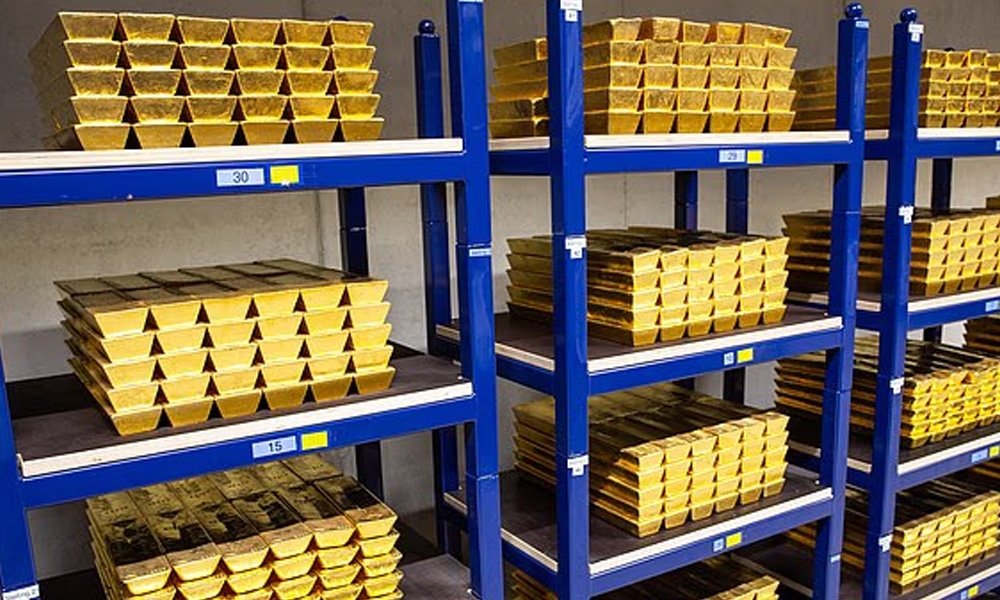
KARACHI: Gold prices in Pakistan recorded a sharp increase on Monday after declining steadily in recent sessions, with the price of one tola rising by Rs7,800.
According to the All Pakistan Sarafa Association, the price of 24-karat gold increased to Rs384,136 per tola in local markets.
Similarly, the price of 10 grams of gold rose by Rs6,687 to reach Rs329,334.
On November 18, gold prices had fallen below Rs400,000 per tola for the first time in 13 months.
Gold prices in international and local markets are influenced by several factors, including fluctuations in the US dollar, global economic uncertainty, geopolitical tensions and investor sentiment.
Investors generally consider gold a safe-haven asset during periods of economic and political uncertainty. Increased demand under such circumstances can push up international gold prices, while easing uncertainty may put downward pressure on the precious metal.
In Pakistan, international gold rates and the exchange rate between the Pakistani rupee and the US dollar also play a key role in determining local prices.
Which Countries Hold the Largest Gold Reserves?
According to a 2025 report by the World Gold Council, the following 10 countries hold the world’s largest official gold reserves:
1. United States – 8,133 tonnes
The United States has held the world’s largest gold reserves for decades. Most of its gold is stored at Fort Knox and the Federal Reserve Bank of New York. Its reserves have remained largely stable in recent years.
2. Germany – 3,352 tonnes
Germany, Europe’s largest economy, has brought much of its gold reserves back to the country. Gold remains an important part of its financial security strategy.
3. Italy – 2,452 tonnes
Italy has maintained substantial gold reserves since the Second World War. These holdings serve as a financial safeguard and help support confidence in the country’s economy.
4. France – 2,437 tonnes
France has also retained most of its gold reserves, which form an important part of its national financial assets.
5. Russia – 2,327 tonnes
Russia has increased its gold holdings in recent years, particularly amid Western sanctions. Gold has become an important reserve asset as Moscow seeks to reduce its reliance on the Western financial system.
6. China – 2,301 tonnes
China has continued to add gold to its reserves. It has been using gold purchases to diversify its foreign exchange holdings and strengthen confidence in its currency, the yuan.
7. Switzerland – 1,040 tonnes
Switzerland holds substantial gold reserves despite its relatively small size. Its strong financial sector and reputation for secure banking have reinforced its position as a global financial centre.
8. India – 880 tonnes
India has also expanded its gold reserves. Gold holds significant cultural and economic importance in the country, while the Reserve Bank of India has increased its holdings as part of its reserve diversification strategy.
9. Japan – 846 tonnes
Japan’s gold reserves have remained relatively stable for decades and form part of its broader foreign exchange reserve portfolio.
10. Turkiye – 639 tonnes
Türkiye has increased its gold holdings in recent years, securing a place among the world’s 10 largest official gold reserve holders.