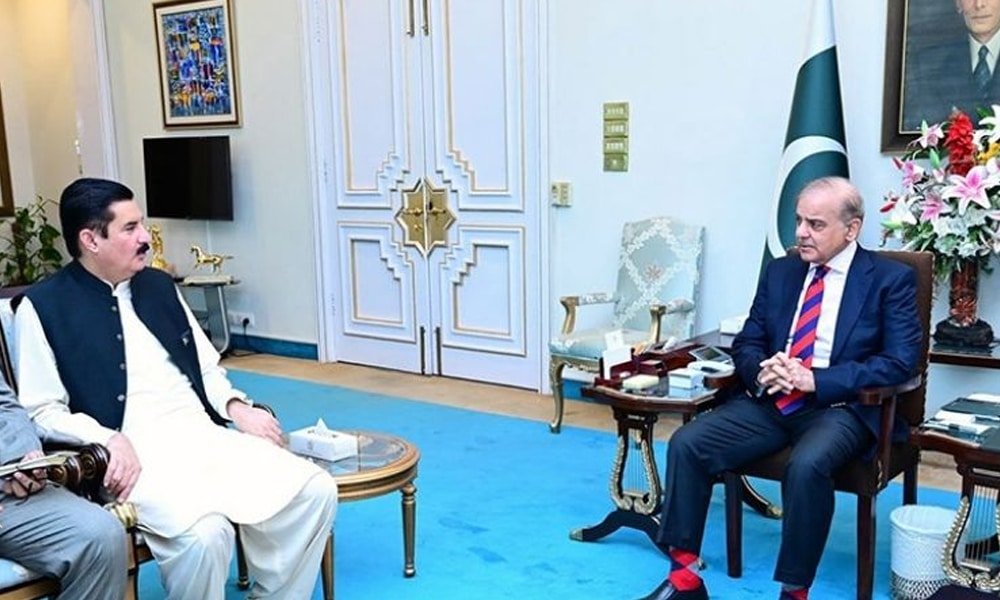
PESHAWAR: Prime Minister Shehbaz Sharif is chairing a meeting of the provincial Apex Committee in Peshawar on Thursday to review the security situation in Khyber Pakhtunkhwa (KP), assess police requirements and consider measures to strengthen counterterrorism operations following the imposition of emergency and governor’s rule in the province.
The meeting at the Governor House brings together senior civilian and military officials, including Deputy Prime Minister Ishaq Dar, Interior Minister Mohsin Naqvi, Information Minister Attaullah Tarar, Rana Sanaullah, KP Governor Faisal Karim Kundi, the chief secretary, inspector general of police, Peshawar corps commander and provincial advisers, according to sources at the Governor House.
The meeting comes as the federal government implements a new security and administrative framework in the militancy-hit province, including plans to address police staffing shortages, improve coordination between security agencies and accelerate development in 12 designated districts.
The government imposed emergency and governor’s rule on October 11, following the breakdown of negotiations between the federal government and the opposition over security and counterterrorism policy.
Police overhaul and counterterrorism measures
Under the new arrangements, authorities have introduced a revised command structure, including the appointment of an additional inspector general of police to oversee policing in the 12 designated districts.
Mehmood Jan Babar, information adviser to the council overseeing those districts, previously told Arab News that the prime minister’s visit would provide an opportunity to review security arrangements and consider steps to strengthen the police force.
According to Babar, police, army and Federal Constabulary officials will coordinate operations and counterterrorism campaigns in the designated areas.
He said the new arrangements would also help address longstanding staffing shortages, particularly in the former tribal districts along the Afghan border, where police recruitment had not taken place under previous arrangements.
The provincial inspector general will retain overall command of the police force, while the additional inspector general will focus on the 12 designated districts, Babar said.
Interior Minister Mohsin Naqvi has pledged federal support for the police overhaul, according to the adviser. Authorities have also transferred 10 armoured personnel carriers to provincial police units involved in counterterrorism duties.
In addition, the government has imposed restrictions on public gatherings and protests under Section 144 of the Code of Criminal Procedure in the designated areas.
Militant attacks intensify pressure on KP
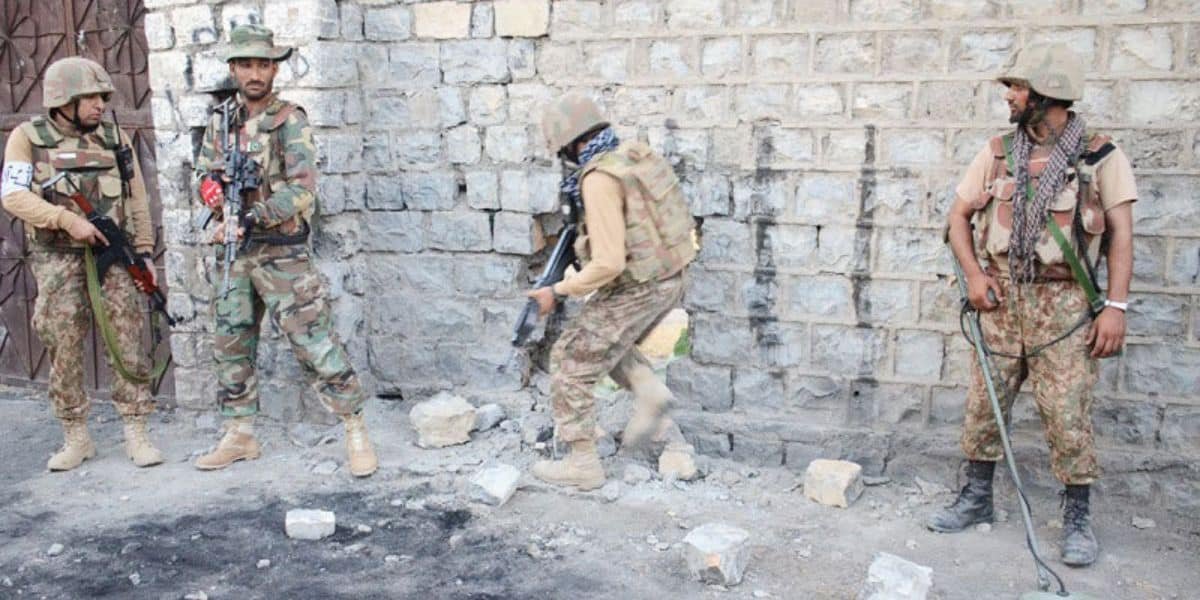
The security review comes amid a rise in militant violence in KP. Islamabad has repeatedly accused Afghanistan-based militant groups of carrying out attacks inside Pakistan, while Kabul denies allowing its territory to be used for attacks against Pakistan.
Interior Minister Attaullah Tarar told foreign media this month that KP recorded 3,774 militant attacks in 2025 and another 2,857 in the first nine months of 2026.
He also reported 3,512 deaths in militancy-related incidents in 2025 and 2,775 during the first nine months of this year.
The federal government has accused the previous PTI-led provincial administration of failing to cooperate adequately in counterterrorism efforts and of not adopting a unified policy towards Afghanistan.
PTI has rejected the allegations and described the imposition of emergency and governor’s rule as undemocratic. The party has also denied claims that it failed to act against militant groups, including the Tehreek-e-Taliban Pakistan (TTP).
The measures shifted administrative authority to Governor Faisal Karim Kundi after President Asif Ali Zardari approved emergency under Article 232 of the Constitution and governor’s rule under Article 234 on October 11, following a recommendation from the federal cabinet.
The federal government has maintained that the intervention aims to restore security and improve governance in the province.
Twelve districts placed under special framework
Alongside the security measures, the government has established a dedicated administrative and development framework for 12 districts under the prime minister’s supervision.
The designated areas comprise eight districts of the former Federally Administered Tribal Areas (FATA)—Bajaur, Khyber, Mohmand, Orakzai, Kurram, North Waziristan, Upper South Waziristan and Lower South Waziristan—and four southern districts: Dera Ismail Khan, Tank, Lakki Marwat and Bannu.
The framework brings together local representatives, a dedicated development secretariat and relevant government departments to identify priorities, prepare projects and coordinate implementation.
Its main areas of focus include education, healthcare, infrastructure, employment generation, institutional capacity-building and improved governance.
On October 17, the federal government appointed 48 members to a regional representation and development council for the 12 districts following consultations through jirgas. It had earlier announced an 11-member advisory council to assist the governor.
The government has also approved the deployment of the Pakistan Army under Article 245 of the Constitution to assist the civilian administration.
Legal challenge pending in court
The emergency and governor’s rule measures have faced opposition from PTI, which argues that they undermine provincial autonomy and the party’s electoral mandate.
The party challenged the measures in the Peshawar High Court. On October 20, the court reserved its verdict on petitions contesting the federal intervention.
Separately, on October 21, the court sought reports from senior provincial officials about the whereabouts and legal status of Sohail Afridi after his family raised allegations of unlawful detention. The hearing was adjourned until November 3.
Parliament approved the emergency measures in October. The National Assembly and Senate endorsed them on October 14, while a joint sitting passed a supporting resolution on October 15 by 214 votes to 56 amid opposition protests.
The Apex Committee meeting is expected to review the province’s security and policing needs as the federal government advances its new administrative framework, while legal challenges to the intervention remain pending.