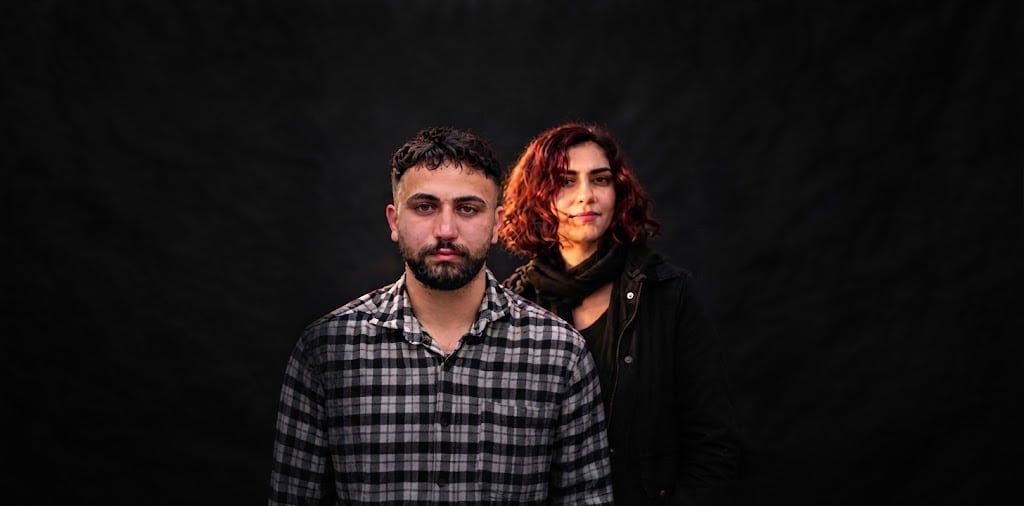
Tehran: In a deeply tragic turn of events amid the backdrop of nationwide demonstrations, Iranian prisoner Alireza Seibahi, arrested in connection with the January protests, married his fellow inmate over the phone on the very night before his execution.
Alireza Seibahi, facing the gallows in Isfahan city, fulfilled his final wish hours before his sentence was carried out by marrying his co-inmate Mahshad Kashani via a telephone ceremony arranged through their lawyer.
Held at Isfahan Central Prison, Seibahi and another individual named Alireza Raiesi were executed on October 5 for their alleged participation in the January 8 protests at Ali Khani Square in Isfahan, where authorities claimed four police officers lost their lives.
According to the judiciary-affiliated Mizan agency, they were convicted of ties to an armed group and endangering national security.
Norway-based NGO Iran Human Rights reported that these executions brought the total number of individuals put to death in connection with those protests to 34.
Human rights organizations note that the demonstrations were violently suppressed, resulting in thousands of deaths and severe internet shutdowns.
Alireza Seibahi was arrested on January 10 alongside his mother, who remains in custody serving a five-year prison sentence.
The US-based Abdorrahman Boroumand Center highlighted major due process flaws in his trial, including the dismissal of defense arguments and video footage proving his absence from the scene. The Isfahan Revolutionary Court rejected his appeal, and authorities summoned his relatives for a final meeting.
However, Alireza Seibahi had one final plan; his lawyer arranged an audio call to conduct a wedding ceremony with Kashani, who was imprisoned in a separate facility in Isfahan. The marriage took place with the explicit consent of both sets of parents.
The lawyer asked the parents for permission to solemnize the marriage with a dowry consisting of a copy of the Holy Quran, a piece of sugar, and a red rose, to which both families agreed. Human rights groups published the audio recording of the event, though prison authorities denied the couple an in-person final meeting.
Roaya Boroumand, co-founder of the Abdorrahman Boroumand Center, stated that lawyers likely hoped the marriage might temporarily delay the execution.
However, officials argued that the fiancée had no legal kinship and blocked an in-person ceremony, resulting in a remote legal union rather than physical presence inside the prison.
ALSO READ: Mysterious Cash on Delivery Parcel Leaves Women in Complete Shock
The tragedy surrounding Alireza Seibahi persisted even after his execution, as his body was withheld from Isfahan and instead transferred to Kashan, roughly 200 kilometers away, for burial.