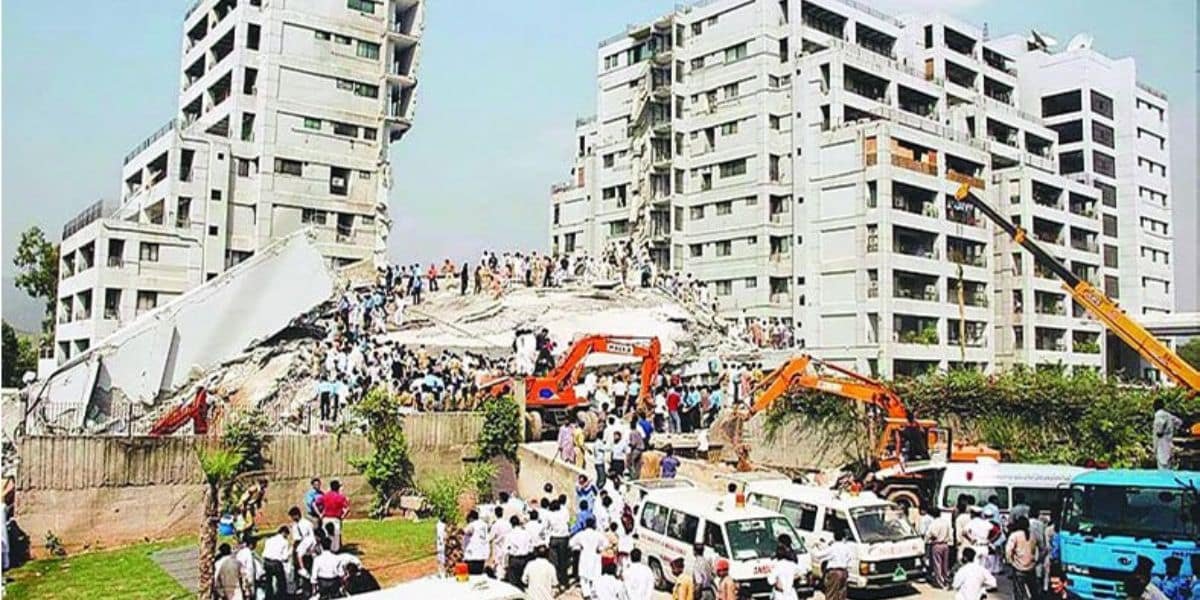
ISLAMABAD: October 8, 2005, remains one of the darkest and the Devastating day that shook Pakistan. A powerful earthquake struck northern Pakistan in the morning, killing tens of thousands of people, destroying entire communities and leaving millions in need of emergency assistance. Nearly two decades later, the disaster continues to be remembered as a defining moment for Pakistan’s disaster response and national resilience.
At around 8:50am, a magnitude 7.6 earthquake struck near Muzaffarabad in Azad Jammu and Kashmir. The powerful tremors were felt across large parts of Pakistan and neighbouring areas, with Muzaffarabad, Balakot and surrounding mountainous regions among the worst-affected areas.
October 8, 2005: The Devastating Day That Shook Pakistan
The earthquake caused widespread destruction, with homes, schools, hospitals, roads and other infrastructure collapsing across the affected region. Thousands of people were trapped beneath rubble, while landslides blocked roads and made access to remote communities extremely difficult.
According to official figures, more than 73,000 people lost their lives, while around 128,000 were injured. Millions were affected and hundreds of thousands of families were left homeless. The disaster caused billions of dollars in economic losses and severely disrupted life across the affected areas.
The destruction of schools was particularly tragic. Many children and teachers were among those killed when buildings collapsed during the morning earthquake, leaving communities devastated.
Massive Rescue and Relief Operation
In the aftermath, Pakistan launched a large-scale rescue and relief operation involving the armed forces, government agencies, emergency workers, volunteers and local communities.
The mountainous terrain, damaged roads and widespread landslides created enormous challenges for rescue teams. In many areas, helicopters became essential for transporting injured people and delivering food, medicine, tents and other emergency supplies.
The international community also responded with humanitarian assistance. Countries, international organisations and relief agencies contributed personnel, equipment and financial support to help Pakistan deal with the unprecedented disaster.
As the immediate rescue phase ended, attention shifted towards rehabilitation and reconstruction. Thousands of homes and public facilities had to be rebuilt, while displaced families required long-term assistance.
A Turning Point for Disaster Preparedness
The earthquake also exposed significant vulnerabilities in Pakistan’s infrastructure and emergency response systems. It highlighted the need for stronger building standards, better disaster preparedness and more effective coordination among national and local authorities.
In the years that followed, Pakistan strengthened its disaster-management framework and introduced measures aimed at improving preparedness and reducing risks from future natural disasters.
The tragedy also contributed to greater public awareness about earthquake safety, emergency planning and the importance of resilient infrastructure.
Remembering the Victims
October 8 is observed as National Resilience Day in Pakistan, providing an opportunity to remember those who lost their lives and honour the survivors who rebuilt their communities.
For the families who lost loved ones, the earthquake remains a deeply painful memory. For survivors, however, the years since the disaster have also been a story of recovery, resilience and rebuilding.
Also Read: Earthquake Tremors Shake Swat and Surrounding Areas, Trigger Panic
The events of October 8, 2005, demonstrated the devastating power of nature but also the strength of communities when confronted with extraordinary adversity.
Today, the anniversary serves as both a solemn remembrance of the victims and a reminder that preparedness can save lives. Stronger construction, effective emergency planning, public awareness and coordinated disaster response remain essential to reducing the impact of future earthquakes.
October 8, 2005, was a day that shook Pakistan to its foundations — but it also revealed the resilience of a nation determined to rebuild