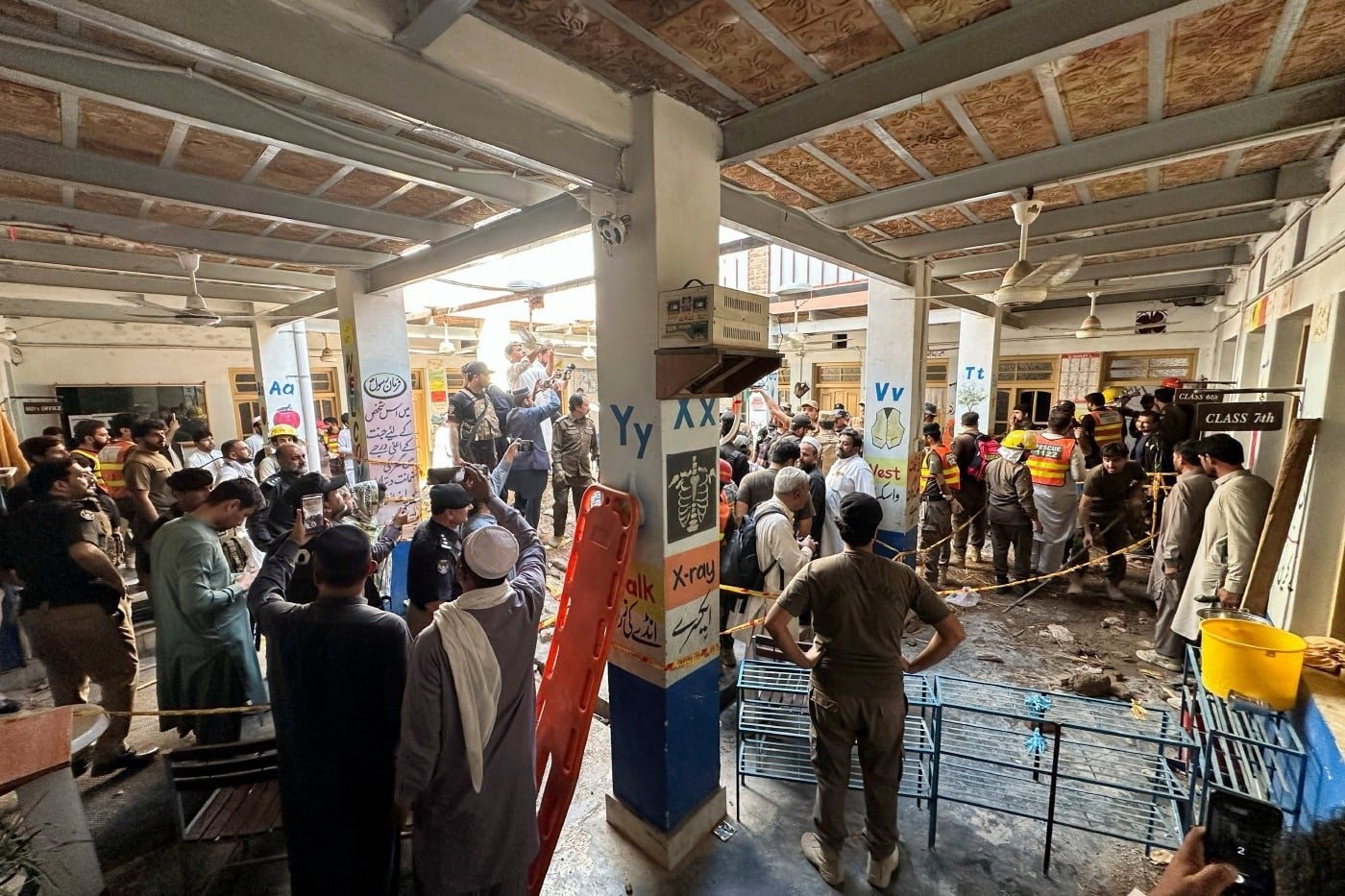
PESHAWAR: The deaths of 30 people, including 29 children and a teachers, in a school roof collapse in Peshawar have raised difficult questions about school safety and government oversight in Khyber Pakhtunkhwa, where Pakistan Tehreek-e-Insaf (PTI) has held power for more than 13 years and pledged to reform the education sector.
The tragedy in Deir Colony has brought renewed scrutiny to the provincial government’s education priorities, particularly whether declarations of an education emergency have translated into safer school buildings, effective inspections and meaningful enforcement of construction standards.
Rescue teams continued searching the rubble for survivors after the roof of the private Al-Khair Education System school collapsed. More than 40 people were reported injured, with hospital officials warning that several children were in critical condition.
The school building’s condition, the legality of the additional rooms constructed on its roof and any previous safety inspections are now key questions for investigators. Authorities have not yet established the official cause of the collapse.
Education emergency, but are schools safe?
PTI has governed Khyber Pakhtunkhwa since 2013, making the condition of public services and regulatory oversight a central issue in assessing its record. Although the collapsed building was privately operated, the incident raises questions about whether the authorities responsible for regulating private schools have adequately enforced safety requirements.
In 2025, the provincial government announced an education emergency initiative aimed at addressing educational shortcomings, including the problem of children remaining out of school. The government also highlighted funding for improving school facilities.
However, an education emergency must mean more than announcements, budget allocations and enrolment targets. It must also include functioning classrooms, structurally safe buildings, regular inspections and accountability when safety requirements are ignored.
A 2025 assessment of KP’s education sector pointed to uneven progress despite increased spending and teacher recruitment, highlighting persistent concerns over education quality and the delivery of reforms.
The Peshawar collapse now places school safety and regulatory enforcement firmly on the accountability agenda. Investigators will need to determine whether the building had been inspected, whether its rooftop rooms complied with applicable building regulations and whether any warnings about its condition had been ignored.
School owner detained as inquiry begins
Capital City Police Officer Peshawar said around 120 children were inside the building when the roof collapsed. The school’s owner, identified as Maulana Khan Muhammad Darvesh, was taken into custody, according to police.
The detention does not by itself establish criminal responsibility. Investigators must determine whether any construction violations, negligence or regulatory failures contributed to the deaths.
Khyber Pakhtunkhwa’s education authorities have ordered an inquiry and directed a committee to submit its findings within 24 hours. The managing director of the Private Schools Regulatory Authority has also been instructed to visit the site and examine the circumstances surrounding the collapse.
The investigation will be crucial in establishing whether the disaster resulted from unsafe construction, deterioration of the building, failures in inspection or a combination of factors.
A wider pattern of deadly building collapses
The Peshawar incident also comes amid a series of deadly school-related collapses reported across Pakistan this year. Previous incidents in Dera Ghazi Khan and Lahore killed students, renewing concerns about construction quality and safety oversight in educational buildings.
For families who send children to school expecting them to be safe, the immediate priority is rescue and medical care. The longer-term question is whether the authorities will turn the latest tragedy into enforceable reforms rather than another announcement followed by an inquiry.
For a provincial government that has repeatedly placed education reform among its priorities, the test now extends beyond policy declarations: authorities must establish what happened in Deir Colony, identify any failures and ensure that schools are inspected and made safe before another family faces a similar loss.