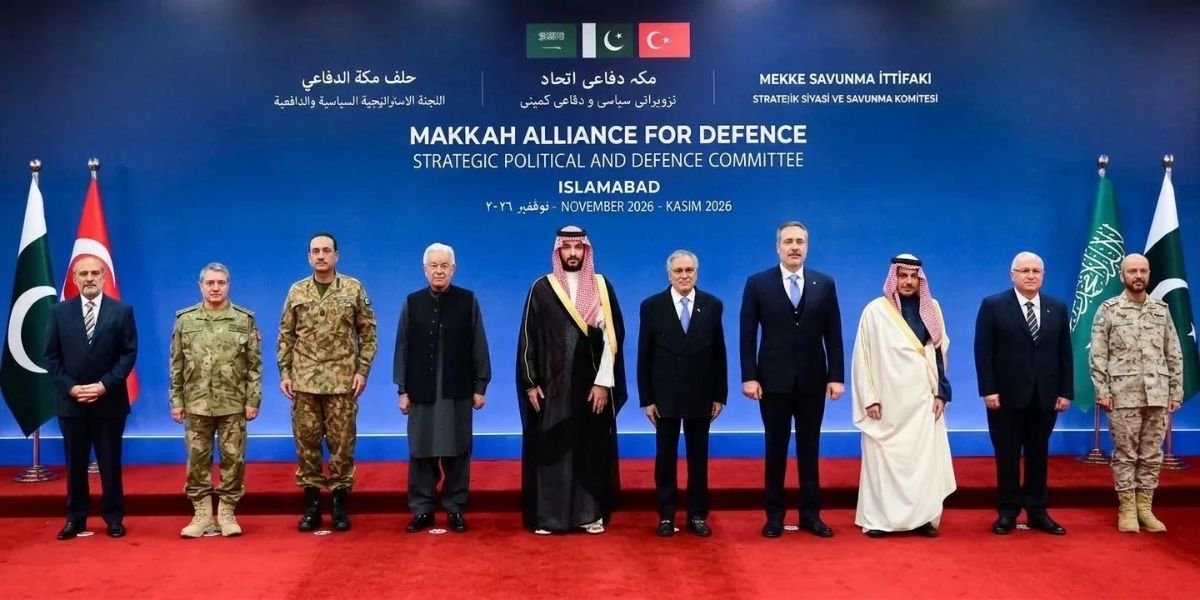
ISLAMABAD: Prime Minister Shehbaz Sharif has reaffirmed Pakistan’s commitment to the Makkah Joint Defence Agreement, expressing satisfaction over the outcome of the second meeting of the Strategic Political and Defence Committee (SPDC) and welcoming the strong unity demonstrated by Pakistan, Saudi Arabia and Türkiye.
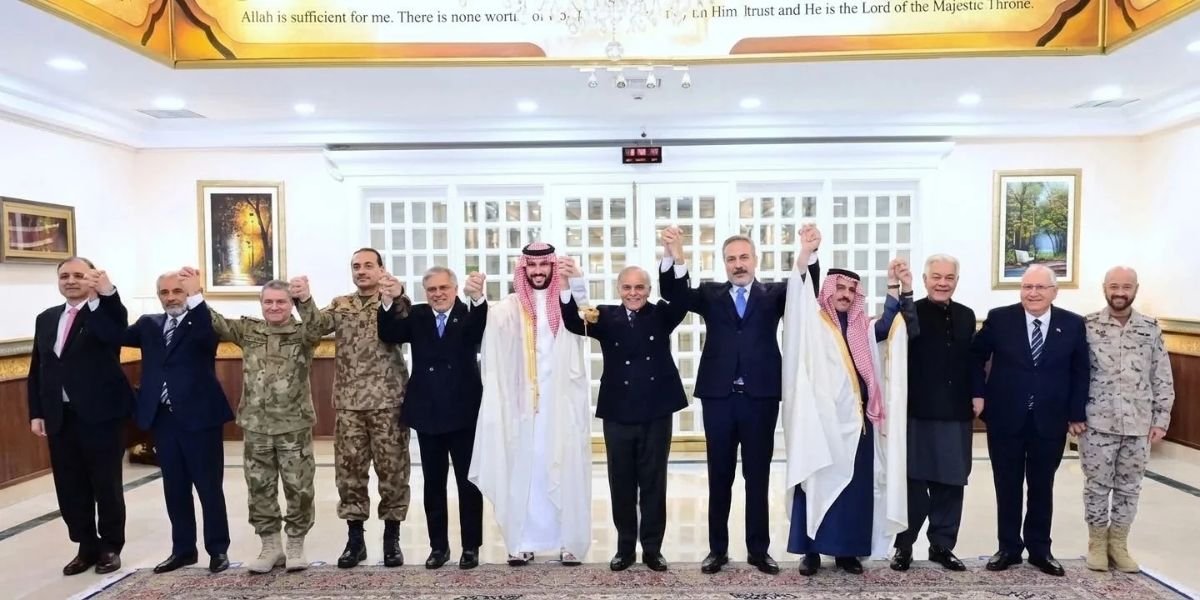
According to a statement issued by the Prime Minister’s Office (PMO), the Saudi and Turkish delegations called on Prime Minister Shehbaz Sharif following the conclusion of the SPDC meeting in Islamabad.
During the meeting, the prime minister welcomed the strong unity and collective determination of the three countries to safeguard each other’s security, sovereignty and territorial integrity in accordance with the provisions of the agreement.
Prime Minister Shehbaz expressed satisfaction with the outcomes of the SPDC meeting and reiterated Pakistan’s unwavering solidarity with the Kingdom of Saudi Arabia, assuring full support for its sovereignty, territorial integrity and security.
The prime minister also hosted a dinner reception at the Prime Minister’s House in honour of the visiting delegations.
Makkah Joint Defence Agreement and Institutional Progress
Pakistan, Saudi Arabia and Türkiye signed the Makkah Joint Defence Agreement on August 7, establishing a framework for collective defence under which an armed attack against one member is considered an attack against all, with the other members committed to providing assistance through available means, including military support.
The Strategic Political and Defence Committee, comprising the foreign and defence ministers and senior military officials of the three countries, serves as the alliance’s principal decision-making forum.
A permanent secretariat has been established in Riyadh to coordinate the alliance’s activities, with Pakistan’s retired Lieutenant General Nauman Mahmood appointed as its first secretary general for a three-year term. A working committee comprising officials from the member states is also functioning.
Türkiye’s ratification of the agreement has completed the accession process for all three members, although the alliance’s institutional and operational framework remains in its early stages.
Defence Minister Khawaja Asif has previously stressed the need for frequent meetings to advance the alliance’s institutional arrangements and operational preparations.
Collective Defence Framework and Regional Security Challenges
The alliance’s operational framework, including its defence doctrine, force composition, command arrangements and procedures for collective military responses, is still being developed.
An emergency SPDC meeting held in Riyadh on October 5 called for advancing the practical implementation of collective defence commitments, including arrangements for the rapid deployment of agreed forces and capabilities, subject to national laws.
The alliance’s formation comes amid broader regional tensions involving Iran, the United States and Israel. While the three member states share an interest in strengthening regional security and deterrence, their respective strategic priorities require careful coordination.
Defence Minister Khawaja Asif has identified potential regional threats and stressed the importance of strengthening cooperation among regional countries, while also acknowledging the complexities surrounding relations with Iran.
Pakistan has continued diplomatic engagement with Tehran while expanding defence cooperation with Saudi Arabia and Türkiye. A meeting involving representatives of the three countries and Iranian officials in Tehran, initiated by Pakistan, reflected efforts to maintain communication and encourage regional stability.
Pakistan has also played a diplomatic role in efforts to reduce tensions between Washington and Tehran, although mediation efforts remain fragile amid renewed disagreements.
Meanwhile, existing bilateral defence arrangements, including military cooperation and deployments, continue to form part of the broader security landscape as the three countries work towards strengthening the Makkah Joint Defence Agreement.
Türkiye has also emphasised the defensive nature of the agreement while maintaining a cautious approach towards involvement in combat operations in Yemen.