ISLAMABAD: Decades-long participation in power politics, involvement in various ruling coalitions, and questions surrounding family-linked properties and financial affairs of Jamiat Ulema-e-Islam (F) chief Maulana Fazlur Rehman have once again sparked debate on social media.
Users online are asking when Fazlur Rehman, who has played a prominent role in national politics across multiple eras, will present clear details of his assets, properties, and sources of income before the public. Observers and social media commentators argue that long-standing participation in governing alliances and political influence naturally invite scrutiny regarding financial transparency and public accountability.
Focus on Properties and Income Sources
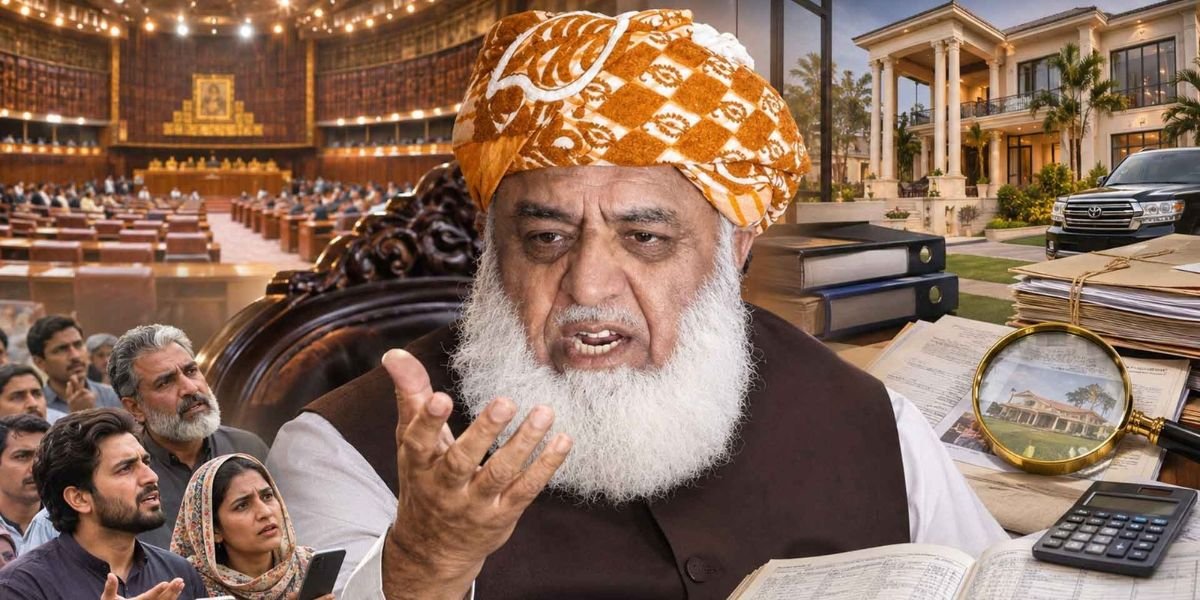
Discussions circulating on social media raise questions regarding properties, residences, luxury vehicles, and lifestyle attributed to Fazlur Rehman and his family. Users are calling for clarity on ownership, funding sources, and declared income to address ambiguity surrounding these matters, emphasizing that documented records—rather than political statements alone—are needed to answer questions about leadership finances.
History of Political Coalitions and Accountability
Fazlur Rehman’s party has been part of various political alliances and governing arrangements over the years, with a long record in parliamentary politics and political accommodation. Social media users point to this prolonged association with corridors of power to ask why financial accountability should be avoided. While supporters may view political alignments as part of democratic strategy or expediency, critics contend that addressing public questions remains a responsibility of political leadership.
Family Influence, State Resources, and Madrasa Land
The debate also touches upon family influence in politics, questions around opportunities or public-sector appointments linked to political families, and concerns regarding the use of state resources. Users have called for impartial verification and public transparency whenever allegations of political influence arise.
Additionally, concerns have been raised online regarding land associated with religious seminaries (madrasas) and the acquisition or use of state land. Commentators argue that while religious institutions deserve respect, laws governing land ownership, allotment, and usage should apply uniformly, with record checks and legal requirements fulfilled wherever complaints emerge.
Political Statements vs. Documentary Clarification
Commentators note that accountability in Pakistani politics frequently becomes entangled in partisan disputes, where leaders demand scrutiny from rivals but frame questions about their own affairs as political victimization or pressure. In Fazlur Rehman’s case, social media users continue to press for clear documentary clarification rather than political responses, reiterating the central question of when full details of his assets and sources of income will be made public.