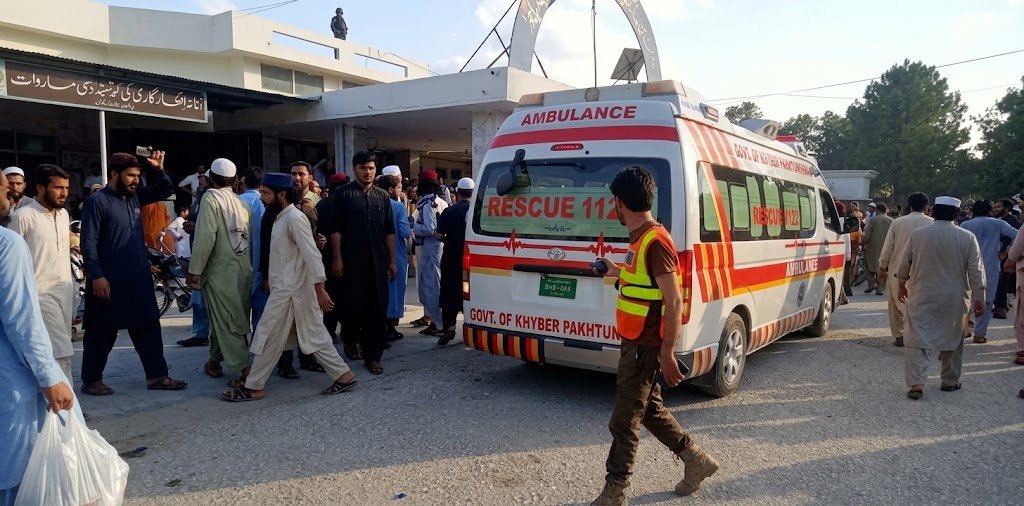
PESHAWAR / KARAK : Four more people die after the tragic gas explosion in Karak.
According to the details, In a heartbreaking calamity, the tragic Karak gas explosion death toll rises to seven after four more severely injured victims succumbed to their burn wounds at a medical facility in Peshawar.
The catastrophic incident took place in the Alwargi Banda area of Banda Daud Shah Tehsil in Karak district, where a severe gas leakage ignited and caused a massive structural explosion.
Initial reports confirmed that three victims, including women, lost their lives on the spot when the building structure collapsed under the force of the blast.
The death toll expanded as four additional family members fighting for their lives in critical care passed away.
Among the deceased are the head of the household, identified as Baghdad, along with his wife, daughters-in-law, and four grandchildren.
The departure of seven funeral processions from a single household has enveloped the entire neighborhood in immense grief and mourning.
Local residents continue to pray for two remaining victims currently receiving specialized intensive care in Peshawar, as the tragic Karak gas explosion death toll rises to seven.
Technical Note: Frequent Fatal Gas Leakage and Fire Incidents in Khyber Pakhtunkhwa
Khyber Pakhtunkhwa (KP) has witnessed a persistent trend of fatal gas-related domestic accidents over past years, resulting in numerous loss of lives and severe infrastructure damage across both urban and rural districts.
A critical combination of extreme winter temperatures, illegal connections, substandard piping materials, and low gas pressure fluctuations underpins the recurring nature of these domestic explosions.
In regions like Karak, Kohat, and Peshawar, domestic gas pressure often drops significantly during colder periods.
Residents routinely leave gas heaters, stoves, or valve connections open overnight to maintain indoor warmth or retain a standing pilot light.
When main pipeline pressure unexpectedly surges during off-peak hours, unignited natural gas rapidly accumulates inside unventilated residential rooms, turning residential homes into high-risk combustion hazards where a single electrical switch or small spark triggers a devastating blast.
Furthermore, widespread reliance on non-certified local plumbers, unmetered direct connections, low-quality rubber hoses, and lack of automatic gas leak detection sensors severely heightens vulnerability.
ALSO READ: Deadly Road Accident in Mach Causes Several Deaths
Addressing this ongoing public safety concern requires rigorous enforcement of building safety codes, public awareness campaigns on gas safety protocols, systematic infrastructure inspection by distribution utility companies, and promotion of certified pressure-regulating equipment across the province.