QUETTA: Balochistan Interior Minister Zia Langove says that important measures are taken to root out militancy .
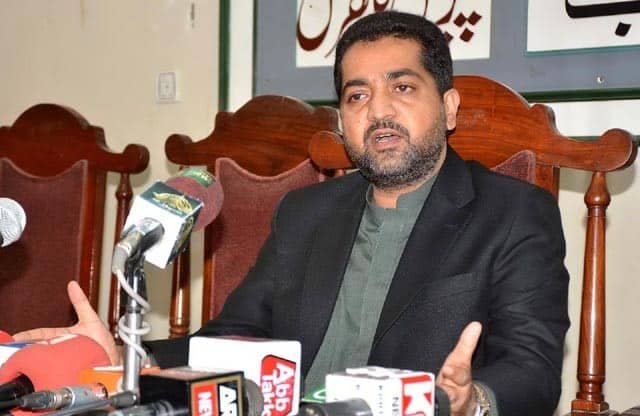
Addressing a joint press conference at the Quetta Press Club, the Balochistan provincial leadership reaffirmed its commitment to establishing lasting peace.
Provincial Interior Minister Mir Zia Ullah Langau, Home Secretary Hamza Shafqaat, and Special Assistant on Information Shahid Rind jointly detailed the current comprehensive provincial measures for anti-terrorism and infrastructure development across Balochistan.
Home Secretary Hamza Shafqaat provided specific details during the briefing, noting that the provincial government has passed more than 18 pieces of anti-terrorism legislation over the last two years and established 17 new departments to enhance security operations.
He emphasized that as part of these comprehensive provincial measures for anti-terrorism, the Safe City project is under active execution, involving the installation of a widespread network of CCTV cameras.
Furthermore, specialized “faceless courts” have been established to enhance legal proceedings.
Securing highways remains a high priority. Shafqaat announced that within the next two to four months, security would be significantly improved on the critical Quetta-Karachi and Quetta-Taftan highways.
Additional actions under the comprehensive provincial measures for anti-terrorism included the repatriation of hundreds of thousands of refugees to their homeland and the execution of over 60,000 intelligence-based and security operations across the province.
Interior Minister Zia Langau stressed that effectively countering terrorism requires a robust legal framework and that the provincial government remains dedicated to providing maximum cooperation and logistical support required by law enforcement forces.
He commended the provincial assembly, noting that both the government and the opposition have consistently collaborated on national security legislation.
Making a comparison, Langau suggested that the recent imposition of Governor’s Rule in Khyber Pakhtunkhwa was linked to that provincial government’s intentions.
This sentiment was echoed by Special Assistant Shahid Rind, who noted that a key factor in the emergency measures in KP was that provincial administration’s continued marches toward Islamabad.
He contrasted this with Balochistan, emphasizing that the focus here has remained entirely on comprehensive provincial measures for anti-terrorism rather than disruptive political marches.
The Impact of Balochistan’s Anti-Terrorism Strategies
The government of Balochistan is currently implementing a multi-pronged approach that moves beyond traditional combat.
Their comprehensive anti-terrorism measures strategically integrate legal reforms, digital surveillance, and specialized judicial systems to tackle the unique security challenges of the province.
By passing 18 robust anti-terrorism laws, the provincial administration has provided a necessary legal umbrella for law enforcement, addressing loopholes that often hindered prosecution.
The shift toward the Safe City initiative and computerized facial recognition surveillance introduces an important technological dimension previously absent.
This modernization is crucial for improving intelligence gathering and real-time response capability, especially in high-risk zones and along critical transport routes like the Quetta-Karachi highway.
Furthermore, addressing infrastructure and safe passage on trade routes demonstrates a commitment to stabilizing the local economy, which is directly linked to lasting peace.
ALSO READ: Operation Rad-ul-Fitna 3: Four Militants Neutralized in Ziarat, Heavy Blow to Anti-State Elements
While physical security operations continue, these structural and legal reforms suggest a long-term commitment by the Balochistan government to create an environment where extremist elements find zero legal or social space.