PESHAWAR: Prime Minister Shehbaz Sharif has said the imposition of emergency in Khyber Pakhtunkhwa was unavoidable, accusing the previous provincial government of undermining the peace achieved through sacrifices by security forces and the public.
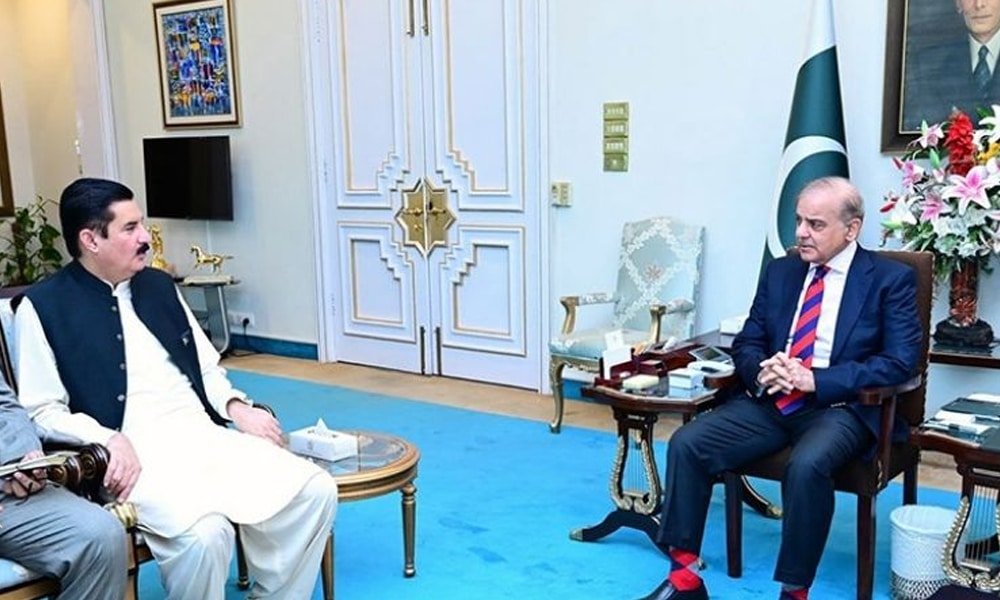
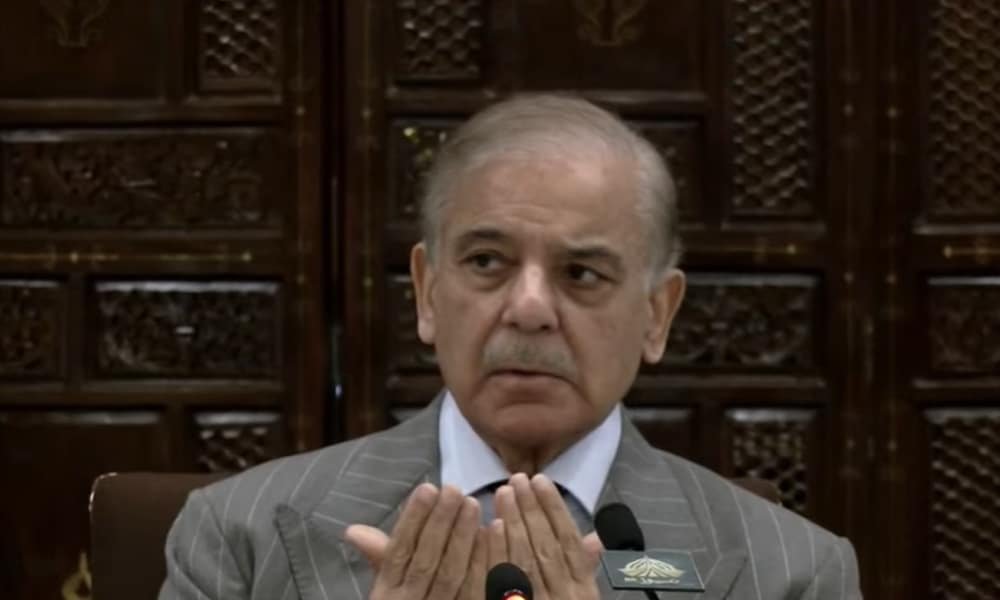
He made the remarks while addressing a provincial Apex Committee meeting at Governor House in Peshawar, which concluded after more than three hours of deliberations on law and order, security and stability in the province.
The meeting took place as the federal government moves to implement a new political, security and administrative framework following the imposition of emergency and governor’s rule in KP.
“The imposition of emergency had to be undertaken under extreme compulsion,” the prime minister said, describing KP as a beautiful province inhabited by a courageous and great people.
Referring to a tragic school incident in which children and teachers were killed, Shehbaz expressed condolences and prayed for the victims. He said he had directed Governor Faisal Karim Kundi to ensure a transparent investigation into the incident.
The prime minister said the security situation in KP had been peaceful in 2018 following sacrifices made by the armed forces, police and the public.
He alleged that militants were subsequently brought back to the province, undoing those sacrifices.
“Disrespecting these sacrifices cannot be anything less than hostility towards the country,” he said.
Shehbaz added that public concerns related to education, healthcare and employment had been sidelined. He also claimed that 5,000 police vacancies remained unfilled during the previous provincial government’s tenure.
Governor Calls Peace and Public Safety a Shared Priority
Earlier, Governor Faisal Karim Kundi thanked the prime minister, Field Marshal Asim Munir and federal ministers for attending the meeting to discuss security challenges and develop a joint strategy to address them.
He said establishing peace in KP and protecting its people were shared priorities, describing the constitutional measures taken in the province as a peaceful step towards stability and development.
Kundi also praised the people of KP for remaining patient despite what he described as attempts to provoke them following the imposition of governor’s rule and emergency.
He claimed that no untoward incident had occurred during the period, calling it evidence of the public’s responsible conduct and commitment to peace.
The meeting was attended by Deputy Prime Minister Ishaq Dar, Interior Minister Mohsin Naqvi, Information Minister Attaullah Tarar, Rana Sanaullah, Governor Kundi, the chief secretary, inspector general of police, Peshawar corps commander and provincial advisers.
Emergency and Governor’s Rule in KP
On October 11, President Asif Ali Zardari approved the imposition of emergency under Article 232 of the Constitution and governor’s rule under Article 234 on the federal cabinet’s recommendation.
The federal government cited the deteriorating security situation and what it described as insufficient cooperation from the Pakistan Tehreek-e-Insaf (PTI)-led provincial government in counterterrorism efforts.
Following the move, administrative powers were transferred to Governor Kundi. The federal government also announced an 11-member advisory council to assist him and established a separate Area Development Secretariat for 12 terrorism-affected districts.
The districts are Dera Ismail Khan, Tank, Lakki Marwat, Bannu, Bajaur, Mohmand, Khyber, Kurram, Orakzai, Upper South Waziristan, Lower South Waziristan and North Waziristan.
The federal government also approved the deployment of the Pakistan Army under Article 245 of the Constitution to assist the civil administration.
Parliament Endorses Emergency Measures
The emergency and governor’s rule measures were presented to parliament for approval. The National Assembly and Senate endorsed them on October 14.
On October 15, a joint sitting of parliament passed a supporting resolution by 214 votes to 56 amid opposition protests.
On October 17, the federal government appointed 48 members to a regional representation and development council for the 12 affected districts following consultations with local jirgas.
The new administrative framework is intended to address security and development challenges in the affected areas, while the emergency measures have drawn opposition from PTI, which has challenged their legality.