KARACHI: Pakistan has offered Saudi Arabia tax-neutral oil storage facilities under a newly approved bonded policy. The framework will allow Saudi companies to maintain commercial petroleum reserves in Pakistan while diversifying supply routes, the petroleum ministry said on Friday.
The offer builds on longstanding energy ties between Islamabad and Riyadh. Saudi Arabia has supported Pakistan’s petroleum needs through financial assistance, oil supplies and investment.
The move also comes amid heightened US-Iran tensions, which have disrupted maritime traffic through the Strait of Hormuz. As a result, several countries are exploring alternative routes and supply arrangements to secure energy shipments.
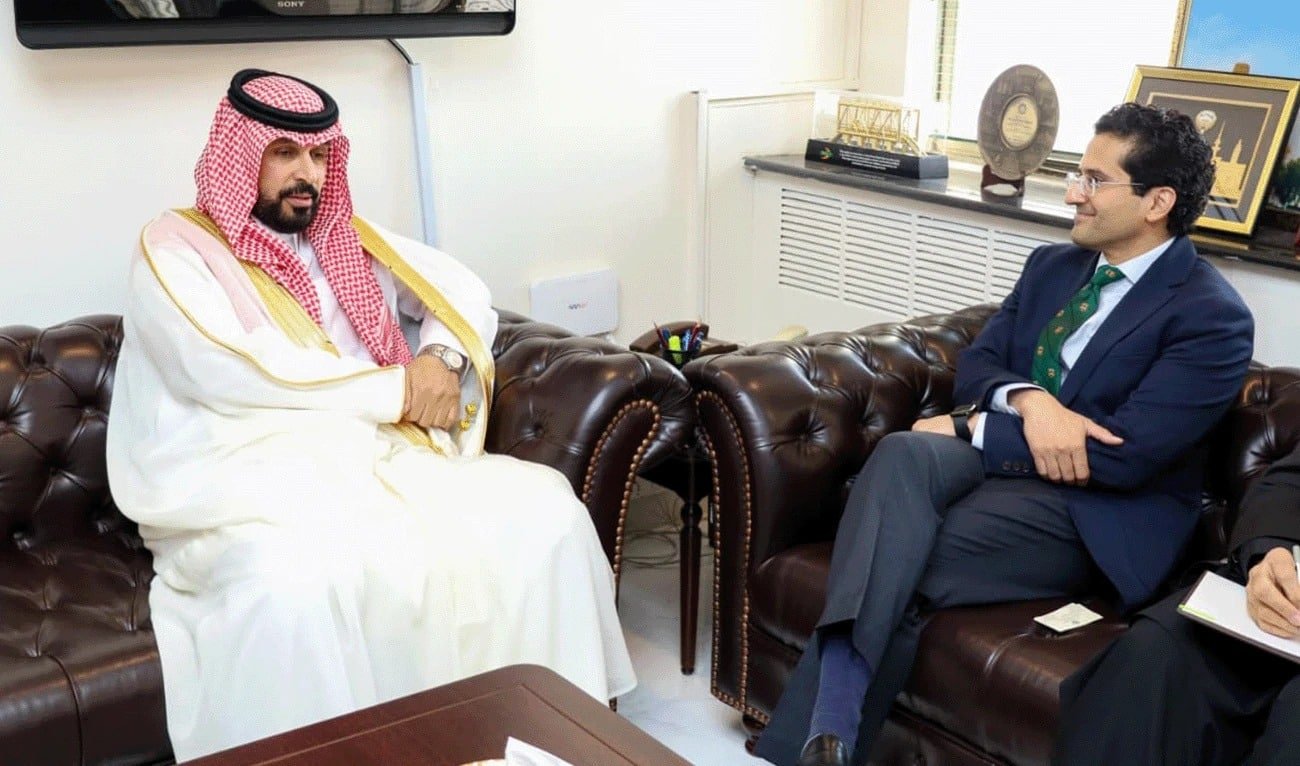
On Friday, Petroleum Minister Ali Pervaiz Malik met Saudi Ambassador to Pakistan Dr Rajeh bin Tami Al-Baqami. They discussed ways to expand cooperation in mining, petroleum and energy.
During the meeting, Malik said Pakistan had approved a tax-neutral bonded policy modelled on international energy hubs such as Fujairah and Singapore.
Under the policy, Saudi companies can establish commercial oil reserves in Pakistan without facing local tax liabilities. The arrangement could also help them reduce risks linked to shipping through the Strait of Hormuz and the Bab al-Mandab Strait while improving access to Asian markets.
Meanwhile, Pakistan has held talks with major energy companies from Saudi Arabia, Kuwait, the Netherlands, Singapore and other countries to develop bonded fuel storage facilities. Officials and industry stakeholders told Arab News last month that the projects could attract billions of dollars in investment.
The proposed facilities form part of Pakistan’s broader effort to reduce dependence on fuel shipments through the Strait of Hormuz. They would also strengthen the country’s strategic petroleum reserves.
Malik told the Saudi ambassador that the facilities would give Saudi Arabia greater flexibility in managing supply routes and reaching regional markets.
He also outlined Pakistan’s plan to establish a major petroleum storage and refining complex in Hub, Balochistan. The project aims to accommodate Very Large Crude Carriers (VLCCs) and strengthen Pakistan’s role as an energy corridor for Central Asian and Chinese markets.
In addition, Malik highlighted investment opportunities under Pakistan’s refinery upgrade programme. The initiative aims to modernise refining facilities, improve efficiency and shift production towards Euro 5 fuel standards. He said the programme could create opportunities for Saudi investors in Pakistan’s refining sector.
The minister also thanked Saudi authorities for prioritising crude oil shipments to Pakistan through Yanbu port. Furthermore, he discussed coordination with Saudi Aramco to increase crude oil purchases and arrange dedicated liquefied petroleum gas (LPG) shipments.
These arrangements could help Pakistan meet its energy needs, particularly as domestic gas demand is expected to rise during winter.
The petroleum ministry said both sides had reaffirmed their commitment to strengthening longstanding ties through greater cooperation and investment in the energy and petroleum sectors.
Separately, Saudi Ambassador Al-Baqami met Commerce Minister Jam Kamal Khan to discuss trade, investment and other areas of cooperation.
Also Read: Pakistan Reaffirms Support for Saudi Arabia’s Defence
In a post on X, Khan said they discussed expanding bilateral trade, agricultural cooperation and industrial partnerships.
He added that both sides had reaffirmed their commitment to turning longstanding brotherly and defence ties into stronger economic cooperation and mutually beneficial opportunities.