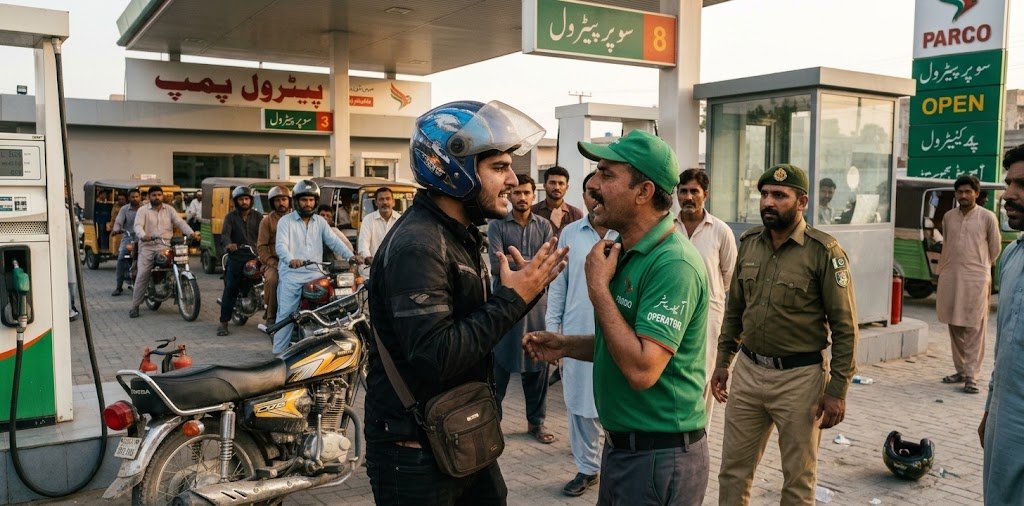
ISLAMABAD: The Prime Minister orders action against petrol pumps denying relief during a Federal Cabinet meeting held in Islamabad.
Prime Minister Shehbaz Sharif addressed public grievances regarding certain fuel stations failing to pass on relief benefits to consumers, directing the Petroleum Minister to take strict punitive measures against the non-compliant filling stations.
During the session, the Prime Minister highlighted that fuel prices were projected to increase by Rs 15 per liter on Friday.
However, timely government interventions prevented the price hike, securing economic relief for the public.
He further stated that the era of the LPG mafia has ended, as the federal government plans to directly import LPG to lower domestic costs.
Addressing security, the Prime Minister prioritized stability in Khyber Pakhtunkhwa (KP) and confirmed a finalized development package worth Rs 160 billion for the province.
Authorities reiterated that strict enforcement remains active across the nation as the Prime Minister orders action against petrol pumps denying relief to protect consumers from artificial price inflation.
Special Note: Government Subsidy Scheme on Fuel in Pakistan
Government subsidy schemes on fuel in Pakistan serve as essential macroeconomic tools designed to shield households, transportation sectors, and low-income demographics from global energy price volatility.
Historically, fuel subsidies are deployed during periods of sharp international crude oil price surges or heightened domestic inflationary pressures.
By absorbing a portion of the actual cost per liter through federal fiscal adjustments or targeted targeted financial grants, the government aims to reduce transportation overheads, stabilize food logistics costs, and protect public purchasing power.
In recent fiscal strategies, Pakistan has increasingly shifted from broad-based fuel subsidies to targeted relief mechanisms.
Generalized energy subsidies often strain the national treasury, inflate fiscal deficits, and conflict with international financial obligations.
Consequently, modern fuel relief frameworks utilize digital registries and targeted welfare networks, such as the Benazir Income Support Programme (BISP), to deliver direct cash transfers or fuel vouchers specifically to vulnerable households, motorcycle owners, and commercial transport operators.
Additionally, maintaining price stability requires rigorous monitoring by local administration and regulatory authorities like the Oil and Gas Regulatory Authority (OGRA).
Effective implementation of fuel subsidy policies relies on ensuring that market players—including Oil Marketing Companies (OMCs) and petrol pump operators—fully comply with official pricing structures.
ALSO READ: Federal government announces fuel price reduction across Pakistan
Through a combination of regulatory enforcement and targeted direct subsidies, the government balances fiscal responsibility while mitigating the direct impact of global energy shocks on everyday citizens.