
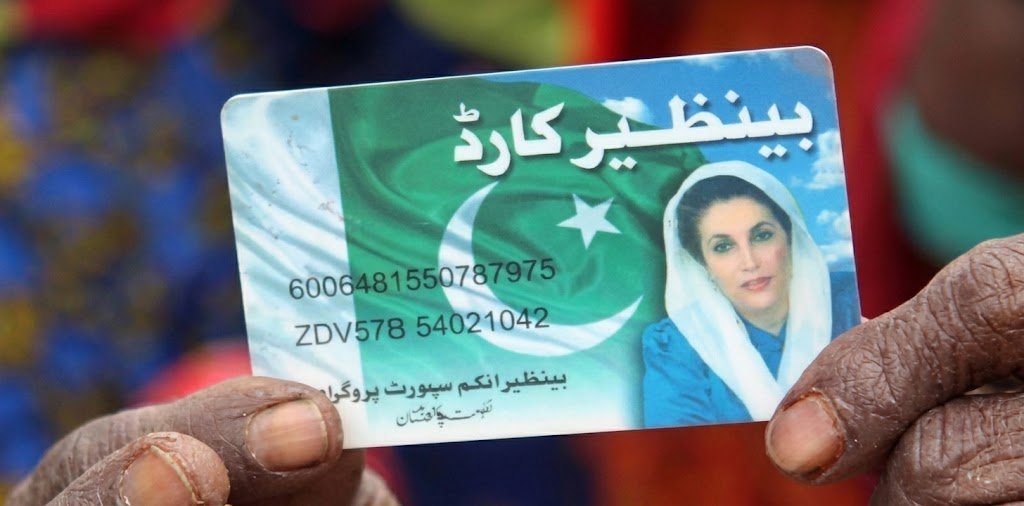
ISLAMABAD: Massive corruption has been unveiled in the Benazir Income Support Program.
According to the sources, BISP financial irregularities of Rs 24 billion revealed involving government employees after documents presented by the Ministry of Poverty Alleviation in the National Assembly exposed widespread operational misallocations, where over 140,000 government personnel allegedly withdrew funds meant for underprivileged families.
According to official records, out of the total financial irregularities, only Rs 710 million has been recovered so far through federal agencies and provincial departments.
The National Assembly papers revealed that in FY 2019–20 alone, civil servants and pensioners drew Rs 23.13 billion from the Benazir Income Support Programme (BISP).
Despite initial identification in 2019, improper disbursements reportedly continued for nearly six years, including Rs 900 million disbursed after the beneficiaries were flagged.
Subsequent yearly breakdowns show thousands of government officials continuing to draw funds, including 12,078 employees in FY 2024–25 and 236 staff members from BISP itself.
Recovery efforts remain slow relative to the total sum. The Federal Investigation Agency (FIA) recovered Rs 540 million, other government departments collected Rs 145 million, and BISP reclaimed Rs 21.5 million from its own staff, bringing the current total recovery to approximately Rs 706.5 million.
BISP has dispatched employee records to relevant authorities and initiated verification for over 600,000 civil servants and pensioners to audit further discrepancies.
Benazir Income Support Programme
The Benazir Income Support Programme (BISP) is Pakistan’s flagship social safety net initiative, established in 2008 to provide direct financial assistance to the country’s most vulnerable and low-income households.
Designed to alleviate poverty, cushion families against economic shocks, and empower women, BISP operates several target initiatives, including cash transfer programs (Kafaalat), educational stipends (Taleemi Waseela-e-Taleem), and health and nutrition support (Nashonuma).
To identify eligible families, the program relies on a computerized National Socio-Economic Registry (NSER), which ranks households using a Poverty Scorecard.
While BISP has been widely acknowledged internationally for reducing extreme poverty and boosting female financial inclusion, its scale requires robust oversight and continuous data audits.
Preventing leakage, ensuring transparent verification systems, and maintaining accurate beneficiary registries remain critical to preserving institutional trust and ensuring state welfare support reaches genuinely deserving citizens.
Addressing administrative loopholes remains imperative as BISP financial irregularities of Rs 24 billion revealed involving government employees, highlighting the pressing need for stronger accountability mechanisms within social welfare systems.