
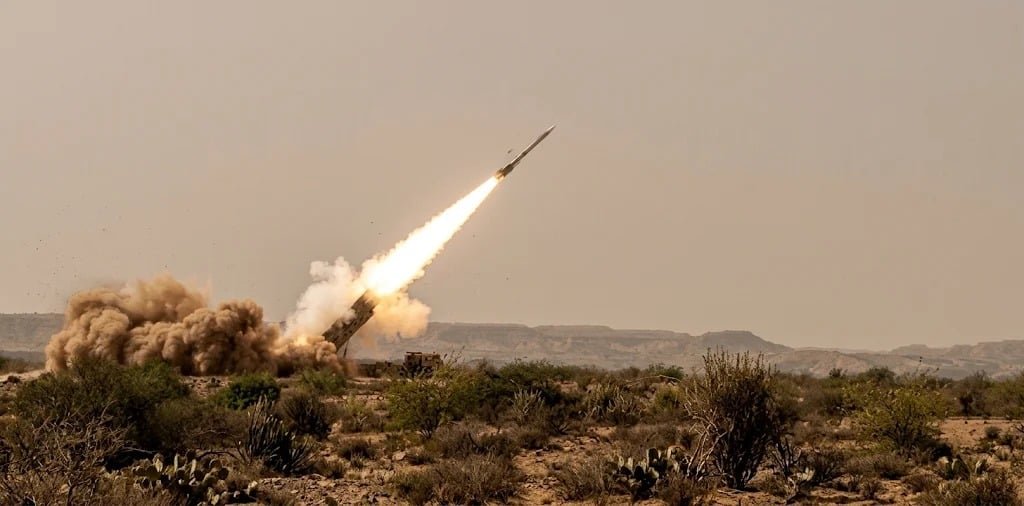
ISLAMABAD: Pakistan Army successfully conducts test launch of Fatah-3 supersonic cruise missile.
According to the details, Pakistan Army successfully conducts test launch of Fatah-3 supersonic cruise missile, marking a major technological milestone in strengthening the nation’s conventional deterrence and precision-strike capabilities.
According to a statement issued by the Inter-Services Public Relations (ISPR) on Wednesday, the advanced weapon system is equipped with state-of-the-art navigation and propulsion technologies, enabling it to engage long-range targets at supersonic speeds with pinpoint accuracy.
Military officials noted that the induction of Fatah-3 will substantially boost the operational flexibility and strike reach of the Pakistan Army’s Rocket Force Command (ARFC), further fortifying the country’s overall defensive posture.
The successful flight test—demonstrating once again how Pakistan Army successfully conducts test launch of Fatah-3 supersonic cruise missile—was witnessed on-site by the Commander of the Army Rocket Force Command, senior military officers, and the dedicated team of scientists and engineers behind the project.
Following the launch, the President, Prime Minister, Chief of Defence Forces, and Services Chiefs extended their heartfelt congratulations to the troops and technical experts, lauding their unwavering commitment to advancing national defense self-reliance.
In recent years, the Pakistan Armed Forces have undergone a comprehensive doctrinal and technological transformation to adapt to the demands of modern multi-domain warfare.
Moving beyond traditional battlefield tactics, Pakistan has prioritized indigenous defense production, network-centric operations, and rapid-response conventional deterrence.
The establishment of specialized formations like the Army Rocket Force Command underscores a strategic shift toward high-speed precision munitions, including the Fatah missile series, hypersonic systems, and long-range standoff weapons capable of penetrating sophisticated air-defense networks.
Simultaneously, the military has heavily integrated unmanned combat aerial vehicles (UCAVs), electronic warfare suites, satellite-guided navigation, and artificial intelligence-driven surveillance into its operational framework.
By pairing modern aerodynamic platforms with indigenous engineering and strategic defense partnerships, Pakistan’s armed forces ensure credible, agile, and cost-effective readiness across land, air, sea, and cyber domains, maintaining regional stability without lowering the nuclear threshold.
ALSO READ: Pakistan Air Force Launch Successful Test of Air to Air Faaz Missile
With the seamless validation of its advanced propulsion and guidance architecture, Pakistan Army successfully conducts test launch of Fatah-3 supersonic cruise missile, reaffirming its resolve to safeguard national sovereignty against evolving regional security challenges.