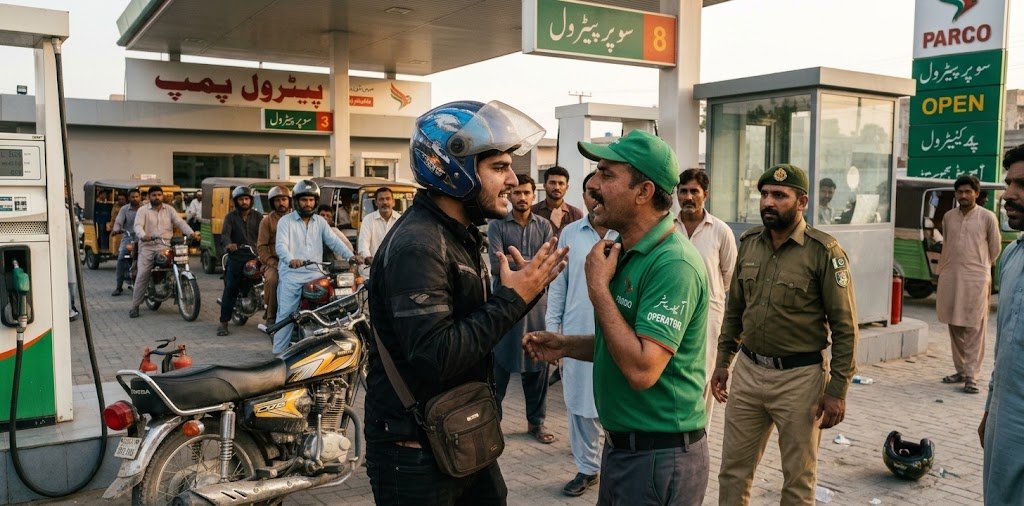
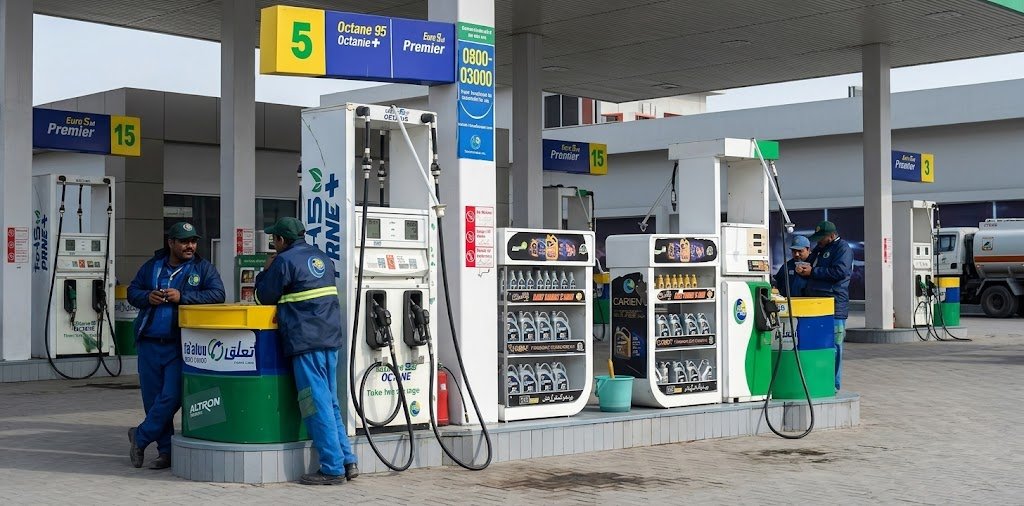
ISLAMABAD: Fuel prices dropped across Pakistan today.
According to the details, in a recent notification regarding petroleum product adjustments, the fuel rates in Pakistan see marginal decrease as the government announces revised prices for the upcoming fortnightly cycle.
According to the official figures released, the price of petrol has been reduced by Rs 7.06 per litre, bringing its new fixed price down to Rs 362.00 per litre.
Similarly, high-speed diesel has seen a downward adjustment, becoming cheaper by Rs 3.71 per litre, with its newly appointed price set at Rs 387.81 per litre.
This minor relief comes as a welcome adjustment for consumers grappling with high inflation, even as broader economic indicators continue to heavily influence domestic energy pricing structures across the country.
Fuel Rates in Pakistan
The mechanics governing fuel rates in Pakistan are complex, multi-layered, and deeply intertwined with global macroeconomic trends, domestic fiscal policies, and International Monetary Fund (IMF) stabilization frameworks.
Pakistan imports a vast majority of its petroleum requirements, making its domestic pump prices highly vulnerable to fluctuations in international crude oil benchmarks, regional supply chain disruptions, and the exchange rate volatility of the Pakistani Rupee against the US Dollar.
Consequently, any shifts in OPEC+ production quotas or geopolitical tensions in major oil-producing regions quickly reflect in fortnightly price reviews conducted by the Oil and Gas Regulatory Authority (OGRA) and the Ministry of Finance.
Beyond international crude dynamics, domestic pricing is heavily burdened by structural taxation and fiscal levies.
The ultimate retail price paid by consumers at petrol stations does not merely consist of the import cost, refinery margins, and freight charges.
Instead, it incorporates the Petroleum Levy (PL), General Sales Tax (GST), and custom duties.
The Petroleum Levy, in particular, has historically been utilized by successive governments as a primary revenue-generation tool to meet rigid fiscal deficit targets mandated by international lenders.
While GST is subject to standard value-added tax rules, the Petroleum Levy has a legal ceiling that has progressively been raised through legislative amendments to maximize non-tax revenue collections, often insulating the national exchequer at the expense of end-consumers.
The socioeconomic ramifications of volatile or elevated fuel rates in Pakistan are profound.
Because petroleum and diesel serve as the lifeblood of the national economy, fluctuations in their prices trigger an immediate cascading effect across multiple sectors.
High diesel prices directly escalate transportation and freight costs, which in turn inflate the prices of essential food items, raw materials, and manufactured goods, fueling domestic inflation.
Furthermore, agricultural output relies heavily on diesel-powered tube wells and heavy machinery, meaning that high fuel costs directly undermine agricultural productivity and food security.
Public transport fares also fluctuate in tandem with petroleum revisions, squeezing the purchasing power of salaried classes and daily-wage earners.
In recent years, policymakers have increasingly recognized the urgent need for structural resilience against global energy shocks.
Transitioning toward fuel efficiency, promoting electric mobility (EVs), investing in indigenous renewable energy resources, and modernizing public mass transit systems are frequently debated policy alternatives.
However, until these long-term structural reforms are fully realized and successfully implemented, short-term fortnightly adjustments will remain the primary mechanism for managing energy economics.
ALSO READ: Federal government announces fuel price reduction across Pakistan
Ultimately, achieving sustainable stabilization in fuel rates in Pakistan requires a delicate balance between meeting fiscal deficit obligations, protecting vulnerable segments of the population from inflationary spirals, and fostering a competitive, transparent domestic energy market.