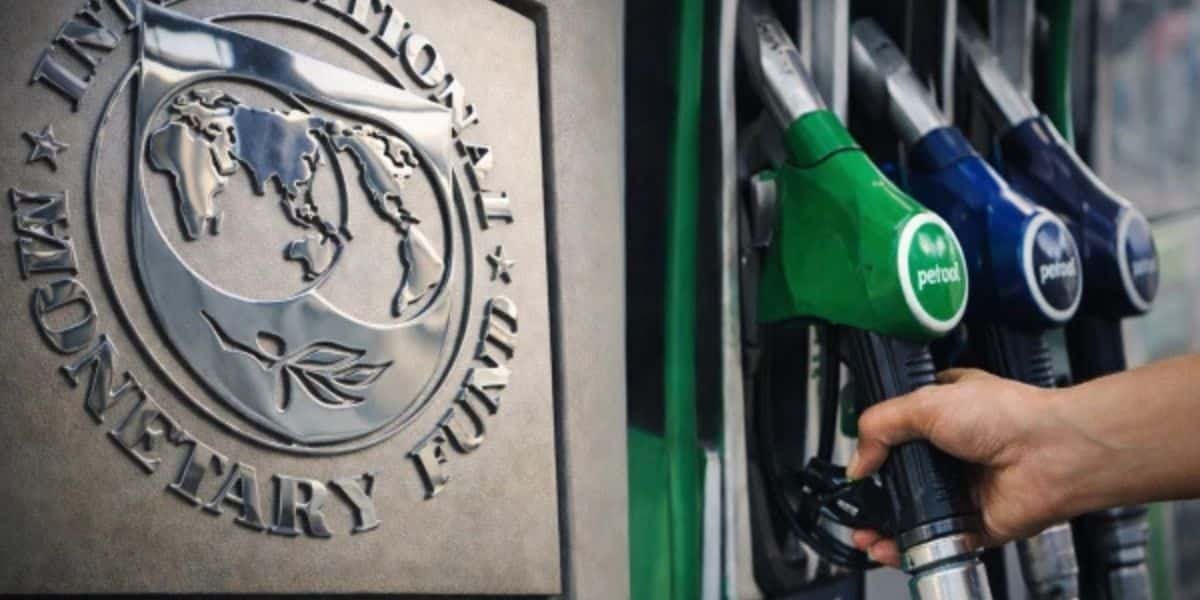
ISLAMABAD: The International Monetary Fund (IMF) has opposed Pakistan’s proposed fuel subsidy and cross-subsidy measures, telling the government that any fuel relief scheme should not be extended beyond three months, according to sources familiar with ongoing negotiations.
During discussions between Pakistan and the IMF, differences reportedly remain over several key economic issues, including the exchange rate and interest rates. The IMF has stressed the importance of maintaining a market-based exchange rate and keeping monetary policy sufficiently tight to contain inflation.
IMF Fuel Subsidy: Targeted Relief Proposed for Low-Income Consumers
Sources said the IMF has opposed a broad-based fuel subsidy and cross-subsidy mechanism and instead proposed targeted assistance for eligible consumers through a system similar to the Benazir Income Support Programme (BISP).
The government, meanwhile, has decided not to immediately withdraw the proposed fuel relief scheme for motorcycles and small vehicles.
The IMF has reportedly maintained that the fuel relief programme cannot be extended beyond three months. Sources estimate that the actual cost of providing fuel subsidies for three months could exceed Rs75 billion.
IMF Fuel Subsidy Talks Continue Over Petrol Pricing
The government and IMF reportedly remain at an impasse over petrol pricing and Rs1.4 trillion in receivables owed to gas companies.
Pakistan’s negotiating team has presented the IMF with a detailed breakdown of petrol pricing, explaining that imported petrol costs around Rs250 per litre, while the retail price is approximately Rs390 per litre. Officials said taxes account for around Rs110 per litre, with another Rs27 attributed to various margins.
IMF Raises Concerns Over Gas Sector Circular Debt
The IMF has also reportedly expressed reservations about proposals concerning the settlement of Rs1.4 trillion in receivables of gas companies. The circular debt in the gas sector has reached approximately Rs3.6 trillion, according to sources.
The IMF has also raised concerns over a proposal to use around Rs850 billion in gas companies’ profits to address the outstanding debt. A detailed meeting on the management plan for gas-sector circular debt is expected to take place next week.
Pakistan and the IMF have yet to reach an agreement on two major issues related to the petroleum sector. However, sources said the IMF has acknowledged progress on reforms in the gas sector and efforts to reduce gas theft.
IMF Negotiations: Pakistan Presents Economic Outlook
Economic review talks between Pakistan and the IMF are continuing, with Pakistan’s economic team presenting updated estimates and projections during several meetings with the IMF mission.
According to officials, Pakistan has told the IMF that the country’s economic outlook remains stable, the rupee is relatively stable, inflation is expected to ease, and the current account deficit is likely to remain below the targeted level.
The government has maintained its 4% economic growth target for the current fiscal year.
IMF Negotiations Continue Over Interest Rates and Exchange Rate
Differences reportedly persist between Pakistan and the IMF over the exchange rate and interest-rate policy.
Sources said the IMF wants monetary policy to remain sufficiently tight to contain inflation, while Pakistani officials expect inflation to gradually decline after December.
Officials estimate that inflation could reach 7.5% if global oil prices remain around $80 per barrel, while it could rise to approximately 8.2% if oil prices reach $100 per barrel. They also said a stable rupee could help contain imported inflation.
Pakistan’s Export and Remittance Projections
During the ongoing IMF negotiations, Pakistani officials reportedly informed the IMF that exports are projected to reach around $34 billion during the current fiscal year, while workers’ remittances are estimated at approximately $45.5 billion.
Also Read: PM Fuel Relief Scheme: Govt Abolishes Five-Litre Petrol Limit Per Token
Imports are projected to remain between $69 billion and $70 billion, while the current account deficit is expected to range between $2.5 billion and $3 billion.
Officials said foreign exchange reserves are expected to help keep the external sector stable. Remittances increased by 14.7% during the first two months, while higher domestic food production is expected to help contain the import bill.
Despite risks associated with the Middle East conflict, Pakistan has retained its 4% economic growth target. Officials, however, identified higher oil prices and potential supply disruptions as key risks to the economic outlook.