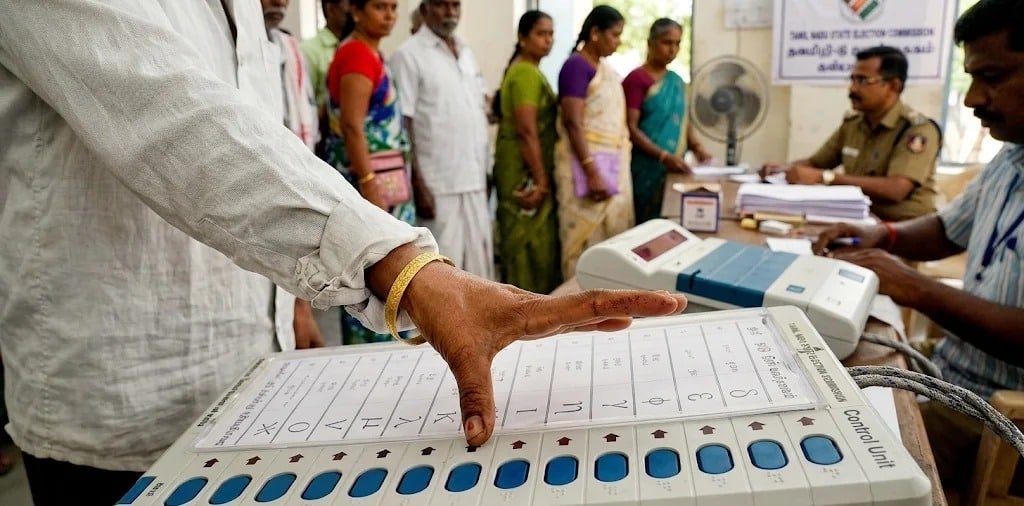
LAHORE: Punjab local government election are to be conducted in two phases.
According to the details, in a major administrative development toward grassroots democracy, the Election Commission of Pakistan approves two-phase local government elections in Punjab, accepting a phase-wise polling proposal submitted by the provincial government.
According to an official directive issued by the Election Commission of Pakistan (ECP) on November 17, 2026, the Punjab government had formally proposed conducting the local body polls in two phases on November 16.
Following deliberations, the electoral body agreed to the proposal and issued a formal letter to the Chief Secretary of Punjab, instructing provincial authorities to accelerate electoral preparations and complete all prerequisite arrangements in a timely manner.
Under the approved framework, 18 district groups—including Lahore—will go to the polls in the first phase, while another 18 district groups—including Faisalabad and Multan—will hold elections in the second phase.
This structured rollout comes as the Election Commission of Pakistan approves two-phase local government elections in Punjab to ensure smooth logistics and administrative management across the province.
Phase-Wise Breakdown of Districts
- First Phase (18 District Groups): Lahore, Kasur, Sheikhupura, Nankana Sahib, Pakpattan, Sialkot, Okara, Chakwal & Talagang, Rawalpindi & Murree, Dera Ghazi Khan & Taunsa, Rajanpur, Narowal, Chiniot, Khanewal, Bahawalpur, Lodhran, Sargodha, Hafizabad, and Bhakkar.
- Second Phase (18 District Groups): Faisalabad, Multan, Sahiwal, Gujranwala & Wazirabad, Bahawalnagar, Attock, Khushab, Mandi Bahauddin, Vehari, Jhelum, Muzaffargarh & Kot Addu, Toba Tek Singh, Mianwali, Layyah, Jhang, Gujrat, and Rahim Yar Khan.
The ECP has urged all relevant administrative departments to finalize delimitation, polling staff arrangements, and logistical groundwork without delay.
Historical Preview: Local Government Elections in Pakistan
Local government systems in Pakistan have historically experienced cycles of empowerment and suspension, often tied to shifts between military and civilian rule.
The foundational Basic Democracies system was introduced in 1959 under Ayub Khan, followed by major structural reforms in 1979 under Zia-ul-Haq and the landmark Devolution of Power Plan in 2001 under Pervez Musharraf, which decentralized administrative and financial authority to district nazims.
Following the 18th Constitutional Amendment in 2010, provinces gained legislative authority over local bodies.
Despite constitutional mandates under Article 140-A, provincial governments have frequently delayed local polls, making consistent grassroots governance an ongoing democratic challenge.
ALSO READ: ECP Announces Date for First Phase of Punjab Local Government Elections
Political parties and civic observers across the province are now gearing up for grassroots mobilization as the Election Commission of Pakistan approves two-phase local government elections in Punjab.