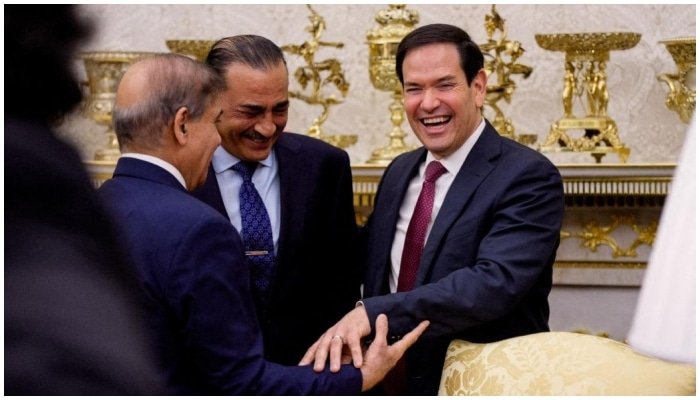
WASHINGTON / ISLAMABAD: Highlighting the geopolitical realities of modern diplomacy, US Secretary of State Marco Rubio emphasizes US needs ties with Pakistan as India needs Iran to maintain regional equilibrium and protect strategic interests.
In an exclusive interview with Indian media, Rubio defended Washington’s ongoing diplomatic engagement with Islamabad, noting that geographic positioning and nuclear capabilities make Pakistan an essential global partner.
“We are against terrorism anywhere in the world, and we stand against anyone who sponsors terrorism,” Rubio stated, while explaining that maintaining open channels with Pakistan remains a strategic imperative for the United States.
Drawing a direct parallel to New Delhi’s foreign policy choices, US Secretary of State Marco Rubio emphasizes US needs ties with Pakistan as India needs Iran, emphasizing that just as Indian officials interact with Iranian leadership out of national necessity, Washington must similarly manage its diplomatic relations with Pakistan.
Rubio added that active engagement with Islamabad enables Washington to address security concerns constructively.
As US Secretary of State Marco Rubio emphasizes US needs ties with Pakistan as India needs Iran, he pointed out that diplomatic dialogue allows the United States to play a constructive role in mitigating regional tensions and discouraging developments that cause concern to India.
Note on Pak-USA Defence and Strategic Ties on Global Issues
Pakistan and the United States share a multifaceted defence and strategic relationship spanning several decades, historically anchored in regional security, counter-terrorism, and geopolitical stability across South and Central Asia.
Despite periodic policy shifts and recalibrations, the bilateral defence architecture remains a key pillar of broader global security initiatives.
From a strategic perspective, Pakistan’s crucial geographic position at the crossroads of South Asia, Central Asia, and the Middle East makes it an indispensable partner for Washington in navigating complex global challenges.
Operational cooperation between both nations has played a significant role in intelligence sharing, maritime security enforcement in the Indian Ocean, and counter-terrorism operations targeting non-state actors.
Furthermore, maintaining high-level military-to-military engagement and defense dialogues ensures stability in a volatile region equipped with nuclear capabilities.
On broader global issues, Pak-US strategic ties extend to counter-proliferation efforts, humanitarian assistance, peacebuilding, and maritime domain awareness across critical international shipping lanes.
Washington recognizes that sustained communication with Islamabad is vital for managing regional crises and promoting peace in Afghanistan and broader Asia.
Conversely, Pakistan leverages this strategic partnership to modernize its defense capabilities, enhance border security, and maintain strategic balance.
ALSO READ: White House Clarifies: President Trump Has No Plans to Attack Iran Before November Midterms
As power dynamics shift globally, the engagement between Pakistan and the United States continues to evolve from a purely transactional alliance toward a structured, pragmatically aligned security partnership aimed at fostering enduring international peace and stability.