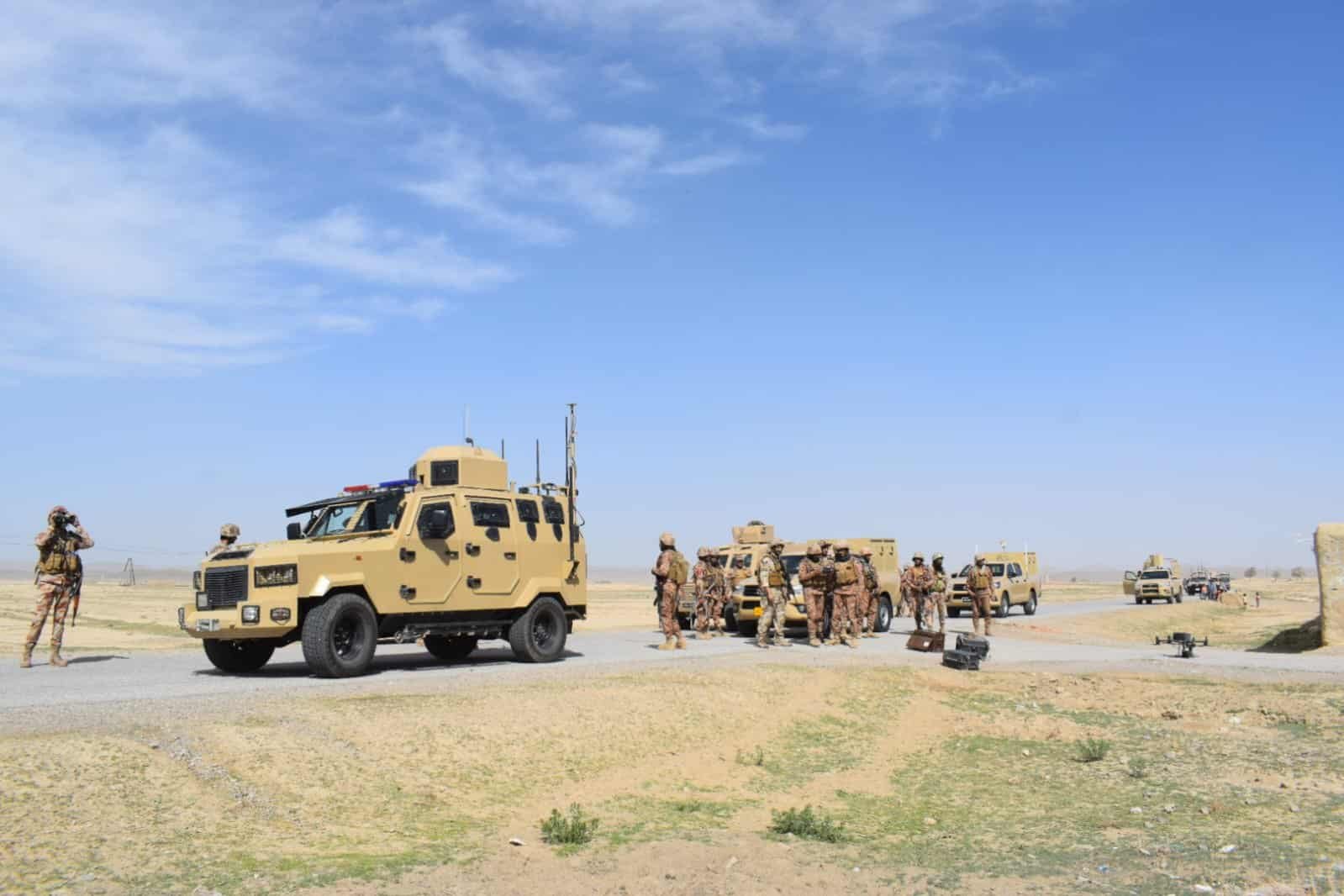
QUETTA: Pakistani security forces have killed at least 316 militants in Balochistan since the launch of Operation Radd-ul-Fitna 3 on Aug 4 against the India-sponsonred terrorists known as Fitna al Khawarij and Fitna al Hindustan, according to a compilation of publicly reported figures from security authorities and Pakistani media.
The data include four terrorists killed in operation carried out by the security forces in Mastung district of Balochistan today.
The figure is compiled from Pakistan Institute for Conflict and Security Studies (PICSS) monthly data, ISPR-reported operations and separately reported operations in October.
The tally covers operations carried out across the province from Aug. 4 through Oct. 6. It includes militants killed in intelligence-based operations, firefights and targeted actions against militant hideouts.
The latest figure rose by 10 following fresh operations in Mastung, where security sources reported the deaths of six militants on Monday and four more on Tuesday.
The latest operations add to an intense counterterrorism campaign that has continued for more than two months.
Operations intensify across Balochistan
Radd-ul-Fitna 3 began with a series of intelligence-based operations in Balochistan. Security forces targeted militant networks in districts including Mastung, Washuk, Panjgur, Kharan, Khuzdar, Quetta, Kalat, Sibi, Chagai and other areas.
August 9: Security forces killed 15 Fitna al-Hindustan militants in operations across Mastung, Washuk, Awaran, Khuzdar and Nushki.
August 12: Eighteen Fitna al-Hindustan militants were killed in Surab. Security authorities said eight were killed while preparing a vehicle-borne improvised explosive device.
Operations timeline
August 16–21: Security forces conducted 10 intelligence-based operations in Mastung, Mach, Khuzdar and Panjgur, killing 37 Fitna al-Hindustan militants. The operations included actions in Lajay in Kharan, Hajika in Surab and Killi Suran in Panjgur.
August 26: Four Fitna al-Hindustan militants were killed in an operation in Sasool, Khuzdar.
August 30: Security forces killed five Fitna al-Hindustan militants in Malar, Awaran, while another four were killed in a separate operation in Awaran.
August 31: Twenty Fitna al-Hindustan militants were killed during clashes and operations in Dalbandin and Washuk.
September 1: Three Fitna al-Hindustan militants were killed in Dasht Kaur.
September 3: Three Fitna al-Hindustan militants were killed in Hajika, Surab.
September 4: Twenty Fitna al-Hindustan militants were killed in operations in Nushki and Khadkocha, Mastung.
September 11: Eleven Fitna al-Hindustan militants were killed in operations in Kharan and Washuk.
September 14: Three Fitna al-Hindustan militants, including a commander identified as Naqeeb, were killed in Mastung.
September 15: Four Fitna al-Hindustan militants were killed in Turbat, while two others were killed in Gandawa, Jhal Magsi.
September 16: Three Fitna al-Hindustan militants were killed in Badran, Awaran.
The tempo increased in the following weeks. On Aug. 21, the military said security forces had killed 37 militants in 10 operations in Balochistan, including actions in Mastung, Mach, Khuzdar and Panjgur.
Meanwhile, security forces continued to conduct smaller intelligence-led raids. These included operations in Kharan, Panjgur and other districts, where weapons, ammunition and militant hideouts were also reported to have been recovered or destroyed.
August operations
The Pakistan Institute for Conflict and Security Studies, or PICSS, recorded 115 militants killed in security-force operations in Balochistan during August. The institute also recorded 89 terrorist attacks in the province during the month.
That figure makes August an important baseline for measuring the scale of Radd-ul-Fitna 3.
However, individual media reports cannot simply be added together because several reports covered the same operations or later provided cumulative figures. The overall tally therefore relies on monthly and cumulative datasets where available, while individual operations are used to document the campaign’s progression.
September saw a sharper escalation
The campaign intensified further in September.
According to PICSS data, security-force operations in Balochistan killed 171 militants during September. The province also recorded 131 terrorist attacks, up sharply from 89 in August.
One of the largest reported operations came in early September.
Security forces killed 48 militants in multiple operations over 72 hours in Mastung, Quetta, Kalat and Sibi, according to the Inter-Services Public Relations. The military said the operations targeted members of groups it identifies as Fitna-al-Hindustan and Fitna-al-Khawarij.
The campaign continued throughout the month. Security forces reported three militants killed in Mastung on Sept. 14, including a commander, while other operations were reported in Awaran, Chagai and several other districts.
By late September, the military said more than 71 militants had been killed in Shaban and other areas of Balochistan over a 96-hour period, further highlighting the intensity of operations in the province.
Operations continue in October
The campaign has continued into October.
On Oct. 1, security forces reported killing six militants in Kachhi district during an intelligence-based operation in the Sanni area. Security sources said quadcopters were used during the operation and weapons and ammunition were recovered.
Two days later, six more militants were reported killed in the Gorander area of Mashkhel under Radd-ul-Fitna 3 after militants allegedly opened fire on a security check post and attempted to flee.
Further operations were reported in Panjgur and Chagai on Oct. 5, while additional militant casualties were reported in Mastung on Oct. 5 and 6.
316 and counting?
Based on the available PICSS and security-source data, 316 is the strongest reconstructed figure currently available for reported militant deaths in Balochistan from August 4 through October 6.
However, because the number combines different reporting systems and is reconstructed after removing obvious overlaps, it should not be described as an official ISPR cumulative toll.
What the figures do show is clear: Radd-ul-Fitna 3 has maintained sustained operational pressure across Balochistan for more than two months, with militant networks facing repeated intelligence-based strikes and clearance operations.