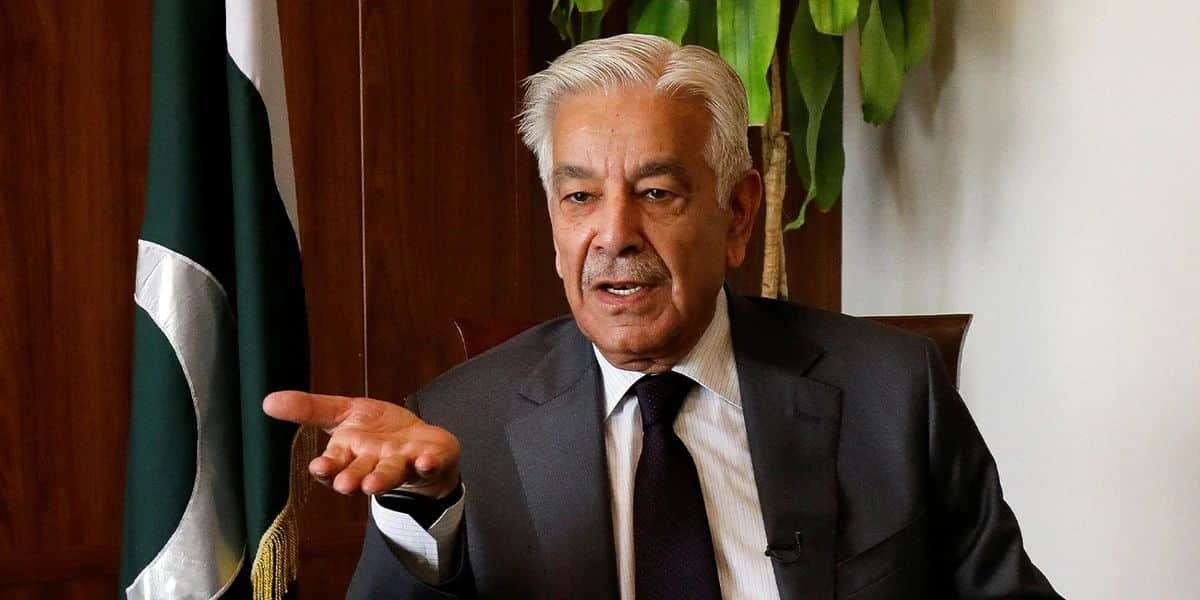
ISLAMABAD: Defence Minister Khawaja Asif has reaffirmed Pakistan’s unwavering support for Saudi Arabia, declaring that Pakistan Standing with Saudi Arabia Like a Rock as the Kingdom faces security threats and reported attacks by Yemen’s Houthi movement.
Speaking to reporters in his hometown of Sialkot, Asif emphasised the growing defence cooperation between Islamabad and Riyadh, revealing that the two countries were signing defence agreements one after another.
“Even at this time, when there are attacks taking place against Saudi Arabia, we are standing with Saudi Arabia like a rock,” the defence minister said.
Without disclosing further details of the agreements, Asif highlighted the importance of the ongoing security partnership between the two countries.
He also credited Field Marshal Asim Munir with leading the defence initiatives, while acknowledging Prime Minister Shehbaz Sharif’s role in the arrangements.
“Shehbaz Sharif is the prime minister, and he has a role in it, no doubt. But the entire initiative is being spearheaded by the field marshal,” Asif said.
Pakistan Standing with Saudi Arabia Like a Rock Amid Regional Security Threats
Pakistan has reiterated its support for Saudi Arabia as concerns grow over reported Houthi attacks targeting the Kingdom and the potential risks to critical infrastructure, including energy and aviation facilities.
Islamabad has called for an immediate halt to the attacks, emphasising the importance of protecting regional security and preventing further escalation.
Pakistan and Saudi Arabia maintain longstanding political, economic and military relations, with defence cooperation forming a key part of their bilateral partnership.
Asif’s remarks underscore Islamabad’s commitment to Riyadh amid growing regional security challenges and continued efforts to strengthen bilateral defence arrangements.
Pakistan, Saudi Arabia and Türkiye Strengthen Defence Cooperation
Pakistan’s defence cooperation with Saudi Arabia has developed through a series of bilateral and regional initiatives.
In September 2025, Pakistan and Saudi Arabia signed a bilateral defence agreement aimed at strengthening their security partnership.
According to the details provided, Pakistan, Saudi Arabia and Türkiye subsequently signed the Makkah Joint Defence Agreement in August 2026. The arrangement provides for collective defence, treating an attack on one participating country as an attack against all three.
Pakistan has also indicated that the framework could be open to other countries sharing its objectives of regional peace, security and stability.
The growing cooperation reflects efforts by Islamabad and its partners to strengthen defence coordination and respond to evolving regional security challenges.
Houthi Conflict Raises Concerns Over Saudi Infrastructure
The Houthi movement has been involved in Yemen’s conflict since 2014, when its fighters seized the capital, Sanaa, and challenged the internationally recognised government.
The conflict has repeatedly raised security concerns across the region, particularly over attacks affecting neighbouring countries and strategically important infrastructure.
Reported attacks on Saudi Arabia have heightened concerns about the safety of critical facilities, including those connected to energy production, transportation and aviation.
Pakistan’s latest statements of support come as Islamabad and Riyadh continue to strengthen their security partnership amid an uncertain regional environment.
Islamabad Reaffirms Commitment to Riyadh
Pakistan’s close relationship with Saudi Arabia remains an important element of its regional diplomacy. The two countries have maintained longstanding ties through economic cooperation, political engagement and defence collaboration.
Asif’s remarks signal Islamabad’s intention to maintain close coordination with Riyadh as both countries address emerging security challenges.
The evolving defence arrangements involving Pakistan, Saudi Arabia and Türkiye also reflect a broader push towards regional cooperation, although the practical scope and implementation of these arrangements will depend on the agreements’ specific terms.
Pakistan has maintained that its defence partnerships are intended to contribute to collective security and regional stability.