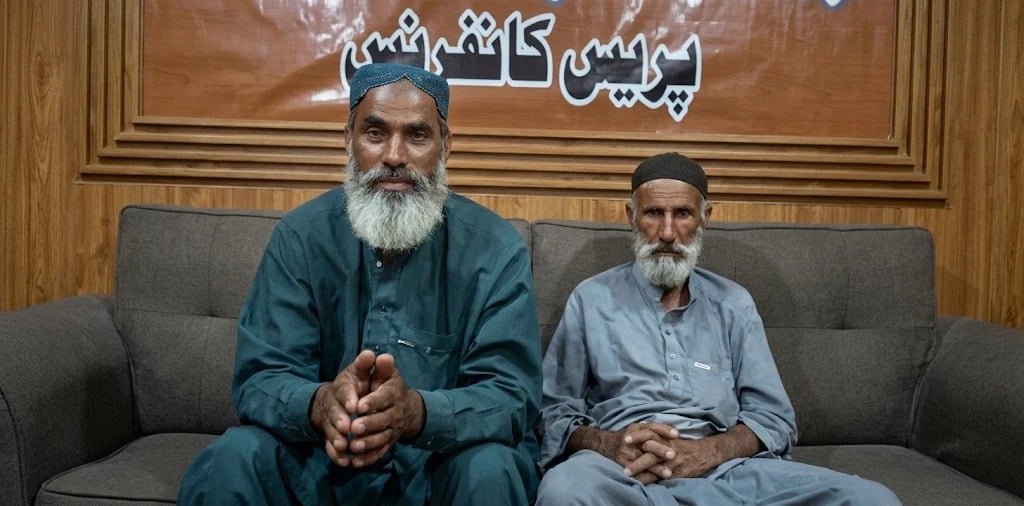
PANJGUR: Panjgur resident disowns suicide bomber sister over ties with Fitna-al-Hindustan militants.
According to a report by Dunya News, a resident of Panjgur, Ghulam Nabi, has publicly announced his complete disassociation from his sister, Soorat, following her involvement with the militant group referred to in the report as Fitna-al-Hindustan (Balochistan Liberation Army).
The report indicates that residents across Balochistan continue to publicly distance themselves from militant outfits.
Expressing deep regret over his sister’s actions, Ghulam Nabi stated that Soorat had been misled by the group and had gone to the mountains alongside her friends.
Ghulam Nabi further stated that banned organizations deceive young Baloch women and exploit them as suicide bombers to serve their agendas.
In his statement, he appealed to his sister to abandon the path of militancy and return to the national mainstream.
Reaffirming his loyalty to Pakistan, he expressed strong disapproval of the terrorist activities carried out by the group in the province.
Families in Balochistan Disowning Militant Relatives
In recent years, a recurring development in Balochistan has involved families publicly disowning relatives who have joined banned militant organizations, particularly following high-profile attacks or security operations.
According to various regional media reports and official statements, parents, siblings, and tribal elders have increasingly utilized press conferences, video messages, and local jirgas to formally sever ties with family members involved in insurgency or suicide bombings.
Observers and security analysts attribute this trend to a combination of social, legal, and personal factors. For many families, the recruitment of young men—and, in rare instances, women—by militant outfits brings severe social stigma, community scrutiny, and legal consequences.
By issuing public declarations of disassociation, families aim to protect the remaining members of their households from security repercussions and clarify that they do not endorse violent extremism.
Additionally, many relatives express genuine grief and frustration, asserting that their children were coerced, radicalized through online propaganda, or misled by false promises before disappearing into remote mountainous areas.
Furthermore, local tribal leaders and community elders often encourage these public announcements to maintain peace and prevent collective blame from falling on entire tribes or neighborhoods.
In many of these statements, families accompany their disownment with direct appeals urging their estranged sons and daughters to surrender, renounce violence, and reintegrate into society.
ALSO READ: Panjgur holds Baqay-e-Pakistan Rallyagainst terrorism
While militant groups continue to seek recruits in the region, these public rejections by immediate family members highlight the growing friction between insurgent networks and the local population, who bear the brunt of instability and conflict in the province.